RedKalion
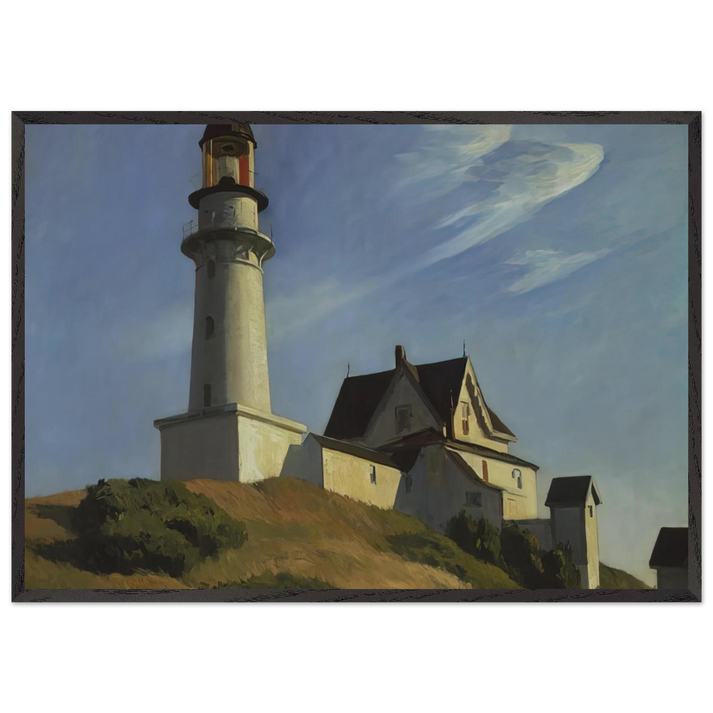
Lighthouse at Two Lights - Edward Hopper 70x100 cm / 28x40 inches Framed Art Print – Black Wooden Frame
Lighthouse at Two Lights - Edward Hopper 70x100 cm / 28x40 inches Framed Art Print – Black Wooden Frame
Couldn't load pickup availability
Lighthouse at Two Lights - Edward Hopper: A Timeless American Icon
Immerse yourself in the stark, evocative beauty of Edward Hopper's "Lighthouse at Two Lights", now available as a museum-quality framed art print from RedKalion. This 70x100 cm / 28x40 inches reproduction captures every nuanced detail of Hopper's 1929 masterpiece, where the solitary lighthouse stands resolute against the vast Maine sky—a quintessential symbol of American solitude and resilience.
Hopper, a master of American Realism, employed precise geometric forms and dramatic lighting to evoke a profound sense of quietude and introspection. This print faithfully reproduces his iconic use of sharp shadows and unadorned architecture, allowing you to bring the contemplative mood of early 20th-century New England into your modern space.
Crafted for Discerning Collectors
RedKalion's archival-grade reproduction ensures this piece is not merely a decoration, but an enduring fine art investment. Printed on 250 gsm (110 lb) matte, uncoated, natural white paper with a thickness of 0.29 mm (11.4 mils), it offers exceptional color fidelity and a tactile, gallery-worthy finish. The FSC-certified sustainable paper guarantees both environmental responsibility and longevity.
Presented in a sophisticated black wooden frame crafted from responsibly sourced oak and ash wood, this piece is ready-to-hang with an included hanging kit. The frame features a substantial 20mm (0.79") thickness and width—wider than the classic 14mm (0.55") profile—providing a bold, contemporary presence. Shatterproof plexiglass offers superior protection against dust and damage, ensuring your print remains pristine for generations.
Elevate your home or office with this authoritative reproduction, curated by RedKalion for those who value art historical significance and premium craftsmanship. Own a piece of American art history, delivered as a complete, archival masterpiece.

Discover Unlimited Art Possibilities
At RedKalion, you can find virtually any artwork from any artist, available in a wide range of sizes to perfectly match your space.
If you didn’t find what you’re looking for, contact us at support@redkalion.com . We will source any artwork and produce it in any size and format you need, including art prints, posters, canvas, framed pieces, framed canvas, and more.
For dedicated art enthusiasts, we also offer handcrafted replicas of any artwork, carefully painted by highly skilled artists using traditional techniques.
For custom requests, contact us at support@redkalion.com .
What are the exact dimensions of this framed Edward Hopper print?
This framed art print measures 70x100 cm / 28x40 inches, including the black wooden frame, making it a statement piece ideal for living rooms, offices, or galleries.
What type of paper is used for this fine art reproduction?
We use 250 gsm (110 lb) matte, uncoated, natural white archival museum-quality paper with a thickness of 0.29 mm (11.4 mils), ensuring vibrant color and durability for this Edward Hopper lighthouse print.
Is the frame included and ready to hang?
Yes, this premium framed art print includes a black wooden frame and hanging kit, so it arrives ready-to-hang directly on your wall without additional assembly.
How does the frame protect the print?
The frame features shatterproof plexiglass that safeguards the Edward Hopper reproduction from dust, UV light, and physical damage, preserving its museum-quality appearance.
Is the paper environmentally sustainable?
Yes, we use FSC-certified materials or equivalent for our sustainable paper, aligning with eco-friendly practices for this archival art print.
What is the historical significance of 'Lighthouse at Two Lights' by Edward Hopper?
Painted in 1929, this work exemplifies Hopper's American Realism, capturing the solitude of coastal Maine and influencing modern perceptions of the American landscape through geometric forms and stark light.
Why did Edward Hopper choose this lighthouse as a subject?
Hopper was drawn to the Two Lights lighthouse in Cape Elizabeth, Maine, for its isolated, monumental quality, using it to explore themes of loneliness and resilience in the early 20th century.