RedKalion
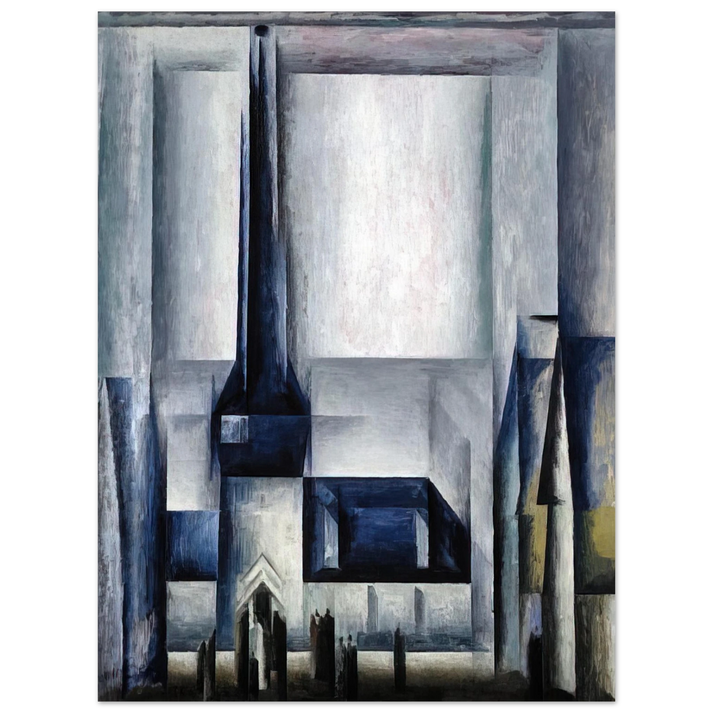
Lyonel Feininger - GELMERODA III 1913 75x100 cm / 30x40inches Fine Art Poster
Lyonel Feininger - GELMERODA III 1913 75x100 cm / 30x40inches Fine Art Poster
Couldn't load pickup availability
Lyonel Feininger - GELMERODA III 1913 Fine Art Print
Immerse yourself in the dynamic world of Lyonel Feininger with this museum-quality reproduction of GELMERODA III (1913), a seminal work of German Expressionism and Cubism. This fine art poster captures the artist's iconic vision of the Gelmeroda village church, rendered with crystalline geometric forms and a vibrant interplay of light and shadow that evokes a sense of architectural harmony and modernist innovation.
Feininger, a master of the Bauhaus movement, transformed this Thuringian motif into a timeless symbol of artistic abstraction. Our archival print preserves every nuanced line and tonal shift, allowing you to bring a piece of early 20th-century avant-garde history into your home or office. The 75x100 cm (30x40 inches) size ensures a striking visual impact, perfect for contemporary interiors seeking depth and character.
Crafted on our exclusive Master's Edition archival paper, this print features a matte, uncoated finish in a natural white hue that enhances the artwork's texture without glare. The acid-free composition (pH above 7) and FSC-certified sustainability guarantee it resists yellowing, offering enduring beauty for generations. With a substantial weight of 250 gsm (110 lb) and a thickness of 0.29 mm (11.4 mils), it delivers a luxurious, gallery-ready presence. RedKalion's on-demand printing ensures each piece is produced with meticulous care, shipped directly to you as a premium, archival masterpiece that elevates any space.
Discover Unlimited Art Possibilities
At RedKalion, you can find virtually any artwork from any artist, available in a wide range of sizes to perfectly match your space.
If you didn’t find what you’re looking for, contact us at support@redkalion.com . We will source any artwork and produce it in any size and format you need, including art prints, posters, canvas, framed pieces, framed canvas, and more.
For dedicated art enthusiasts, we also offer handcrafted replicas of any artwork, carefully painted by highly skilled artists using traditional techniques.
For custom requests, contact us at support@redkalion.com .
What is the historical significance of Lyonel Feininger's GELMERODA III?
GELMERODA III (1913) is a key work in German Expressionism and Cubism, showcasing Feininger's unique geometric abstraction of the Gelmeroda church, reflecting his Bauhaus influences and modernist vision of architectural form.
What are the dimensions of this fine art print?
This museum-quality reproduction measures 75x100 cm (30x40 inches), ideal for creating a focal point in any room with its large-scale, detailed presentation.
What type of paper is used for this archival print?
It's printed on Master's Edition archival paper, an acid-free, FSC-certified material with a matte, uncoated finish in natural white, ensuring longevity and a luxurious texture for premium art displays.
How does the acid-free paper prevent yellowing over time?
The acid-free composition (pH above 7) neutralizes degradation, protecting the print from yellowing and ensuring your fine art poster remains vibrant as a durable, archival reproduction.
What is the weight and thickness of this art print?
With a weight of 250 gsm (110 lb) and thickness of 0.29 mm (11.4 mils), it offers a substantial, high-quality feel suitable for framing and long-term preservation.
How is this print shipped and is there a minimum order?
RedKalion prints and ships on demand with no minimum orders, providing efficient fulfillment for your custom fine art poster directly to your doorstep.
Why is Gelmeroda a recurring theme in Feininger's work?
Feininger repeatedly depicted the Gelmeroda church as a symbol of structural purity and spiritual resonance, using it to explore Cubist fragmentation and emotional depth in his modernist compositions.