

RedKalion
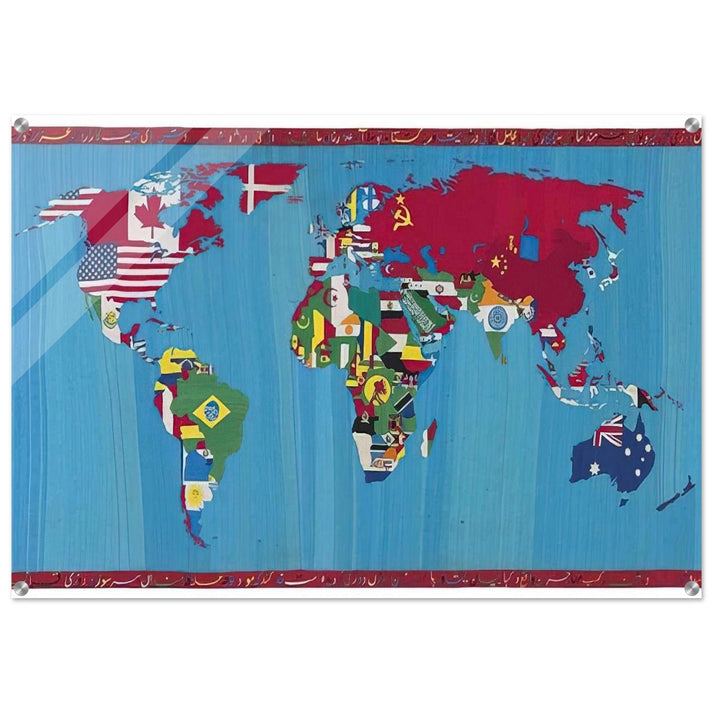
MAPPA DEL MONDO 1988 - Alighiero Boetti Acrylic Print - 70x100 cm / 28x40″ inches | Alighiero Boetti Wall Art | Alighiero Boetti Prints
MAPPA DEL MONDO 1988 - Alighiero Boetti Acrylic Print - 70x100 cm / 28x40″ inches | Alighiero Boetti Wall Art | Alighiero Boetti Prints
Couldn't load pickup availability
Mappa del Mondo 1988 by Alighiero Boetti: A Conceptual Masterpiece
Immerse yourself in the vibrant world of Alighiero Boetti with this museum-quality reproduction of Mappa del Mondo 1988. This iconic artwork, part of Boetti's celebrated series of embroidered world maps, reimagines global geography through the lens of conceptual art, where each country is depicted in the colors of its national flag. Created through a collaborative process with Afghan artisans, the piece reflects Boetti's fascination with order, chance, and cultural exchange, blending meticulous craftsmanship with profound philosophical inquiry. The map's intricate stitching and bold palette symbolize interconnectedness and geopolitical identity, making it a timeless statement in contemporary art history.
Premium Acrylic Print: Archival Quality & Modern Elegance
RedKalion presents this masterpiece as a fine art print of exceptional durability and visual impact. Printed on 4mm (0.15") acrylic, it offers a sleek, vibrant finish that enhances the artwork's rich colors and details, ensuring it resists fading and wear. The straight-cut corners provide a modern aesthetic, while transparent backgrounds are optimized to white for a crisp presentation. Measuring 70x100 cm / 28x40" inches, this Alighiero Boetti wall art piece is ready to elevate any space with its archival-grade longevity. A complete hanging kit is included, featuring hardware, screws, and pre-drilled screw holes at each corner (positioned 14mm/0.55" from the edge, with an 8mm/0.31" diameter hole and 15mm/0.6" screw head) for effortless installation.
Why Choose RedKalion for Your Art Reproduction?
At RedKalion, we curate museum-quality reproductions that honor the integrity of original artworks. Our expertise in art history and premium materials ensures each piece, like this Alighiero Boetti print, meets rigorous standards for accuracy and preservation. Trust in our authority as a premier online gallery to bring archival masterpieces into your home or office, where they endure as testaments to artistic legacy.


Discover Unlimited Art Possibilities
At RedKalion, you can find virtually any artwork from any artist, available in a wide range of sizes to perfectly match your space.
If you didn’t find what you’re looking for, contact us at support@redkalion.com . We will source any artwork and produce it in any size and format you need, including art prints, posters, canvas, framed pieces, framed canvas, and more.
For dedicated art enthusiasts, we also offer handcrafted replicas of any artwork, carefully painted by highly skilled artists using traditional techniques.
For custom requests, contact us at support@redkalion.com .
What is the historical significance of Mappa del Mondo 1988 by Alighiero Boetti?
This artwork is part of Boetti's iconic series of embroidered world maps, created collaboratively with Afghan artisans to explore themes of globalization, order, and cultural identity through the colors of national flags, making it a landmark in conceptual art history.
What materials are used in this Alighiero Boetti acrylic print?
The print features a 4mm (0.15") acrylic surface for a vibrant, durable finish with straight-cut corners and white-optimized backgrounds, ensuring a museum-quality reproduction that resists fading.
How is the hanging hardware installed for this wall art?
It includes a complete kit with pre-drilled screw holes at each corner (14mm/0.55" from the edge, 8mm/0.31" diameter), screws, and hardware for easy mounting of your Alighiero Boetti fine art print.
What are the dimensions of this Alighiero Boetti print?
This museum-quality reproduction measures 70x100 cm / 28x40" inches, ideal for creating a bold statement with archival-grade Alighiero Boetti wall art in any room.
How durable is the acrylic material for long-term display?
The 4mm acrylic offers excellent durability, protecting against scratches and UV light to maintain the vibrant colors of your Alighiero Boetti print for years as a premium art reproduction.
What inspired Alighiero Boetti's use of embroidery in his maps?
Boetti was inspired by traditional Afghan craftsmanship, using embroidery to symbolize cultural collaboration and challenge Western art norms, adding texture and depth to his conceptual explorations.
How does the map reflect geopolitical themes from the 1980s?
Created in 1988, it captures shifting national borders and identities during the Cold War era, using flag colors to comment on global interconnectedness and political change in fine art.