RedKalion
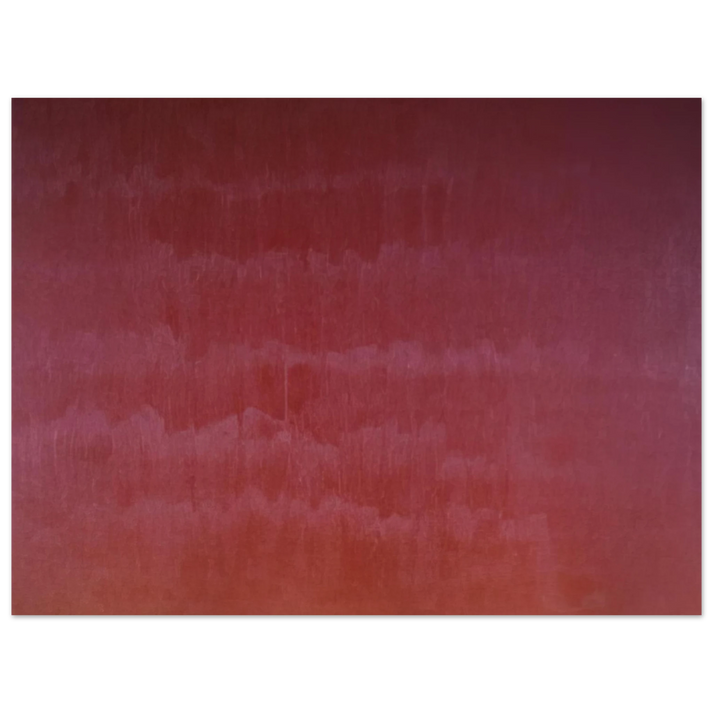
Marcia Hafif - Venetian Red 75x100 cm / 30x40inches Fine Art Poster
Marcia Hafif - Venetian Red 75x100 cm / 30x40inches Fine Art Poster
Couldn't load pickup availability
Marcia Hafif - Venetian Red: A Monumental Study in Color and Form
This fine art print reproduces Marcia Hafif's iconic minimalist painting, "Venetian Red", in its original monumental scale of 75x100 cm (30x40 inches). A leading figure in the Radical Painting movement, Hafif dedicated her career to exploring the essence of a single color. This piece is not merely a red rectangle; it is a profound meditation on pigment, surface, and perception, inviting deep contemplation.
Hafif's Venetian Red exemplifies her methodical, almost scientific approach. She applied the oil paint in thin, even layers, allowing the materiality of the pigment itself to become the subject. The result is a field of intense, resonant color that seems to vibrate with internal light, transforming any wall into a space of serene focus.
RedKalion presents this masterpiece on our exclusive Master's Edition archival paper. This museum-quality reproduction features a luxurious, uncoated matte finish on natural white (off-white) paper. The 250 gsm (110 lb) weight and substantial 0.29 mm (11.4 mils) thickness provide a tangible, premium feel worthy of the artwork's gravity. Printed on-demand on FSC-certified, acid-free paper (pH above 7), this print is crafted to resist yellowing and endure for generations.
Elevate your space with an archival masterpiece that endures. This fine art poster of Marcia Hafif's Venetian Red offers a timeless statement of minimalist elegance and intellectual depth.

Discover Unlimited Art Possibilities
At RedKalion, you can find virtually any artwork from any artist, available in a wide range of sizes to perfectly match your space.
If you didn’t find what you’re looking for, contact us at support@redkalion.com . We will source any artwork and produce it in any size and format you need, including art prints, posters, canvas, framed pieces, framed canvas, and more.
For dedicated art enthusiasts, we also offer handcrafted replicas of any artwork, carefully painted by highly skilled artists using traditional techniques.
For custom requests, contact us at support@redkalion.com .
What are the exact dimensions of this Marcia Hafif Venetian Red print?
The print measures 75 cm by 100 cm, which is equivalent to 30 inches by 40 inches, matching the scale of the original artwork for an authentic presence.
What type of paper is used for this museum-quality reproduction?
It is printed on our premium Master's Edition archival paper, a 250 gsm (110 lb), 0.29 mm thick, acid-free paper with a natural white matte finish for a luxurious texture.
How is this fine art poster shipped and is there a minimum order?
We print and ship each Marcia Hafif Venetian Red poster on demand with no minimum orders, ensuring careful handling and direct delivery to you.
Will this archival print fade or yellow over time?
No, the acid-free paper (pH above 7) and archival-quality inks are designed to prevent yellowing, ensuring your minimalist art print remains vibrant for decades.
Is the paper sustainably sourced?
Yes, the paper is FSC-certified, meeting high environmental standards for responsible forestry, making this a sustainable fine art print choice.
What artistic movement is Marcia Hafif associated with?
Marcia Hafif was a central figure in the Radical Painting movement of the 1970s and 80s, which focused on monochromatic and reductive approaches to explore painting's fundamental elements.
What is significant about the color 'Venetian Red' in art history?
Venetian Red is a traditional pigment with earthy, warm tones, historically used by Old Masters; Hafif's use recontextualizes it within minimalist abstraction, emphasizing its pure materiality.