

RedKalion
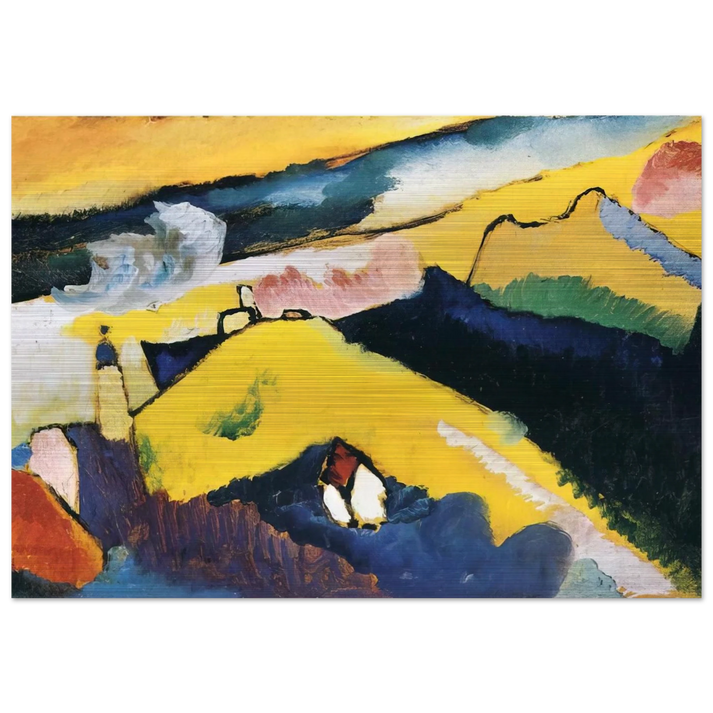
MOUNTAIN LANDSCAPE WITH CHURCH 1910 - Wassily Kandinsky Brushed Aluminum Print - 70x100 cm / 28x40 inches | Wassily Kandinsky Aluminum Print | Wassily Kandinsky Prints
MOUNTAIN LANDSCAPE WITH CHURCH 1910 - Wassily Kandinsky Brushed Aluminum Print - 70x100 cm / 28x40 inches | Wassily Kandinsky Aluminum Print | Wassily Kandinsky Prints
Couldn't load pickup availability
Mountain Landscape with Church 1910 - Wassily Kandinsky Brushed Aluminum Print
Experience the revolutionary vision of Wassily Kandinsky with this museum-quality reproduction of Mountain Landscape with Church (1910), a pivotal work from his transitional period into pure abstraction. This fine art print captures the dynamic interplay of color and form that defined Kandinsky's early explorations, blending expressionist landscape elements with the bold, non-representational shapes that would later hallmark his iconic abstract compositions.
Kandinsky, a founding figure of abstract art, believed color and line could evoke spiritual and emotional responses independent of subject matter. In this piece, the mountainous terrain and church steeple are rendered with vibrant, almost musical brushstrokes, foreshadowing his groundbreaking theories on the "inner necessity" of art. Our archival-grade reproduction ensures every nuanced hue and textured detail is preserved with exceptional fidelity.
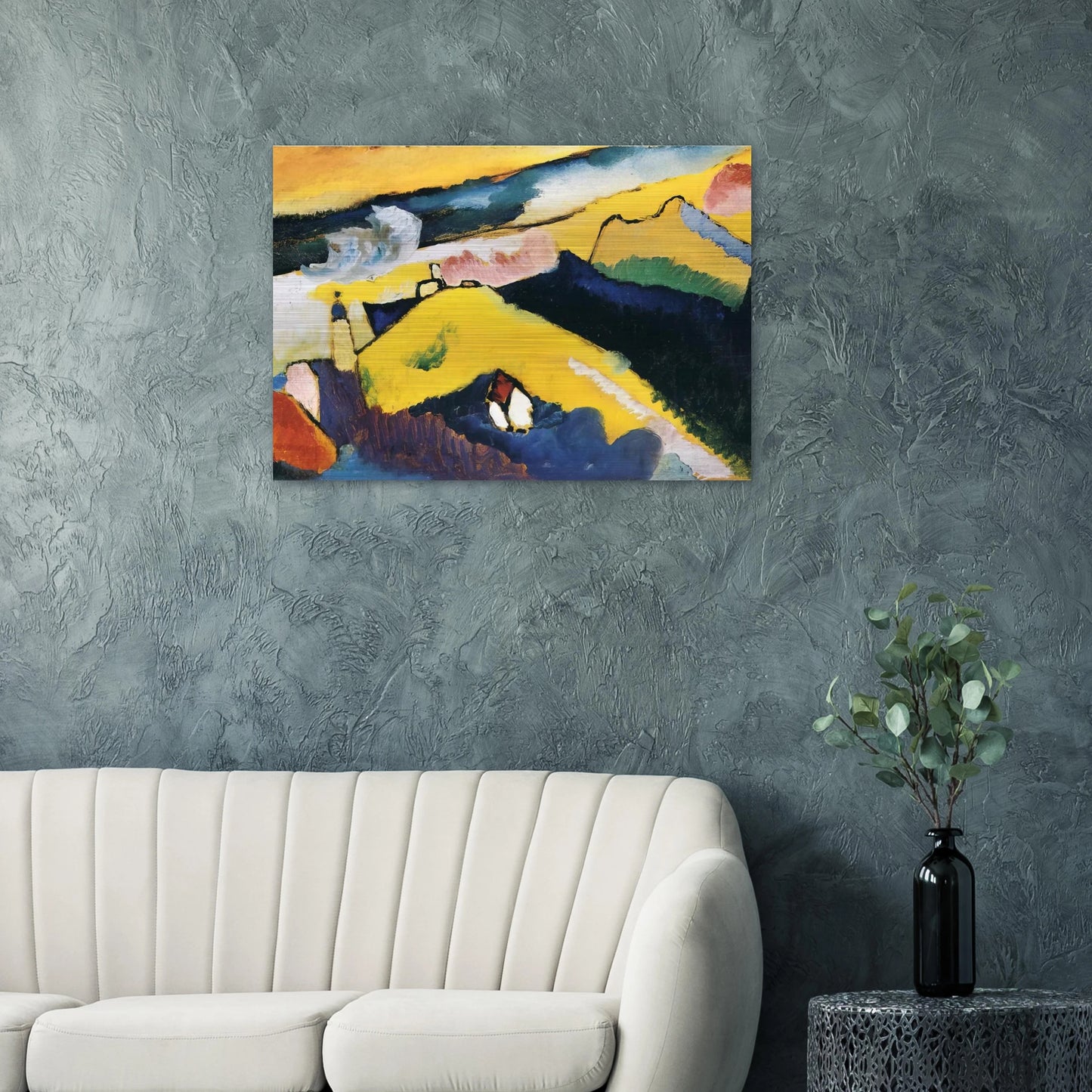
This premium brushed silver Aluminum DIBOND® print measures 70x100 cm / 28x40 inches, featuring a 3mm (0.12") rigid base for durability and a sleek, contemporary display. The direct print on AluDibond delivers vivid, matte-finish colors, while unprinted areas reveal a striking metallic silver effect through the horizontal grain—perfect for enhancing the artwork's dramatic contrasts. A glare-free surface ensures optimal viewing in any lighting, complemented by an included hanging kit for effortless installation.
Elevate your space with an archival masterpiece that endures, curated by RedKalion for discerning collectors seeking authentic, gallery-worthy reproductions.


Discover Unlimited Art Possibilities
At RedKalion, you can find virtually any artwork from any artist, available in a wide range of sizes to perfectly match your space.
If you didn’t find what you’re looking for, contact us at support@redkalion.com . We will source any artwork and produce it in any size and format you need, including art prints, posters, canvas, framed pieces, framed canvas, and more.
For dedicated art enthusiasts, we also offer handcrafted replicas of any artwork, carefully painted by highly skilled artists using traditional techniques.
For custom requests, contact us at support@redkalion.com .
What are the specifications of this Wassily Kandinsky aluminum print?
This fine art print is 70x100 cm (28x40 inches), made from brushed silver Aluminum DIBOND® with a 3mm thickness, direct-printed for vivid colors and a matte finish, featuring a metallic silver effect in unprinted areas.
How does the brushed aluminum enhance this Kandinsky artwork?
The horizontal grain and metallic finish add dynamic texture, ideal for highlighting the bold contrasts and expressionist details in this museum-quality reproduction of Mountain Landscape with Church.
Is a hanging kit included with this premium art print?
Yes, a hanging kit is included; specific components may vary by fulfillment country to ensure secure installation of your archival-grade aluminum print.
What makes this a museum-quality reproduction?
It uses archival-grade materials and precise printing techniques to capture every detail of Kandinsky's 1910 artwork, ensuring longevity and fidelity for your fine art collection.
How should I care for this aluminum print to ensure its longevity?
Dust gently with a soft, dry cloth; avoid harsh chemicals. The matte, glare-free finish and durable 3mm base are designed for long-term display as a premium art reproduction.
What is the historical significance of Mountain Landscape with Church (1910)?
This artwork marks Kandinsky's transition from expressionism to abstraction, blending landscape elements with non-representational forms that foreshadow his theories on spiritual art.
How does Kandinsky's use of color in this piece reflect his artistic philosophy?
Kandinsky employed vibrant, emotive colors to evoke inner feelings, viewing art as a visual symphony—a key concept in his move toward pure abstraction in this period.