

RedKalion
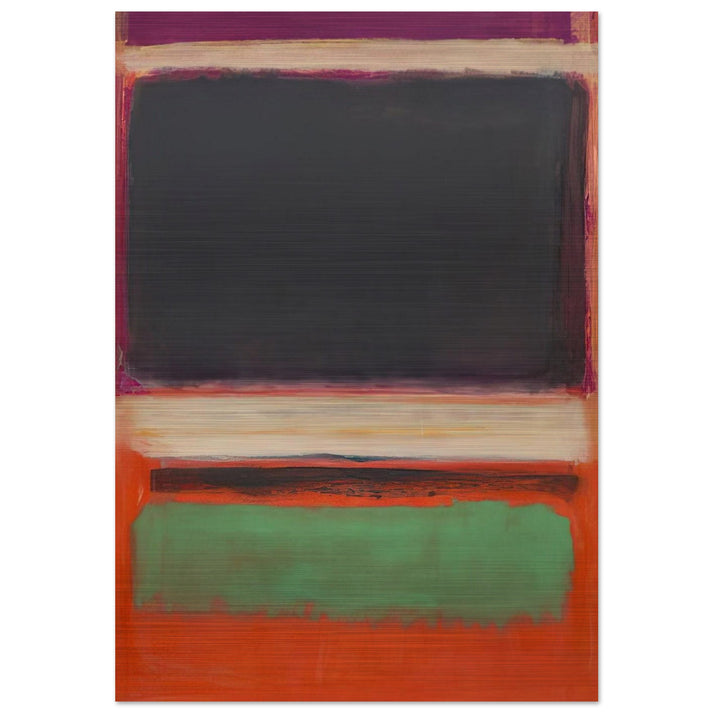
No.3No.13 Magenta, Black, Green on Orange - 1949 - Mark Rothko Brushed Aluminum Print - 70x100 cm / 28x40 inches | Mark Rothko Aluminum Print | Mark Rothko Prints
No.3No.13 Magenta, Black, Green on Orange - 1949 - Mark Rothko Brushed Aluminum Print - 70x100 cm / 28x40 inches | Mark Rothko Aluminum Print | Mark Rothko Prints
Couldn't load pickup availability
Mark Rothko's No.3No.13 Magenta, Black, Green on Orange - 1949: A Monumental Abstract Expressionist Masterpiece
Immerse yourself in the profound emotional resonance of Mark Rothko's No.3No.13 Magenta, Black, Green on Orange (1949), now available as an exclusive museum-quality reproduction from RedKalion. This iconic work from Rothko's classic period exemplifies his revolutionary approach to color field painting, where luminous rectangles of magenta, black, and green float ethereally against a vibrant orange ground, creating a contemplative space that transcends mere abstraction.
As a premier online gallery, RedKalion presents this fine art print on premium brushed silver Aluminum DIBOND®, meticulously crafted to honor Rothko's visionary technique. The 3mm (0.12") thick aluminum base ensures durability and rigidity, while the direct print technology delivers vivid, archival-grade colors with a sophisticated matte finish. Unprinted areas reveal a dynamic metallic silver effect, enhancing the artwork's modern aesthetic and making it a striking centerpiece for any interior.
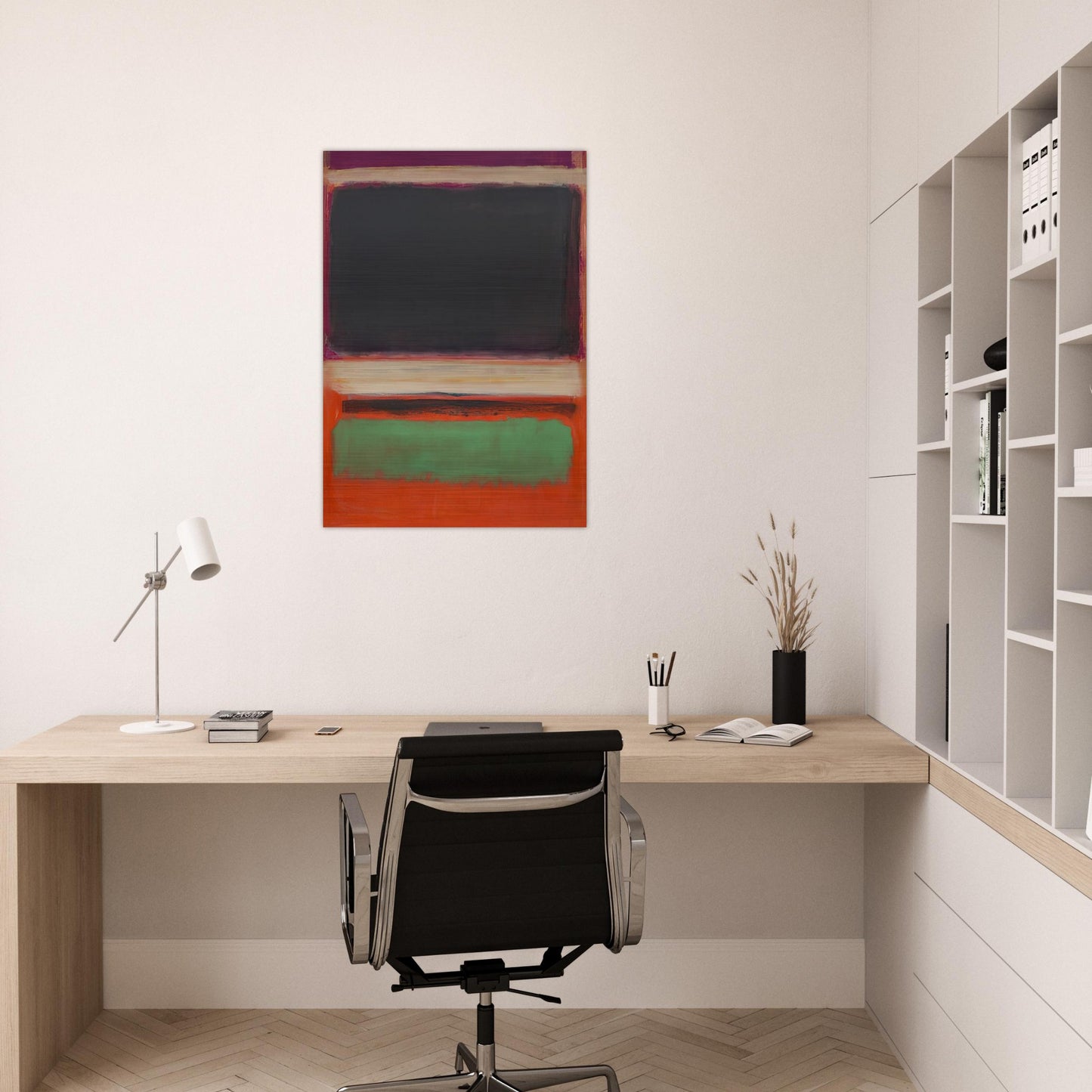
This Mark Rothko aluminum print measures 70x100 cm (28x40 inches), a scale that captures the immersive power of the original. The horizontal grain of the brushed aluminum adds subtle texture, reflecting light in a way that echoes Rothko's layered brushwork and emotional depth. Each piece includes a complete hanging kit, ready to elevate your home or office with a timeless statement of abstract expressionism.
Expert Insight: Rothko's No.3No.13 is a quintessential example of his "multiform" paintings from the late 1940s, where he abandoned figurative elements to explore color as a vehicle for spiritual and emotional experience. The juxtaposition of warm orange with cool magenta and green creates a visual tension that invites prolonged meditation, reflecting his belief that art should evoke a sublime, almost religious response.
At RedKalion, we specialize in archival-quality reproductions that bridge art history and contemporary design. This print is not merely a decoration but a curated piece of cultural heritage, offering an authentic connection to Rothko's legacy. Elevate your space with a masterpiece that endures, backed by our commitment to excellence and preservation.


Discover Unlimited Art Possibilities
At RedKalion, you can find virtually any artwork from any artist, available in a wide range of sizes to perfectly match your space.
If you didn’t find what you’re looking for, contact us at support@redkalion.com . We will source any artwork and produce it in any size and format you need, including art prints, posters, canvas, framed pieces, framed canvas, and more.
For dedicated art enthusiasts, we also offer handcrafted replicas of any artwork, carefully painted by highly skilled artists using traditional techniques.
For custom requests, contact us at support@redkalion.com .
What are the dimensions and materials of this Mark Rothko aluminum print?
This fine art print measures 70x100 cm (28x40 inches) and is crafted on 3mm thick brushed silver Aluminum DIBOND® with a direct print for vivid colors and a matte finish, ideal for museum-quality reproductions.
How does the brushed aluminum finish enhance the artwork?
The brushed silver Aluminum DIBOND® features a horizontal grain and metallic finish, creating a dynamic look where unprinted white areas reveal a striking silver effect, perfect for abstract expressionist prints.
Is a hanging kit included with this Rothko print?
Yes, a complete hanging kit is included with every order, though specific components may vary by fulfillment country to ensure secure installation.
What makes this reproduction archival-quality?
This print uses direct printing on Aluminum DIBOND® with archival-grade inks, ensuring fade-resistant colors and long-term durability for a premium art reproduction.
How does the matte finish benefit this artwork?
The glare-free matte finish minimizes reflections, allowing the vibrant colors of Rothko's No.3No.13 to stand out clearly, enhancing viewing in various lighting conditions.
What is the historical significance of No.3No.13 Magenta, Black, Green on Orange?
Created in 1949, this painting marks Rothko's transition to his signature color field style, using layered rectangles to evoke emotional depth and spiritual contemplation in abstract expressionism.
How did Rothko achieve the color effects in this piece?
Rothko applied thin, translucent layers of paint in a technique called "staining," allowing colors to interact and glow, which is replicated in our high-quality aluminum print for authenticity.