RedKalion
Odilon Redon - THREE VASES OF FLOWERS 75x100 cm / 30x40inches Fine Art Poster
Odilon Redon - THREE VASES OF FLOWERS 75x100 cm / 30x40inches Fine Art Poster
Couldn't load pickup availability
Odilon Redon - THREE VASES OF FLOWERS: A Symbolist Masterpiece
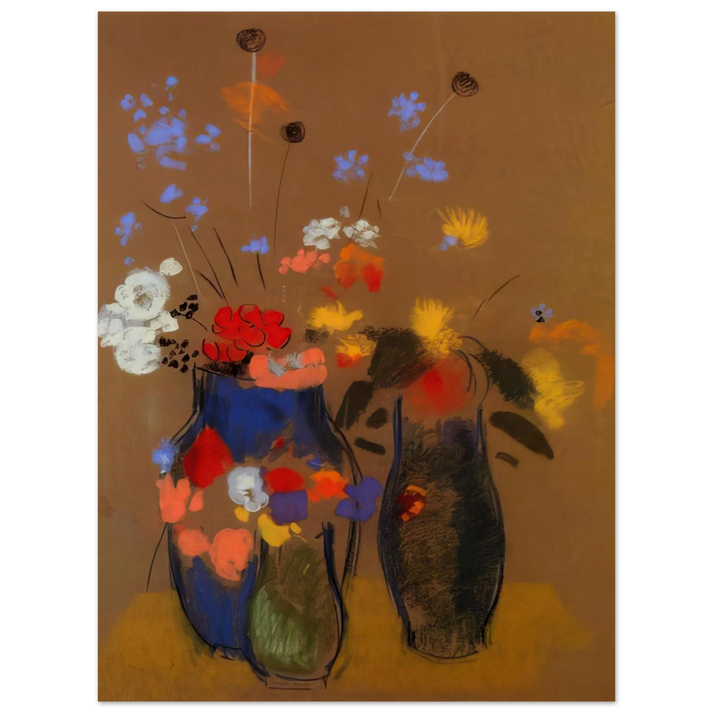
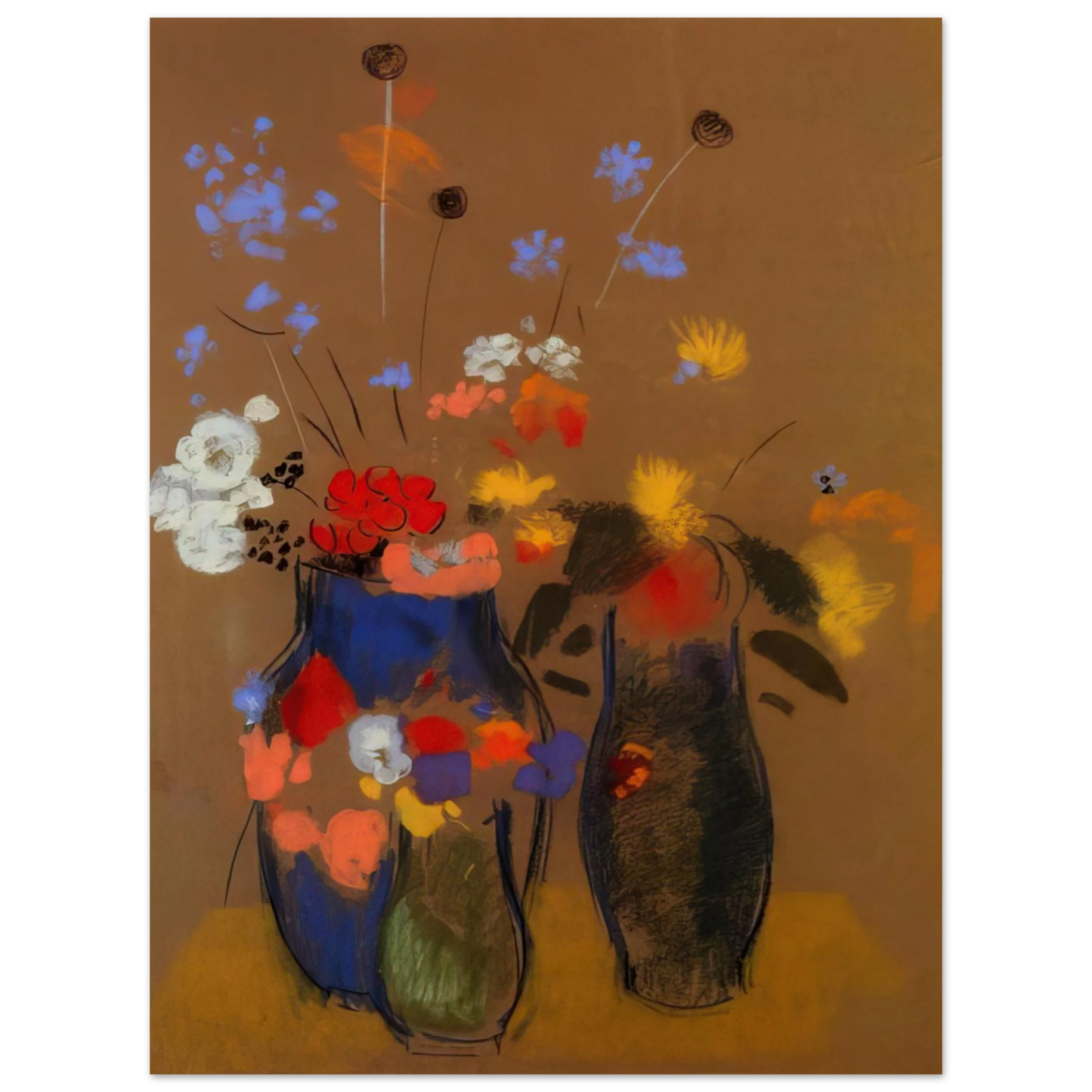
Immerse yourself in the ethereal beauty of Odilon Redon's "Three Vases of Flowers", a captivating fine art print that embodies the dreamlike essence of the Symbolist movement. This museum-quality reproduction, measuring 75x100 cm (30x40 inches), invites you to explore Redon's unique vision, where flowers transcend mere decoration to become portals into a world of mystery and imagination.
Redon, a pioneer of Symbolism in late 19th-century France, masterfully blends soft pastels and delicate forms to create a composition that feels both serene and enigmatic. Unlike his earlier, darker charcoal works, this piece showcases his later shift towards color, revealing a fascination with botanical subjects as symbols of spiritual awakening. The three vases, each brimming with blooms, are rendered with a poetic ambiguity that encourages personal interpretation—whether as a meditation on life's fleeting beauty or an ode to nature's hidden depths.
At RedKalion, we honor this artistic legacy with our Master's Edition archival paper, ensuring every detail of Redon's subtle gradations and textures is preserved. Our matte, uncoated finish in a natural white hue enhances the artwork's luxurious feel, while the acid-free composition (pH above 7) guarantees it remains vibrant for generations. Crafted from FSC-certified paper at 250 gsm (110 lb) and 0.29 mm (11.4 mils) thickness, this fine art poster is a sustainable, enduring addition to any space.
Elevate your home or office with an archival masterpiece that bridges art history and modern craftsmanship. Printed and shipped on demand with no minimum orders, RedKalion delivers a premium experience for discerning collectors.
Discover Unlimited Art Possibilities
At RedKalion, you can find virtually any artwork from any artist, available in a wide range of sizes to perfectly match your space.
If you didn’t find what you’re looking for, contact us at support@redkalion.com . We will source any artwork and produce it in any size and format you need, including art prints, posters, canvas, framed pieces, framed canvas, and more.
For dedicated art enthusiasts, we also offer handcrafted replicas of any artwork, carefully painted by highly skilled artists using traditional techniques.
For custom requests, contact us at support@redkalion.com .
What are the dimensions of this Odilon Redon fine art print?
This museum-quality reproduction measures 75x100 cm, equivalent to 30x40 inches, making it an ideal size for prominent display in living rooms, studies, or galleries.
What type of paper is used for this archival print?
It's printed on Master's Edition archival paper, a matte, uncoated, natural white sheet that ensures longevity and a luxurious texture for your fine art poster.
How is this print protected from yellowing over time?
Our acid-free paper has a pH above 7, preventing yellowing and ensuring your Odilon Redon artwork remains vibrant as a durable museum-quality reproduction.
What is the weight and thickness of the paper?
The paper is 250 gsm (110 lb) with a thickness of 0.29 mm (11.4 mils), offering a substantial feel suitable for framing and preserving this Symbolist masterpiece.
Is this print sustainably produced?
Yes, it uses FSC-certified paper, aligning with eco-friendly practices for a sustainable fine art poster that honors both art and nature.
What is the historical significance of "Three Vases of Flowers" by Odilon Redon?
This work reflects Redon's later Symbolist period, where he used flowers as mystical symbols to explore themes of beauty and transcendence, contrasting with his earlier dark charcoal pieces.
How does Redon's technique in this piece differ from his other works?
In "Three Vases of Flowers," Redon employs soft pastels and delicate forms, showcasing his shift towards color and light, unlike the monochromatic intensity of his earlier noirs.