RedKalion
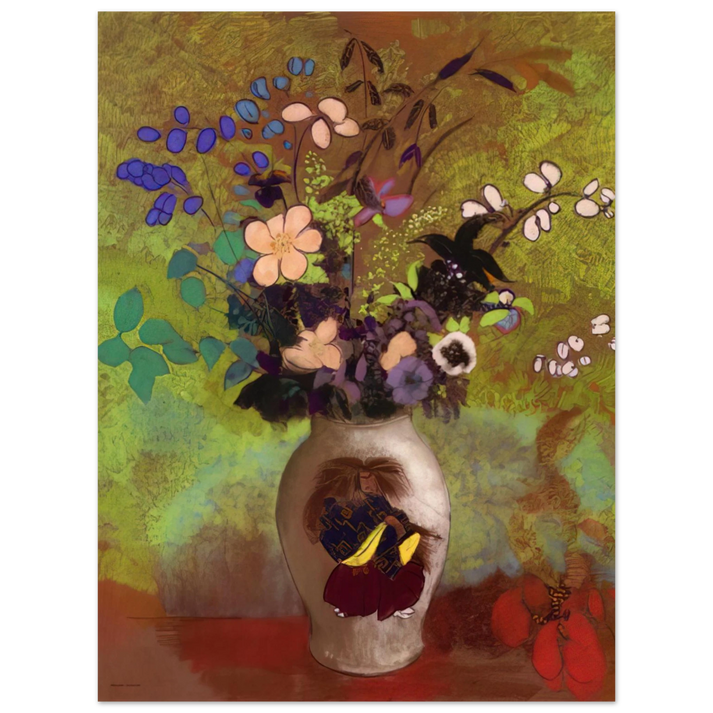
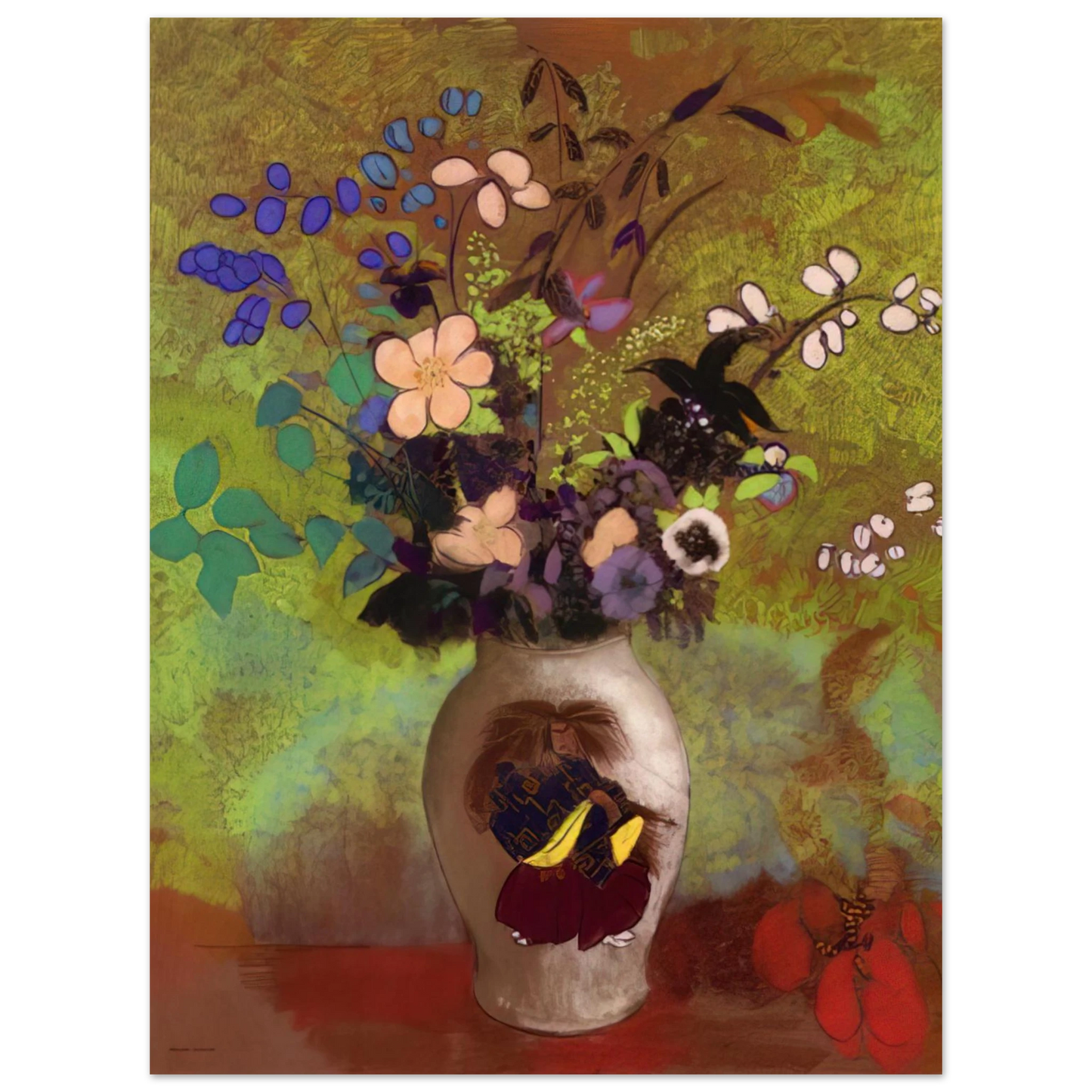
Odilon Redon - VASE WITH JAPANESE WARRIOR 1905 75x100 cm / 30x40inches Fine Art Poster
Odilon Redon - VASE WITH JAPANESE WARRIOR 1905 75x100 cm / 30x40inches Fine Art Poster
Couldn't load pickup availability
Odilon Redon - Vase with Japanese Warrior (1905)
Immerse yourself in the dreamlike world of Symbolist master Odilon Redon with this exquisite 1905 composition, Vase with Japanese Warrior. This museum-quality fine art print captures the ethereal beauty and mystical depth of Redon's late period, where he transitioned from his famed "noirs" (charcoal drawings) to a radiant palette of pastels and oils. The artwork depicts a serene vase adorned with floral motifs, juxtaposed with the enigmatic figure of a Japanese warrior—a testament to Redon's fascination with Eastern art and his ability to blend reality with imagination. Measuring 75x100 cm (30x40 inches), this piece evokes a sense of tranquil mystery, making it an ideal centerpiece for living rooms, studies, or galleries seeking to elevate with timeless elegance.
RedKalion presents this archival reproduction on our premium Master's Edition archival paper, ensuring every subtle hue and delicate brushstroke is preserved with unparalleled fidelity. The matte, uncoated finish in a natural white tone enhances the artwork's luxurious texture, while the acid-free composition (pH above 7) guarantees resistance to yellowing for generations. Crafted from FSC-certified, 250 gsm (110 lb) paper with a thickness of 0.29 mm (11.4 mils), this print combines sustainability with durability, offering a heirloom-quality addition to any collection. Printed and shipped on demand with no minimum orders, RedKalion delivers a seamless experience for acquiring world-class art.
As a leader in fine art reproductions, RedKalion curates each piece with meticulous attention to historical accuracy and material excellence. Vase with Japanese Warrior is not merely a decoration but a portal into Redon's visionary realm, where symbolism and beauty converge. Elevate your space with an archival masterpiece that endures, backed by our commitment to art historical expertise and premium craftsmanship.
Discover Unlimited Art Possibilities
At RedKalion, you can find virtually any artwork from any artist, available in a wide range of sizes to perfectly match your space.
If you didn’t find what you’re looking for, contact us at support@redkalion.com . We will source any artwork and produce it in any size and format you need, including art prints, posters, canvas, framed pieces, framed canvas, and more.
For dedicated art enthusiasts, we also offer handcrafted replicas of any artwork, carefully painted by highly skilled artists using traditional techniques.
For custom requests, contact us at support@redkalion.com .
What are the dimensions and details of this Odilon Redon fine art print?
This museum-quality reproduction measures 75x100 cm (30x40 inches), depicting Odilon Redon's 1905 Symbolist work, Vase with Japanese Warrior, with vibrant colors and intricate details on archival paper.
What type of paper is used for this archival art print?
It's printed on Master's Edition archival paper, featuring a matte, uncoated finish in natural white, with acid-free properties (pH above 7) to prevent yellowing and ensure longevity for your fine art collection.
How is this print shipped and are there minimum order requirements?
We offer no minimum orders and print on demand, with careful packaging and global shipping to deliver your museum-quality reproduction safely and efficiently.
What makes this print archival and durable for long-term display?
The FSC-certified, 250 gsm (110 lb) paper with 0.29 mm thickness ensures durability, while acid-free materials resist fading, making it a sustainable and heirloom-quality fine art poster.
Can you tell me more about the historical significance of Vase with Japanese Warrior?
Created in 1905, this work reflects Odilon Redon's Symbolist era, blending Eastern influences with mystical themes, showcasing his shift to color and exploration of dreamlike imagery in art history.
What inspired Odilon Redon to include a Japanese warrior in this artwork?
Redon was influenced by Japonisme, a trend in late 19th-century European art, incorporating Japanese motifs to add exotic and symbolic depth to his serene vase composition.