
RedKalion
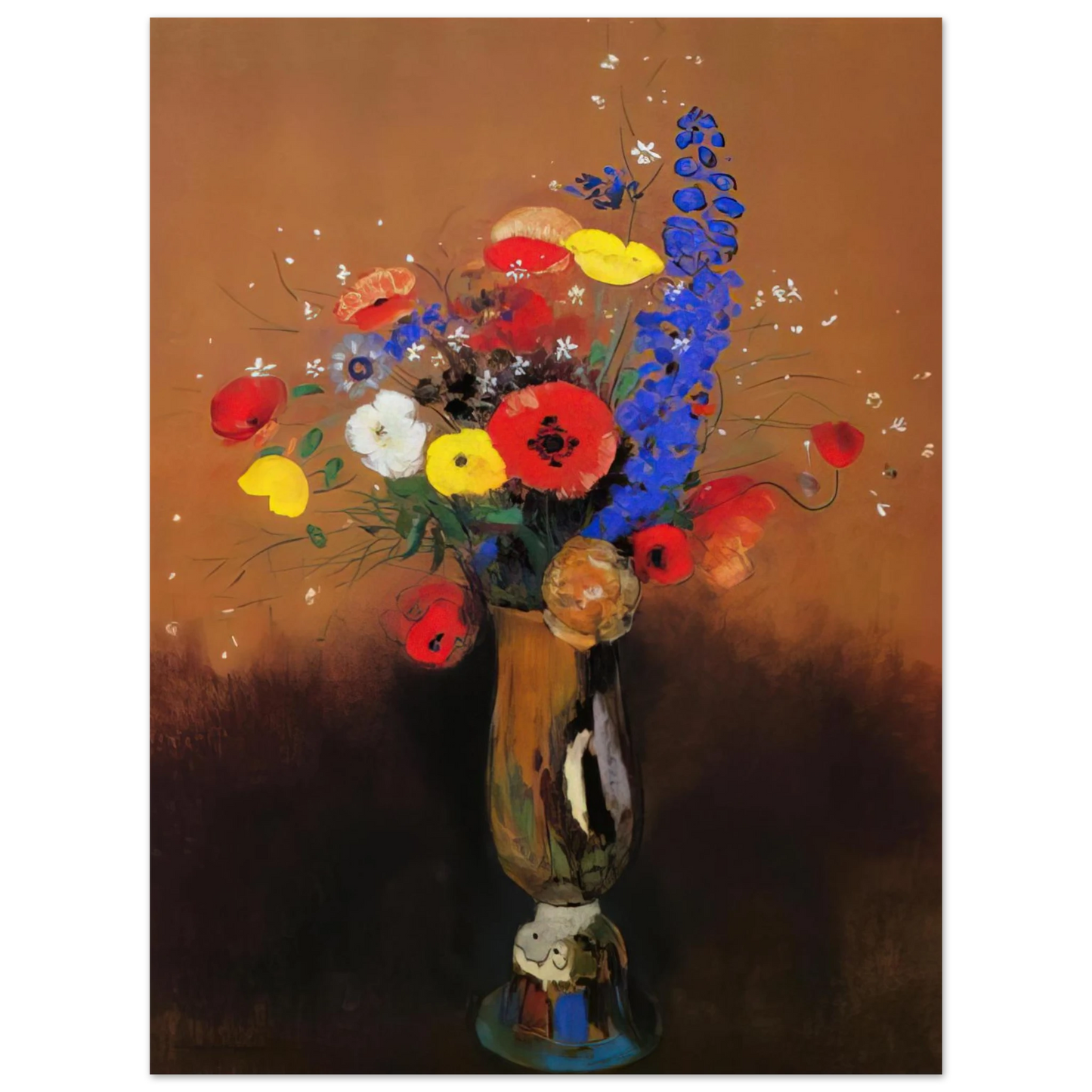
Odilon Redon - WILD FLOWERS IN A LONG NECKED VASE 75x100 cm / 30x40inches Fine Art Poster
Odilon Redon - WILD FLOWERS IN A LONG NECKED VASE 75x100 cm / 30x40inches Fine Art Poster
Couldn't load pickup availability
Odilon Redon's "Wild Flowers in a Long Necked Vase": A Symbolist Masterpiece
Immerse yourself in the ethereal beauty of Odilon Redon's "Wild Flowers in a Long Necked Vase", a captivating fine art print that embodies the dreamlike essence of Symbolism. This museum-quality reproduction captures Redon's unique fusion of botanical precision and poetic mystery, where delicate blooms emerge from shadowy depths to evoke a sense of quiet introspection and natural wonder. Redon, a pioneer of the Symbolist movement, masterfully used charcoal and pastel to create works that transcend mere representation, inviting viewers into a realm of imagination and emotion.
Art Historical Insight: Redon's Noirs and Floral Symbolism
This piece exemplifies Redon's later transition from his famous "Noirs" (black charcoal drawings) to luminous color works, where flowers became central motifs symbolizing spiritual awakening and the fragility of life. His technique involved layering pastels to achieve a velvety texture, a detail meticulously preserved in this archival print. The elongated vase, a recurring element in his still lifes, adds a touch of surreal elegance, reflecting his interest in Japanese art and the subconscious.
Premium Print Specifications for Lasting Elegance
RedKalion presents this artwork as a Master's Edition fine art poster, crafted to museum standards for discerning collectors. Printed on-demand on FSC-certified, archival paper with a natural white (off-white) matte finish, it offers a luxurious, uncoated texture that enhances Redon's subtle tonal variations. The paper is acid-free (pH above 7) to prevent yellowing, with a substantial weight of 250 gsm (110 lb) and thickness of 0.29 mm (11.4 mils), ensuring durability and a premium feel. Elevate your space with an archival masterpiece that endures, available in a 75x100 cm (30x40 inches) format perfect for modern interiors.
Discover Unlimited Art Possibilities
At RedKalion, you can find virtually any artwork from any artist, available in a wide range of sizes to perfectly match your space.
If you didn’t find what you’re looking for, contact us at support@redkalion.com . We will source any artwork and produce it in any size and format you need, including art prints, posters, canvas, framed pieces, framed canvas, and more.
For dedicated art enthusiasts, we also offer handcrafted replicas of any artwork, carefully painted by highly skilled artists using traditional techniques.
For custom requests, contact us at support@redkalion.com .
What are the dimensions of this Odilon Redon fine art print?
This museum-quality reproduction measures 75x100 cm (30x40 inches), ideal for creating a focal point in living rooms, studies, or galleries with its balanced scale.
What type of paper is used for this archival print?
It's printed on Master's Edition archival paper, an FSC-certified, acid-free (pH above 7) material with a matte, uncoated finish and natural white color for a luxurious texture that mimics original artworks.
How is this fine art poster shipped and fulfilled?
RedKalion prints and ships on demand with no minimum orders, ensuring each piece is freshly produced and carefully packaged to arrive in pristine condition, ready for framing.
Will this print last without yellowing over time?
Yes, the acid-free (pH above 7) archival paper prevents yellowing, and its 250 gsm (110 lb) weight with 0.29 mm thickness ensures long-term durability for a lasting investment in art.
What is the significance of the long necked vase in Redon's artwork?
The elongated vase reflects Redon's Symbolist style, drawing from Japanese art influences to create a surreal, elegant form that enhances the mystical quality of the wild flowers, symbolizing spiritual depth.
How does Redon's technique influence the print's appearance?
Redon's layering of pastels for a velvety texture is captured in this reproduction, with the matte finish preserving subtle tonal variations to evoke the dreamlike mood of his original Symbolist piece.