

RedKalion
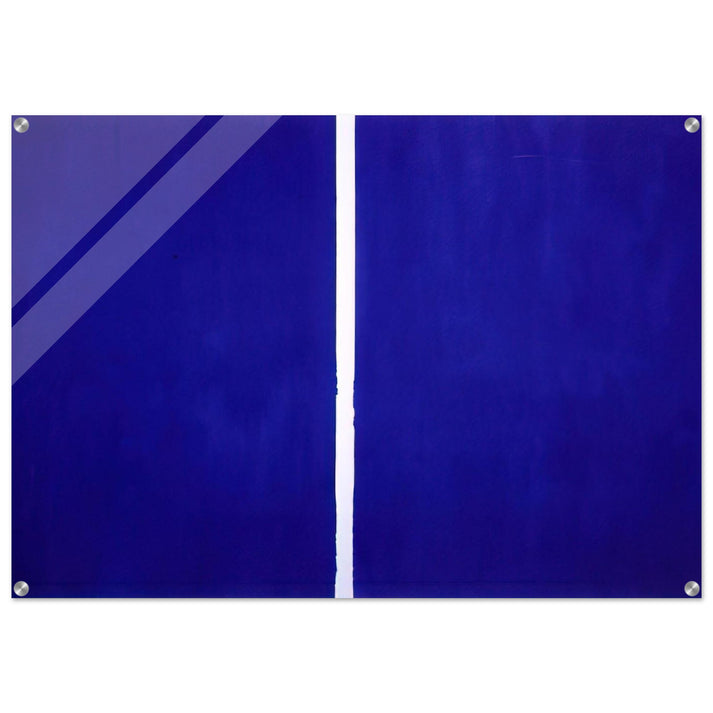
Onement VI - Barnett Newman Acrylic Print - 70x100 cm / 28x40″ inches
Onement VI - Barnett Newman Acrylic Print - 70x100 cm / 28x40″ inches
Couldn't load pickup availability
Onement VI by Barnett Newman: A Monumental Abstract Expressionist Masterpiece
Experience the profound simplicity and spiritual depth of Barnett Newman's Onement VI with this museum-quality acrylic print. As a pivotal work from his iconic "Onement" series (1948-1952), this piece exemplifies Newman's revolutionary approach to abstract expressionism, where a single vertical "zip"—a band of color—bisects a monochromatic field, creating a powerful sense of unity and transcendence. Newman described these works as evoking a "sublime" experience, inviting viewers into a meditative state through bold, reduced forms.
This premium reproduction captures every nuance of Newman's original acrylic painting, rendered on 4mm (0.15") acrylic for exceptional vibrancy and durability. The sleek, straight-cut corners and modern presentation—with transparent backgrounds defaulting to white—ensure it commands attention in any contemporary space. Measuring 70x100 cm / 28x40" inches, it's an ideal scale for making a statement in living rooms, offices, or galleries.
RedKalion specializes in archival-grade reproductions that honor artistic integrity. Our prints are crafted using high-resolution imaging and premium materials, resulting in a piece that resists fading and maintains its brilliance for decades. Elevate your environment with an artwork that bridges mid-century innovation and timeless elegance, backed by our commitment to excellence.
Key Features:
- Artwork: Barnett Newman's Onement VI, a landmark in abstract expressionism.
- Material: 4mm (0.15") acrylic for vibrant colors and a durable, glossy finish.
- Design: Straight-cut corners; transparent backgrounds set to white for optimal display.
- Size: 70x100 cm / 28x40" inches—perfect for impactful wall art.
- Included: Hanging kit with hardware, screws, and pre-drilled holes (14mm from edge, 8mm diameter, 15mm screw head) for easy installation.


Discover Unlimited Art Possibilities
At RedKalion, you can find virtually any artwork from any artist, available in a wide range of sizes to perfectly match your space.
If you didn’t find what you’re looking for, contact us at support@redkalion.com . We will source any artwork and produce it in any size and format you need, including art prints, posters, canvas, framed pieces, framed canvas, and more.
For dedicated art enthusiasts, we also offer handcrafted replicas of any artwork, carefully painted by highly skilled artists using traditional techniques.
For custom requests, contact us at support@redkalion.com .
What is the historical significance of Onement VI by Barnett Newman?
Onement VI is a key work from Newman's "Onement" series (1948-1952), marking a breakthrough in abstract expressionism with its "zip" motif, symbolizing unity and the sublime in fine art prints.
How does the acrylic material enhance this museum-quality reproduction?
The 4mm acrylic provides a sleek, vibrant finish with deep color saturation and durability, ideal for a premium wall art display that resists fading.
What are the dimensions and design details of this print?
It measures 70x100 cm / 28x40" inches with straight-cut corners and white-set transparent backgrounds for a modern acrylic art presentation.
Is the hanging kit included, and how is it installed?
Yes, it includes hardware and screws with pre-drilled holes (14mm from edge, 8mm diameter) for easy mounting of your abstract expressionist print.
How durable and archival is this acrylic print?
Crafted with archival-grade materials, it offers long-lasting color fidelity and protection against UV damage, ensuring a lasting Barnett Newman reproduction.
What inspired Barnett Newman's "zip" motif in Onement VI?
Newman's "zip"—a vertical band—was inspired by his interest in spirituality and creating a sense of oneness, central to his abstract art philosophy.
How does Onement VI compare to other works in the "Onement" series?
Onement VI features a bold, contrasting "zip" on a monochrome field, typical of the series, but each variation explores unique color and spatial dynamics in museum prints.