RedKalion
ORACLE 1965 - Robert Rauschenberg 70x100 cm / 28x40 inches Framed Art Print – Black Wooden Frame
ORACLE 1965 - Robert Rauschenberg 70x100 cm / 28x40 inches Framed Art Print – Black Wooden Frame
Couldn't load pickup availability
ORACLE 1965 by Robert Rauschenberg: A Seminal Silkscreen Masterpiece
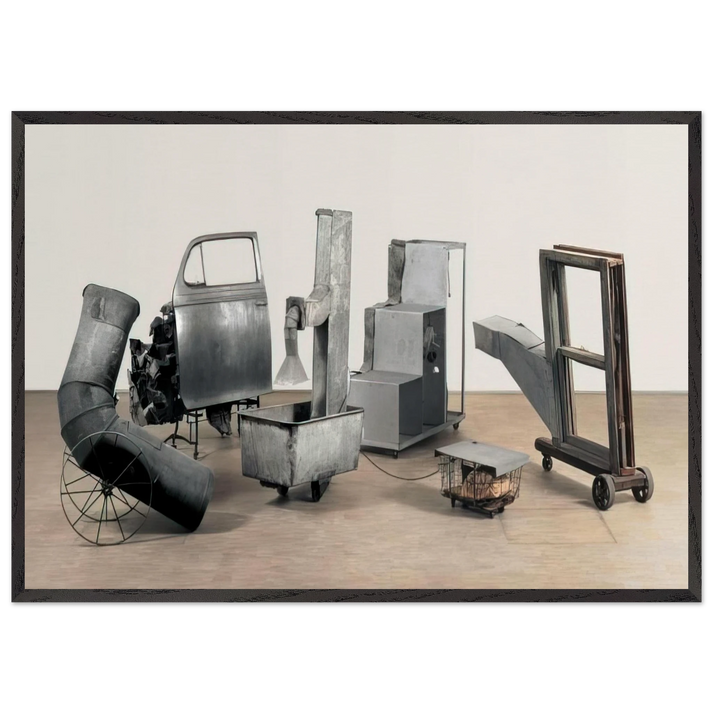
Immerse yourself in the groundbreaking vision of American artist Robert Rauschenberg with this museum-quality framed art print of ORACLE 1965. This iconic silkscreen work, measuring 70x100 cm (28x40 inches), captures Rauschenberg's revolutionary 'Combine' aesthetic, blending painting, photography, and found objects to challenge the boundaries of mid-20th century art. Part of his celebrated 1960s series, ORACLE exemplifies his innovative use of transfer techniques and urban imagery, creating a dynamic, layered composition that evokes the fragmented energy of modern life.
RedKalion presents this archival reproduction as a definitive statement piece for discerning collectors. Expertly printed on 250 gsm (110 lb) matte, uncoated archival museum-quality paper with natural white tones, our fine art print ensures every detail—from the textured brushstrokes to the photographic transfers—is rendered with precision. The artwork is elegantly framed in a 20mm (0.79") thick black wooden frame crafted from responsibly sourced oak and ash wood, offering a substantial, gallery-worthy presence that enhances any interior. Protected by shatterproof plexiglass and including a hanging kit for immediate display, this ready-to-hang piece arrives as a complete, curated artwork.
Elevate your space with an archival masterpiece that endures, backed by RedKalion's commitment to sustainable practices using FSC-certified materials. This framed art print not only honors Rauschenberg's legacy but transforms your environment with a touch of art historical significance.

Discover Unlimited Art Possibilities
At RedKalion, you can find virtually any artwork from any artist, available in a wide range of sizes to perfectly match your space.
If you didn’t find what you’re looking for, contact us at support@redkalion.com . We will source any artwork and produce it in any size and format you need, including art prints, posters, canvas, framed pieces, framed canvas, and more.
For dedicated art enthusiasts, we also offer handcrafted replicas of any artwork, carefully painted by highly skilled artists using traditional techniques.
For custom requests, contact us at support@redkalion.com .
What are the dimensions of the ORACLE 1965 framed art print?
The framed art print measures 70x100 cm (28x40 inches), with a 20mm (0.79") thick black wooden frame, providing a substantial, gallery-ready presence for your wall.
What type of paper is used for this museum-quality reproduction?
We use 250 gsm (110 lb) matte, uncoated, natural white archival museum-quality paper, ensuring fine art durability and vibrant detail in this Robert Rauschenberg print.
Is the frame ready-to-hang and what materials are used?
Yes, it includes a hanging kit and is ready-to-hang. The frame is made from responsibly sourced oak and ash wood, with shatterproof plexiglass for protection.
How does the archival quality ensure longevity for this fine art print?
Our FSC-certified sustainable paper and matte finishing resist fading and damage, making this archival reproduction a lasting investment for your collection.
What shipping and handling can I expect for this framed artwork?
We ship securely packaged to prevent damage, with tracking provided. Delivery times vary by location for this ready-to-hang framed art print.
What artistic techniques did Robert Rauschenberg use in ORACLE 1965?
Rauschenberg employed silkscreen and transfer methods, blending painting with photographic imagery to create his iconic 'Combine' style in this 1960s masterpiece.
Why is ORACLE 1965 significant in art history?
It represents Rauschenberg's innovation in pop art and abstraction, challenging traditional boundaries and capturing the fragmented energy of 1960s America.