
RedKalion
Palmar Region Anatomy Art Print | Detailed Hand Study | RedKalion
Palmar Region Anatomy Art Print | Detailed Hand Study | RedKalion
Couldn't load pickup availability
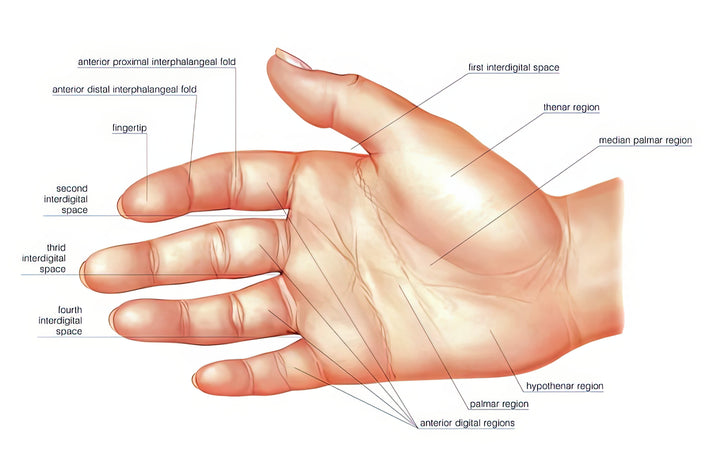
The palmar region, a critical anatomical area of the hand, encompasses the complex structures of the palm, including muscles, tendons, nerves, and vascular networks. This region is essential for grip, fine motor skills, and sensory perception, making it a focal point in medical and artistic studies. RedKalion's premium art print offers a detailed, museum-quality visualization, ideal for educational settings, medical offices, or art collections seeking anatomical precision.
Anatomical Significance of the Palmar Region
Historically, the study of the palmar region dates to Renaissance anatomists like Leonardo da Vinci, who meticulously documented hand anatomy to enhance artistic realism and scientific understanding. This area features key elements such as the thenar and hypothenar eminences, palmar aponeurosis, and digital nerves, which are vital for hand function. Our print captures these details with clarity, emphasizing the interplay of form and function in human anatomy.
Artistic and Educational Value
This artwork blends scientific accuracy with aesthetic appeal, using precise line work and shading to highlight the palmar region's layered structures. It serves as an educational tool for students and professionals, while also appealing to art enthusiasts interested in the beauty of anatomical illustration. RedKalion ensures each print maintains the integrity of the original design, supporting both learning and decorative purposes.
Print Specifications & Materials
- Available Sizes: 75×100 cm / 30×40″, 40×50 cm / 16×20″, 21×29.7 cm / 8×12″
- Paper Finishing: Matte, uncoated, natural white (off-white)
- Acid-Free: pH above 7 to prevent yellowing over time
- Paper Weight: 250 gsm (110 lb) | Thickness: 0.29 mm (11.4 mils)
- Sustainable Paper: FSC-certified
Explore the intricate details of the palmar region with this fine art print from RedKalion, trusted for high-quality anatomical reproductions that combine historical insight with modern printing standards.


Discover Unlimited Art Possibilities
At RedKalion, you can find virtually any artwork from any artist, available in a wide range of sizes to perfectly match your space.
If you didn’t find what you’re looking for, contact us at support@redkalion.com . We will source any artwork and produce it in any size and format you need, including art prints, posters, canvas, framed pieces, framed canvas, and more.
For dedicated art enthusiasts, we also offer handcrafted replicas of any artwork, carefully painted by highly skilled artists using traditional techniques.
For custom requests, contact us at support@redkalion.com .
What anatomical structures are shown in this palmar region art print?
This print details muscles, tendons, nerves, and vascular networks of the palm, including the thenar and hypothenar eminences, for educational and artistic purposes.
What paper is used for RedKalion's fine art prints?
We use FSC-certified, acid-free paper with a matte finish, 250 gsm weight, and natural white color to ensure archival longevity and premium quality.
How is the palmar region art print shipped?
Prints are shipped flat in protective packaging to prevent damage, with tracking available for secure delivery to your location.
How long will this anatomical print last without fading?
With acid-free paper and archival inks, this print resists yellowing and fading for decades under proper display conditions.
What sizes are available for this hand anatomy print?
Available in 75×100 cm, 40×50 cm, and 21×29.7 cm sizes to fit various display needs, from large educational posters to smaller art pieces.
Who historically studied the palmar region in anatomy?
Renaissance figures like Leonardo da Vinci pioneered detailed studies of the palmar region to enhance both artistic realism and medical knowledge.
Why is the palmar region important for hand function?
It enables grip, fine motor skills, and sensory perception through its complex network of muscles, tendons, and nerves, crucial for daily activities.