
RedKalion
PANTHEON 1973 - Philip Guston 70x100 cm / 28x40 inches Framed Art Print – Black Wooden Frame
PANTHEON 1973 - Philip Guston 70x100 cm / 28x40 inches Framed Art Print – Black Wooden Frame
Couldn't load pickup availability
PANTHEON 1973 by Philip Guston: A Monumental Abstract Expressionist Print
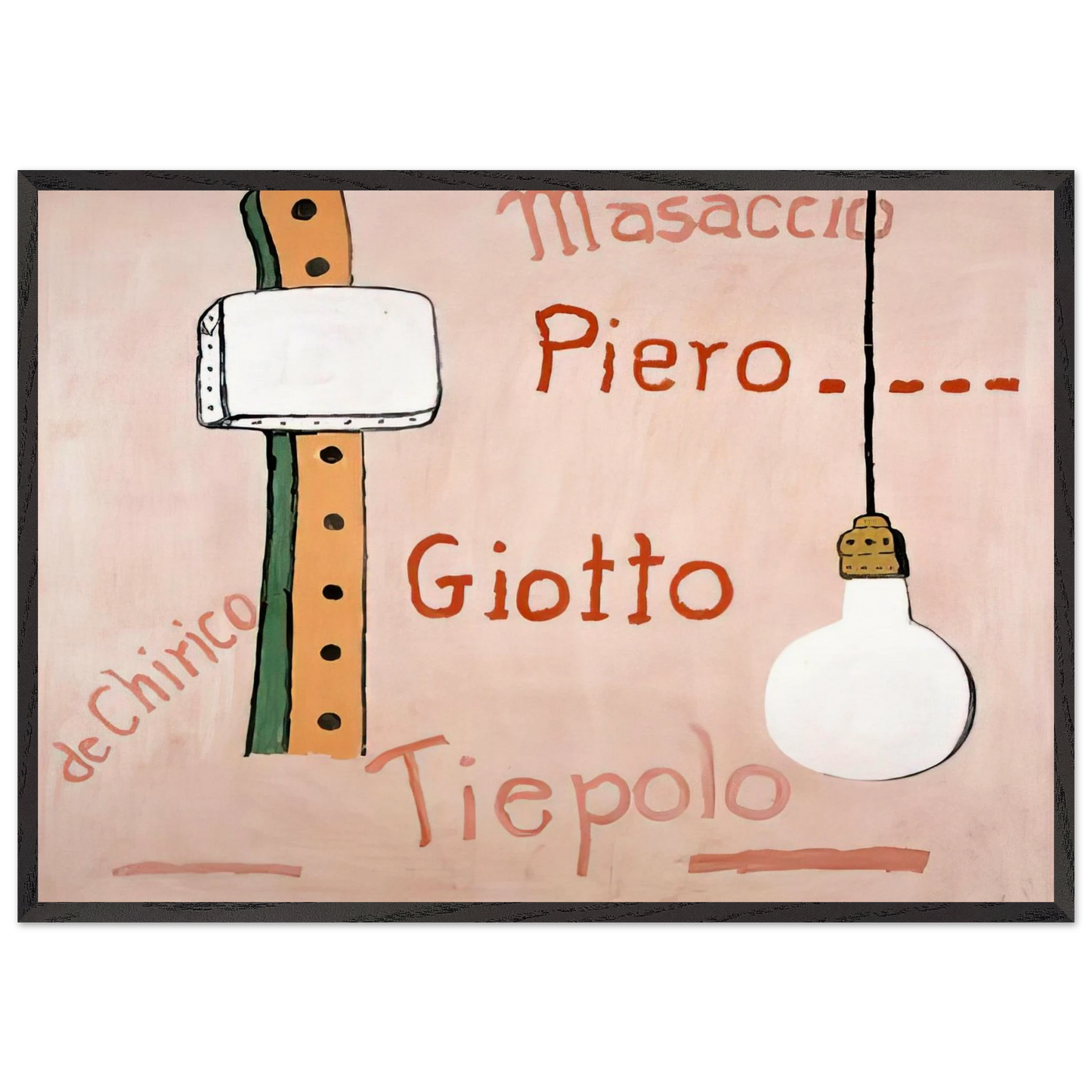
Elevate your space with this museum-quality framed art print of Philip Guston's "PANTHEON 1973", a pivotal work from his late abstract expressionist period. This archival reproduction captures the raw, gestural energy and complex layering that defines Guston's masterful technique, offering a piece of art history ready to inspire any room.
Guston, a key figure in the New York School, created "PANTHEON 1973" during a phase where he explored monumental forms and mythic themes through bold brushwork and a restrained palette. The title evokes ancient grandeur, yet the painting's abstract composition invites personal interpretation, blending historical reverence with modernist innovation. This print allows you to own a slice of this artistic legacy, reproduced with precision to honor the original's depth and texture.
Our fine art print is crafted on premium, 250 gsm (110 lb) matte, uncoated paper with a natural white finish, ensuring vibrant color fidelity and archival longevity. It's framed in a sleek black wooden frame made from responsibly sourced oak and ash, measuring 70x100 cm / 28x40 inches with a substantial 20mm (0.79") thickness for a bold, gallery-worthy presence. The frame includes a hanging kit for immediate display, and shatterproof plexiglass protects the artwork while maintaining clarity.
At RedKalion, we specialize in museum-quality reproductions that bridge art history and contemporary living. This piece is not just a decoration but an investment in cultural heritage, printed on FSC-certified sustainable paper to align with eco-conscious values. Discover the power of abstract expressionism with a print that endures—order today to transform your environment with timeless elegance.
Discover Unlimited Art Possibilities
At RedKalion, you can find virtually any artwork from any artist, available in a wide range of sizes to perfectly match your space.
If you didn’t find what you’re looking for, contact us at support@redkalion.com . We will source any artwork and produce it in any size and format you need, including art prints, posters, canvas, framed pieces, framed canvas, and more.
For dedicated art enthusiasts, we also offer handcrafted replicas of any artwork, carefully painted by highly skilled artists using traditional techniques.
For custom requests, contact us at support@redkalion.com .
What are the dimensions of this Philip Guston framed art print?
This fine art print measures 70x100 cm (28x40 inches) in a black wooden frame, with a 20mm (0.79") thick and wide profile for a bold, gallery-ready look.
What type of paper is used for this museum-quality reproduction?
We use 250 gsm (110 lb) matte, uncoated, natural white archival paper, ideal for fine art prints and ensuring vibrant color and long-term durability.
Is this framed print ready to hang on my wall?
Yes, it includes a hanging kit and is ready-to-hang directly on your wall, making setup effortless for immediate display.
How does the frame protect the Philip Guston art print?
The frame features shatterproof plexiglass to protect the print from damage while maintaining clarity, and it's made from responsibly sourced oak and ash wood.
Is the paper for this archival print sustainable?
Yes, we use FSC-certified materials or equivalent for sustainable paper, ensuring eco-friendly production without compromising quality.
What is the historical significance of "PANTHEON 1973" by Philip Guston?
"PANTHEON 1973" is a key work from Guston's late abstract expressionist period, exploring monumental forms and mythic themes with bold brushwork, reflecting his evolution in the New York School.
Can you describe the artistic technique in this Philip Guston print?
Guston used layered, gestural strokes in "PANTHEON 1973" to create depth and texture, blending abstract expressionism with references to classical grandeur for a unique modernist statement.