

RedKalion
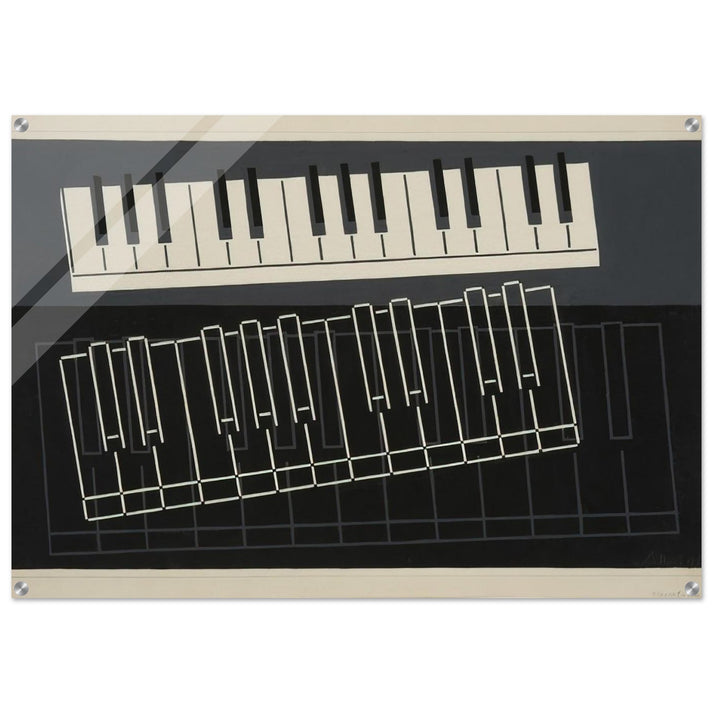
PIANO KEYS 1932 - Josef Albers Acrylic Print - 70x100 cm / 28x40″ inches
PIANO KEYS 1932 - Josef Albers Acrylic Print - 70x100 cm / 28x40″ inches
Couldn't load pickup availability
Piano Keys 1932 by Josef Albers: A Masterpiece of Geometric Abstraction
Experience the bold, pioneering vision of Bauhaus master Josef Albers with this museum-quality acrylic print of Piano Keys 1932. This iconic work exemplifies Albers' revolutionary exploration of color theory and geometric form, capturing the rhythmic interplay of black and white rectangles that evoke the dynamic precision of a keyboard. As a seminal piece from his early career, it reflects the Bauhaus movement's commitment to merging art, design, and functionality—a timeless statement that continues to inspire modern aesthetics.
RedKalion presents this fine art print as a premium acrylic reproduction, meticulously crafted to honor Albers' original intent. Printed on 4mm (0.15") acrylic, it delivers a sleek, vibrant finish with enhanced durability, ensuring the stark contrasts and clean lines remain vivid for generations. The straight-cut corners and modern design, with transparent backgrounds defaulting to white, offer a polished presentation that complements contemporary interiors. Complete with a hanging kit—including hardware, screws, and pre-drilled screw holes (14mm from the edge, 8mm diameter, 15mm screw head)—this piece is ready to elevate any space with archival-grade sophistication.
Art Historical Insight: Albers, a pivotal figure at the Bauhaus school, used works like Piano Keys to investigate perceptual effects through minimal geometric arrangements. This piece foreshadows his later Homage to the Square series, demonstrating how simple forms can evoke complex emotional and visual responses, making it a cornerstone of 20th-century abstract art.
- Dimensions: 70x100 cm / 28x40″ inches—ideal for statement walls or curated galleries.
- Material: 4mm acrylic for a durable, glare-resistant surface that enhances color depth.
- Design Features: Straight-cut corners and white-background default for a seamless modern look.
- Included: Full hanging kit with precision hardware for easy, secure installation.
Trust RedKalion to bring this archival masterpiece into your home or office, where it serves as a testament to enduring artistic innovation.


Discover Unlimited Art Possibilities
At RedKalion, you can find virtually any artwork from any artist, available in a wide range of sizes to perfectly match your space.
If you didn’t find what you’re looking for, contact us at support@redkalion.com . We will source any artwork and produce it in any size and format you need, including art prints, posters, canvas, framed pieces, framed canvas, and more.
For dedicated art enthusiasts, we also offer handcrafted replicas of any artwork, carefully painted by highly skilled artists using traditional techniques.
For custom requests, contact us at support@redkalion.com .
What is the historical significance of Piano Keys 1932 by Josef Albers?
Piano Keys 1932 is a key work from Josef Albers' early career, reflecting Bauhaus principles of geometric abstraction and color theory. It explores rhythmic black-and-white forms, prefiguring his famous Homage to the Square series and highlighting his influence on modern art.
How does the acrylic print enhance the artwork's visual impact?
The 4mm acrylic print offers a sleek, vibrant finish that intensifies the contrast in Piano Keys 1932, with a durable surface that resists fading. This museum-quality reproduction ensures the geometric precision and modern aesthetic are preserved for long-term display.
What are the specifications for the acrylic material and design?
This fine art print uses 4mm (0.15") acrylic for a durable, modern look, with straight-cut corners and white backgrounds by default. It includes pre-drilled screw holes (14mm from edges, 8mm diameter) for easy hanging, making it a premium acrylic reproduction.
How is the hanging kit included with the print?
The hanging kit includes all necessary hardware, screws, and screw holes positioned 14mm (0.55") from each corner, with an 8mm (0.31") diameter hole and 15mm (0.6") screw head, ensuring secure and straightforward installation for your acrylic art print.
What is the archival quality and longevity of this print?
This museum-quality print is crafted with archival-grade materials, including 4mm acrylic, to resist UV damage and fading. It ensures the vibrant colors and details of Piano Keys 1932 endure for decades, making it a lasting investment in fine art.
Can you describe the geometric details in Piano Keys 1932?
Piano Keys 1932 features a grid of black and white rectangles arranged to mimic a keyboard's rhythm, showcasing Albers' mastery of minimal geometric forms. This abstraction creates visual tension and movement, central to Bauhaus design philosophy.
How does this print fit into modern interior design?
With its 70x100 cm size, straight-cut corners, and sleek acrylic finish, this print adds a bold, contemporary touch to spaces. It pairs well with minimalist or industrial decor, serving as a focal point that highlights Josef Albers' timeless aesthetic.