
RedKalion
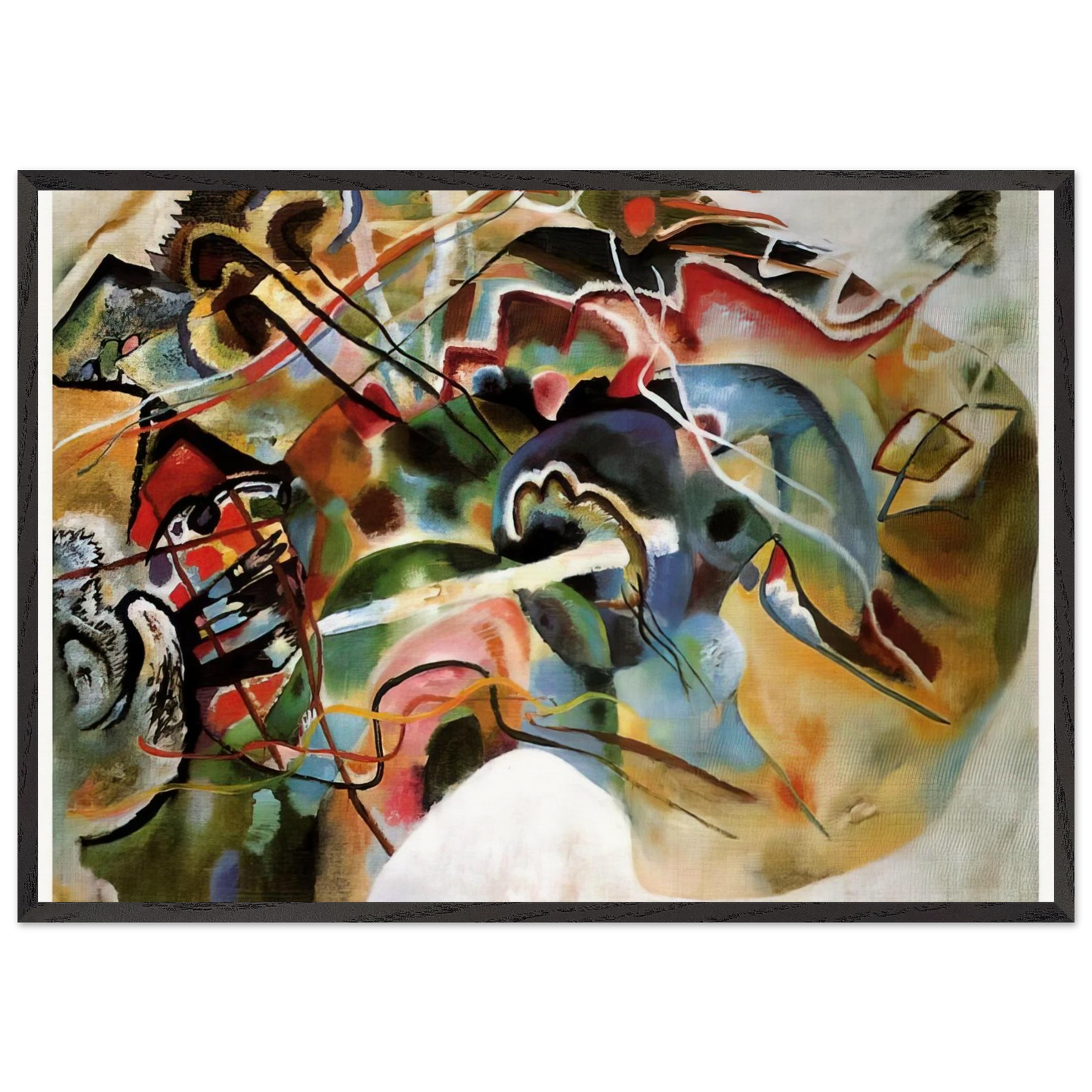
PICTURE WITH A WHITE BORDER 1913 - Wassily Kandinsky 70x100 cm / 28x40 inches Framed Art Print – Black Wooden Frame
PICTURE WITH A WHITE BORDER 1913 - Wassily Kandinsky 70x100 cm / 28x40 inches Framed Art Print – Black Wooden Frame
Couldn't load pickup availability
Picture with a White Border (1913) by Wassily Kandinsky
Immerse yourself in the revolutionary spirit of abstract art with this museum-quality framed print of Wassily Kandinsky's "Picture with a White Border" (1913). This pivotal work from Kandinsky's transition into pure abstraction captures a symphony of color and form, where geometric shapes and dynamic lines evoke emotional resonance rather than depict reality. As a founding figure of the Blue Rider group, Kandinsky pioneered non-objective painting, believing art should express inner spiritual truths. This piece, created just before World War I, reflects his exploration of musicality in visual art—a bold statement that continues to inspire modern interiors.
RedKalion presents this archival masterpiece in a premium 70x100 cm / 28x40 inches framed art print, meticulously reproduced to honor the original's vibrancy and detail. Our commitment to excellence ensures every element, from the FSC-certified sustainable paper to the responsibly sourced black wooden frame, meets the highest standards of fine art reproduction.
Product Specifications
- Frame: Crafted from responsibly sourced oak and ash wood, this black wooden frame measures 20mm (0.79") thick and wide—wider than classic 14mm frames for a bold, contemporary presence. It includes a hanging kit, making it ready-to-hang directly on your wall.
- Print Quality: Printed on 250 gsm (110 lb) archival museum-quality paper with a matte, uncoated, natural white finish (thickness: 0.29 mm / 11.4 mils), ideal for capturing Kandinsky's rich hues without glare.
- Protection: Features shatterproof plexiglass to safeguard the print against damage while maintaining clarity.
- Sustainability: Utilizes FSC-certified materials or equivalent, aligning with eco-conscious values.
Elevate your space with this archival masterpiece that endures, blending art historical significance with RedKalion's trusted curation of premium reproductions.
Discover Unlimited Art Possibilities
At RedKalion, you can find virtually any artwork from any artist, available in a wide range of sizes to perfectly match your space.
If you didn’t find what you’re looking for, contact us at support@redkalion.com . We will source any artwork and produce it in any size and format you need, including art prints, posters, canvas, framed pieces, framed canvas, and more.
For dedicated art enthusiasts, we also offer handcrafted replicas of any artwork, carefully painted by highly skilled artists using traditional techniques.
For custom requests, contact us at support@redkalion.com .
What is the significance of "Picture with a White Border" (1913) by Wassily Kandinsky?
This artwork marks Kandinsky's shift into pure abstraction, using geometric forms and vibrant colors to express emotional and spiritual ideas, pivotal in early 20th-century modern art history.
How does the black wooden frame enhance this fine art print?
The responsibly sourced oak and ash wood frame, 20mm thick and wide, provides a bold, contemporary border that complements Kandinsky's abstract style, ready-to-hang with included hardware.
What are the specifications of the museum-quality paper used?
It features 250 gsm (110 lb) weight, 0.29 mm thickness, and a matte, uncoated, natural white finish for optimal color reproduction and archival longevity in this framed art print.
Is this print protected and sustainable?
Yes, it includes shatterproof plexiglass for durability and uses FSC-certified sustainable paper, ensuring an eco-friendly, museum-quality reproduction.
What are the shipping and handling details for this 70x100 cm print?
We offer secure packaging and global shipping; delivery times vary by location, with tracking provided for this ready-to-hang framed art print.
How does Kandinsky's use of color in this piece reflect his artistic theories?
Kandinsky associated colors with emotions and sounds; here, bold hues like blues and reds create a visual symphony, embodying his belief in art's spiritual power.
Why is the white border significant in this abstract composition?
The white border frames the chaotic inner elements, adding contrast and focus, a technique Kandinsky used to guide viewer perception in his non-objective paintings.