RedKalion
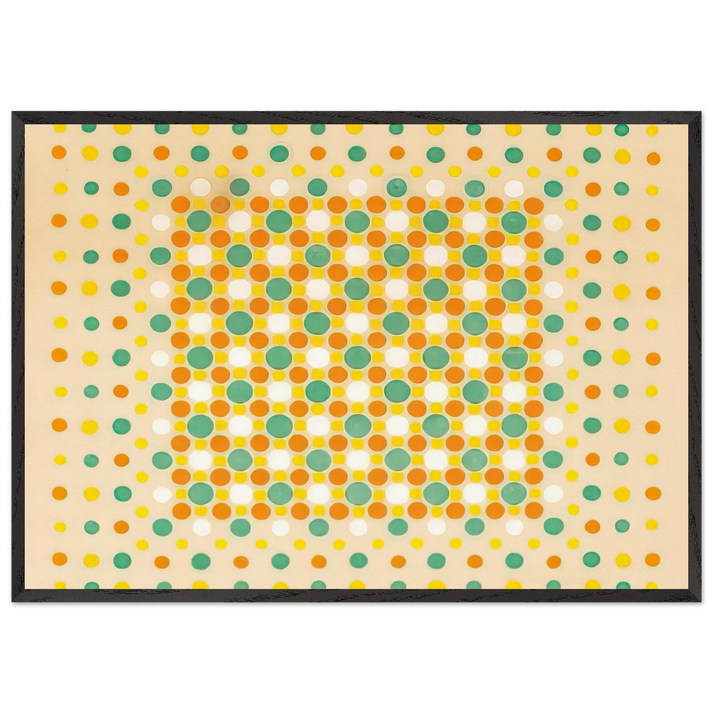
Quilt - 1963 - Thomas Downing 70x100 cm / 28x40 inches Framed Art Print – Black Wooden Frame
Quilt - 1963 - Thomas Downing 70x100 cm / 28x40 inches Framed Art Print – Black Wooden Frame
Couldn't load pickup availability
Quilt - 1963 - Thomas Downing: A Vibrant Geometric Masterpiece
Immerse yourself in the bold, rhythmic energy of Thomas Downing's 1963 painting "Quilt", now available as a museum-quality art print from RedKalion. This iconic work from the Washington Color School exemplifies Downing's pioneering use of hard-edge abstraction and vibrant color theory, creating a dynamic visual experience that transforms any space.
Downing, a key figure in mid-20th century American art, meticulously arranged circular dots in a grid-like pattern to explore optical effects and spatial perception. "Quilt" captures his fascination with color interaction, where hues seem to vibrate and shift, inviting prolonged contemplation. This fine art reproduction faithfully replicates the original's intensity and precision, making it a timeless addition to modern interiors.
Presented in a ready-to-hang framed art print, this piece comes elegantly mounted in a black wooden frame crafted from responsibly sourced oak and ash wood. The frame measures 20mm (0.79") thick and wide, offering a substantial, gallery-worthy presence that enhances the artwork's impact. Your print is protected by shatterproof plexiglass, ensuring durability and clarity without the risk of glass breakage.
Printed on archival museum-quality paper that is 250 gsm (110 lb) with a thickness of 0.29 mm (11.4 mils), this matte, uncoated, natural white paper provides exceptional color fidelity and longevity. Made from FSC-certified materials or equivalent, it reflects our commitment to sustainability without compromising on premium quality. Elevate your home or office with this 70x100 cm / 28x40 inches framed print, a testament to RedKalion's expertise in curating world-class reproductions that endure for generations.
Discover Unlimited Art Possibilities
At RedKalion, you can find virtually any artwork from any artist, available in a wide range of sizes to perfectly match your space.
If you didn’t find what you’re looking for, contact us at support@redkalion.com . We will source any artwork and produce it in any size and format you need, including art prints, posters, canvas, framed pieces, framed canvas, and more.
For dedicated art enthusiasts, we also offer handcrafted replicas of any artwork, carefully painted by highly skilled artists using traditional techniques.
For custom requests, contact us at support@redkalion.com .
What are the dimensions and details of this Thomas Downing art print?
This framed art print measures 70x100 cm / 28x40 inches, featuring Thomas Downing's 1963 painting "Quilt" from the Washington Color School, reproduced on archival museum-quality paper with a black wooden frame.
What type of paper is used for this fine art reproduction?
We use 250 gsm (110 lb) matte, uncoated, natural white archival paper, 0.29 mm thick, made from FSC-certified materials for a sustainable, museum-quality print that ensures vibrant color and longevity.
Is this framed print ready to hang?
Yes, this ready-to-hang framed art print includes a hanging kit, allowing you to display it directly on your wall without additional setup.
What materials are used in the black wooden frame?
The frame is crafted from responsibly sourced oak and ash wood, measuring 20mm (0.79") thick and wide, providing a sturdy, gallery-style presentation wider than classic 14mm frames.
How is the print protected in the frame?
It features shatterproof plexiglass protection, offering durability and clarity while safeguarding your Thomas Downing art print from damage.
What artistic movement is Thomas Downing associated with?
Thomas Downing was a prominent member of the Washington Color School, known for his hard-edge abstraction and exploration of color theory in geometric patterns.
Why is "Quilt" significant in Downing's body of work?
"Quilt" from 1963 showcases Downing's signature use of circular dots in a grid to create optical vibrations, reflecting his innovative approach to color interaction and spatial perception in mid-20th century art.