
RedKalion
Raoul Dufy - ANEMONES 75x100 cm / 30x40inches Fine Art Poster
Raoul Dufy - ANEMONES 75x100 cm / 30x40inches Fine Art Poster
Couldn't load pickup availability
Raoul Dufy - ANEMONES Fine Art Print
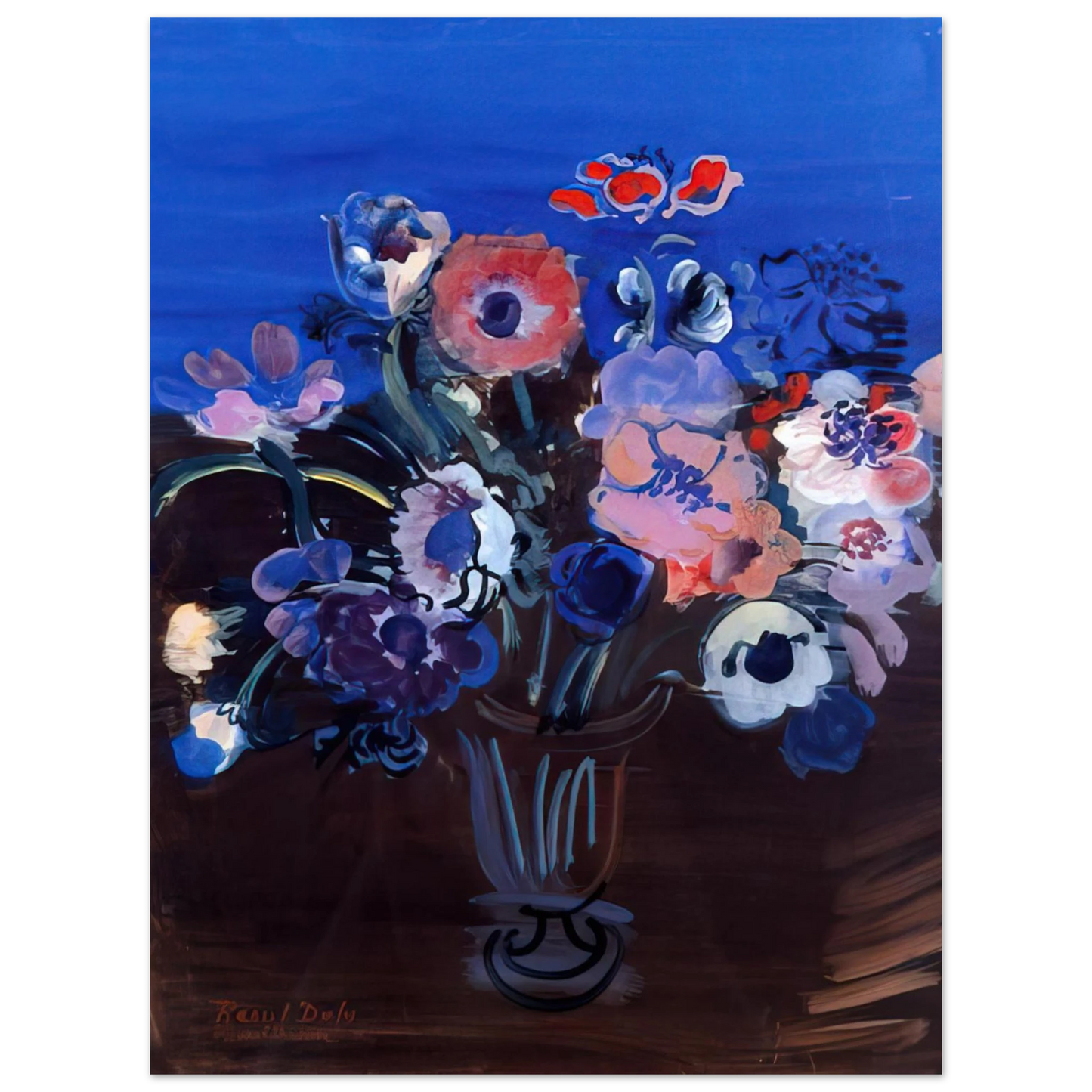
Elevate your space with this museum-quality reproduction of Raoul Dufy's "ANEMONES", a vibrant masterpiece that captures the essence of Fauvist exuberance. Measuring 75x100 cm (30x40 inches), this fine art poster brings the artist's bold color palette and dynamic brushwork into your home, offering a timeless piece of art history.
Dufy, a key figure in the Fauvist movement, was renowned for his joyful, decorative style that celebrated light and color. In "ANEMONES," he transforms a simple floral subject into a symphony of hues, using loose, expressive strokes to evoke a sense of spontaneity and life. This work reflects his mastery in balancing form and freedom, making it a captivating addition to any interior.
Printed on our exclusive Master's Edition archival paper, this reproduction ensures the highest fidelity to Dufy's original vision. The matte, uncoated finish in a natural white (off-white) tone provides a luxurious texture that enhances the artwork's depth, while the acid-free composition (pH above 7) guarantees it remains vibrant for generations. With a weight of 250 gsm (110 lb) and thickness of 0.29 mm (11.4 mils), this piece feels substantial and premium. Crafted from FSC-certified paper, it supports sustainable practices without compromising on quality.
RedKalion specializes in archival-grade reproductions, meticulously curated to bring world-class art into your daily life. This print is produced on demand, ensuring no minimum orders and personalized fulfillment. Invest in a piece that combines artistic heritage with enduring craftsmanship—a true conversation starter for art lovers and collectors alike.
Discover Unlimited Art Possibilities
At RedKalion, you can find virtually any artwork from any artist, available in a wide range of sizes to perfectly match your space.
If you didn’t find what you’re looking for, contact us at support@redkalion.com . We will source any artwork and produce it in any size and format you need, including art prints, posters, canvas, framed pieces, framed canvas, and more.
For dedicated art enthusiasts, we also offer handcrafted replicas of any artwork, carefully painted by highly skilled artists using traditional techniques.
For custom requests, contact us at support@redkalion.com .
What are the dimensions of this Raoul Dufy ANEMONES fine art print?
This museum-quality reproduction measures 75x100 cm (30x40 inches), perfect for standard framing and display in various spaces.
What type of paper is used for this archival art print?
It's printed on Master's Edition archival paper, featuring a matte, uncoated finish in natural white for a luxurious texture and acid-free composition to prevent yellowing.
How is this fine art poster shipped and fulfilled?
We offer on-demand printing with no minimum orders, ensuring each piece is carefully produced and shipped directly to you for a personalized experience.
Is this reproduction sustainable and long-lasting?
Yes, it uses FSC-certified paper and acid-free materials (pH above 7) for archival longevity, making it an eco-friendly choice that endures over time.
What is the weight and thickness of this museum-quality print?
The paper weighs 250 gsm (110 lb) with a thickness of 0.29 mm (11.4 mils), providing a premium, substantial feel for your art collection.
Who was Raoul Dufy and what makes his ANEMONES painting significant?
Raoul Dufy was a French Fauvist artist known for his vibrant, joyful style; "ANEMONES" showcases his use of bold colors and expressive brushwork to capture floral beauty, reflecting the movement's focus on emotion over realism.
Can you describe the artistic techniques in Dufy's ANEMONES artwork?
Dufy employed loose, dynamic strokes and a bright color palette in "ANEMONES," typical of Fauvism, to create a sense of spontaneity and highlight the decorative qualities of the anemone flowers.