RedKalion
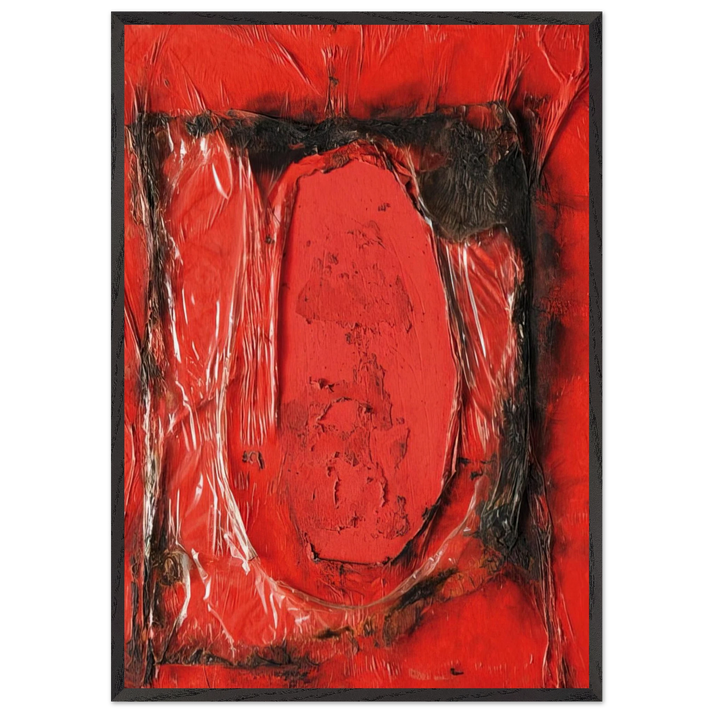
Red Plastic - 1961 - Alberto Burri 70x100 cm / 28x40 inches Framed Art Print – Black Wooden Frame
Red Plastic - 1961 - Alberto Burri 70x100 cm / 28x40 inches Framed Art Print – Black Wooden Frame
Couldn't load pickup availability
Red Plastic - 1961 by Alberto Burri
Immerse yourself in the raw, revolutionary power of Alberto Burri's Red Plastic, a 1961 masterpiece that redefined the boundaries of modern art. This iconic work from the Italian artist's groundbreaking Combustioni Plastiche series captures the tension between destruction and creation, using burnt plastic to evoke visceral emotion and challenge traditional aesthetics. Burri, a former WWII medic, transformed industrial materials into profound statements on trauma and renewal, making this piece a cornerstone of the Arte Povera movement. At RedKalion, we honor this legacy with a museum-quality reproduction that brings the texture and intensity of the original into your space.
Our framed art print is meticulously crafted to archival standards, featuring a 70x100 cm / 28x40 inches format that commands attention. The artwork is printed on 250 gsm (110 lb) matte, uncoated, natural white paper with a thickness of 0.29 mm (11.4 mils), ensuring rich color depth and durability. It is elegantly presented in a black wooden frame made from responsibly sourced oak and ash wood, with a substantial 20mm (0.79") thickness that adds a contemporary edge. Protected by shatterproof plexiglass and including a hanging kit, this ready-to-hang piece is designed for effortless display and lasting impact. Elevate your home or office with an archival masterpiece that endures, backed by our commitment to sustainable paper from FSC-certified materials.

Discover Unlimited Art Possibilities
At RedKalion, you can find virtually any artwork from any artist, available in a wide range of sizes to perfectly match your space.
If you didn’t find what you’re looking for, contact us at support@redkalion.com . We will source any artwork and produce it in any size and format you need, including art prints, posters, canvas, framed pieces, framed canvas, and more.
For dedicated art enthusiasts, we also offer handcrafted replicas of any artwork, carefully painted by highly skilled artists using traditional techniques.
For custom requests, contact us at support@redkalion.com .
What is the significance of Alberto Burri's Red Plastic from 1961?
Red Plastic is a key work from Burri's Combustioni Plastiche series, using burnt plastic to explore themes of trauma and renewal, pivotal to the Arte Povera movement and modern art history.
How does the frame enhance this Alberto Burri art print?
The black wooden frame, made from responsibly sourced oak and ash with a 20mm (0.79") thickness, provides a sturdy, modern complement to Burri's raw aesthetic, ready-to-hang with included hardware.
What are the specifications of the paper used for this fine art print?
This museum-quality reproduction uses 250 gsm (110 lb) matte, uncoated, natural white archival paper, 0.29 mm thick, ideal for vibrant color and long-term preservation in a framed art print.
How is the print protected in this ready-to-hang framed piece?
Shatterproof plexiglass safeguards the Alberto Burri artwork from damage, ensuring durability while maintaining clarity for your 70x100 cm / 28x40 inches art print display.
What makes this a sustainable art reproduction?
We use FSC-certified or equivalent sustainable paper, aligning with eco-friendly practices for a high-quality framed art print that respects the environment.
What techniques did Alberto Burri use in creating Red Plastic?
Burri employed combustion on plastic sheets, a radical technique that blurred painting and sculpture, reflecting his medical background and post-war context in 1961.
Why is the 20mm frame thickness notable for this piece?
The 20mm (0.79") frame is wider than classic 14mm frames, offering enhanced stability and a bold profile that suits Burri's large-scale, impactful 70x100 cm artwork.