RedKalion
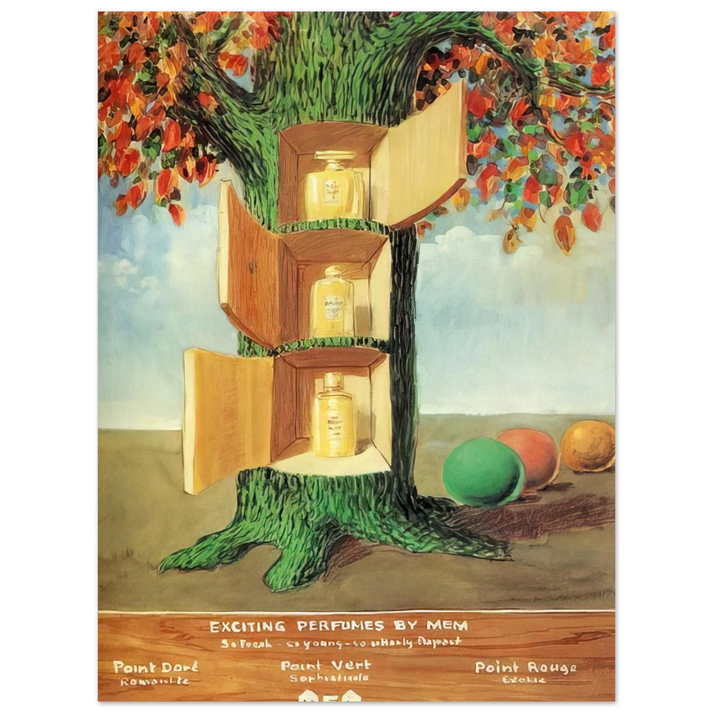
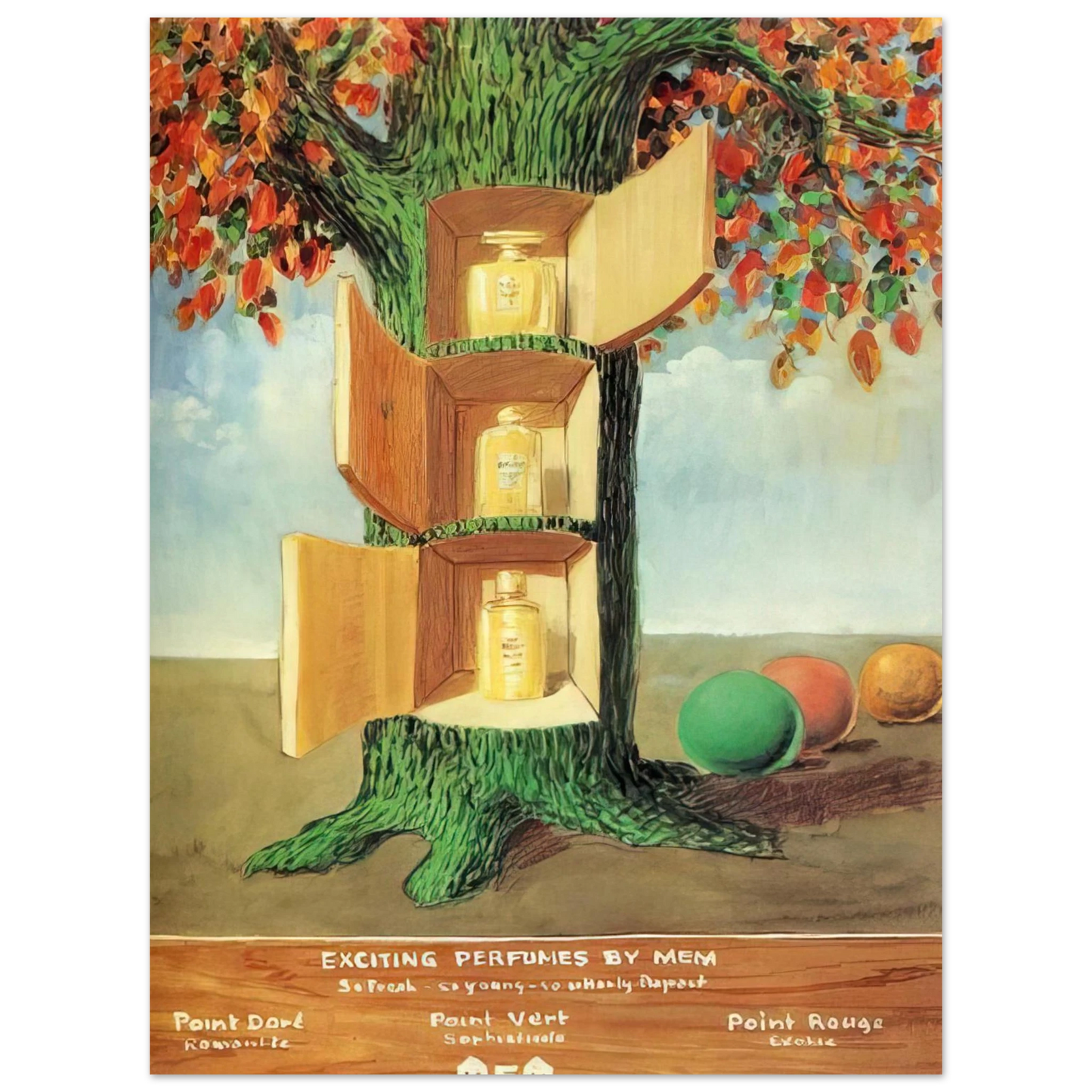
Rene Magritte - POSTER EXCITING PERFUMES BY MEM 1946 75x100 cm / 30x40inches Fine Art Poster
Rene Magritte - POSTER EXCITING PERFUMES BY MEM 1946 75x100 cm / 30x40inches Fine Art Poster
Couldn't load pickup availability
Rene Magritte - POSTER EXCITING PERFUMES BY MEM 1946: A Surrealist Masterpiece Print
Elevate your space with this museum-quality fine art print of René Magritte's iconic 1946 work, "Poster Exciting Perfumes by MEM." This surrealist poster, measuring 75x100 cm (30x40 inches), captures Magritte's enigmatic vision, blending everyday objects with dreamlike ambiguity to provoke thought and intrigue. As a leading figure in 20th-century art, Magritte challenged perceptions of reality, and this piece—originally created for a perfume advertisement—subverts commercial imagery into a profound artistic statement. Its playful yet mysterious composition, featuring whimsical elements and cryptic text, makes it a captivating addition to modern interiors, evoking a sense of curiosity and sophistication.
At RedKalion, we specialize in archival-grade reproductions that honor the artist's original intent. This print is crafted on Master's Edition archival paper, ensuring a matte, uncoated finish in a natural white (off-white) hue that enhances the artwork's depth and texture. With a weight of 250 gsm (110 lb) and a thickness of 0.29 mm (11.4 mils), it offers a luxurious, durable feel. The acid-free composition (pH above 7) prevents yellowing over time, while FSC-certified paper supports sustainable practices. Printed and shipped on demand with no minimum orders, each piece is a testament to our commitment to quality and accessibility.
Invest in a timeless reproduction that bridges art history and contemporary design. This fine art poster not only celebrates Magritte's legacy but also serves as a conversation-starting centerpiece for homes, offices, or galleries. Trust RedKalion for expertly curated, archival masterpieces that endure.
Discover Unlimited Art Possibilities
At RedKalion, you can find virtually any artwork from any artist, available in a wide range of sizes to perfectly match your space.
If you didn’t find what you’re looking for, contact us at support@redkalion.com . We will source any artwork and produce it in any size and format you need, including art prints, posters, canvas, framed pieces, framed canvas, and more.
For dedicated art enthusiasts, we also offer handcrafted replicas of any artwork, carefully painted by highly skilled artists using traditional techniques.
For custom requests, contact us at support@redkalion.com .
What are the dimensions of this René Magritte fine art print?
This museum-quality reproduction measures 75x100 cm, equivalent to 30x40 inches, making it a versatile size for framing and display in various settings.
What type of paper is used for this archival print?
It's printed on Master's Edition archival paper, featuring a matte, uncoated finish in natural white (off-white) for a luxurious texture and enhanced durability.
How does the acid-free paper ensure longevity for this art poster?
The acid-free composition (pH above 7) prevents yellowing and degradation over time, preserving the vibrant colors and details of this surrealist masterpiece for years.
What is the weight and thickness of this fine art poster?
With a weight of 250 gsm (110 lb) and a thickness of 0.29 mm (11.4 mils), this print offers a substantial, premium feel ideal for high-end reproductions.
Is this print sustainably produced?
Yes, it uses FSC-certified paper, supporting responsible forestry practices and aligning with eco-friendly art collection standards.
What was the original context of Magritte's "Poster Exciting Perfumes by MEM" from 1946?
Originally created as a commercial advertisement for perfumes, Magritte subverted typical advertising imagery by infusing it with surrealist elements, blending art and commerce in a thought-provoking way.
How does Magritte's technique in this poster reflect his surrealist style?
Magritte employed juxtaposition and cryptic symbolism, using everyday objects in unexpected contexts to challenge reality and evoke mystery, characteristic of his iconic surrealist approach.