
RedKalion
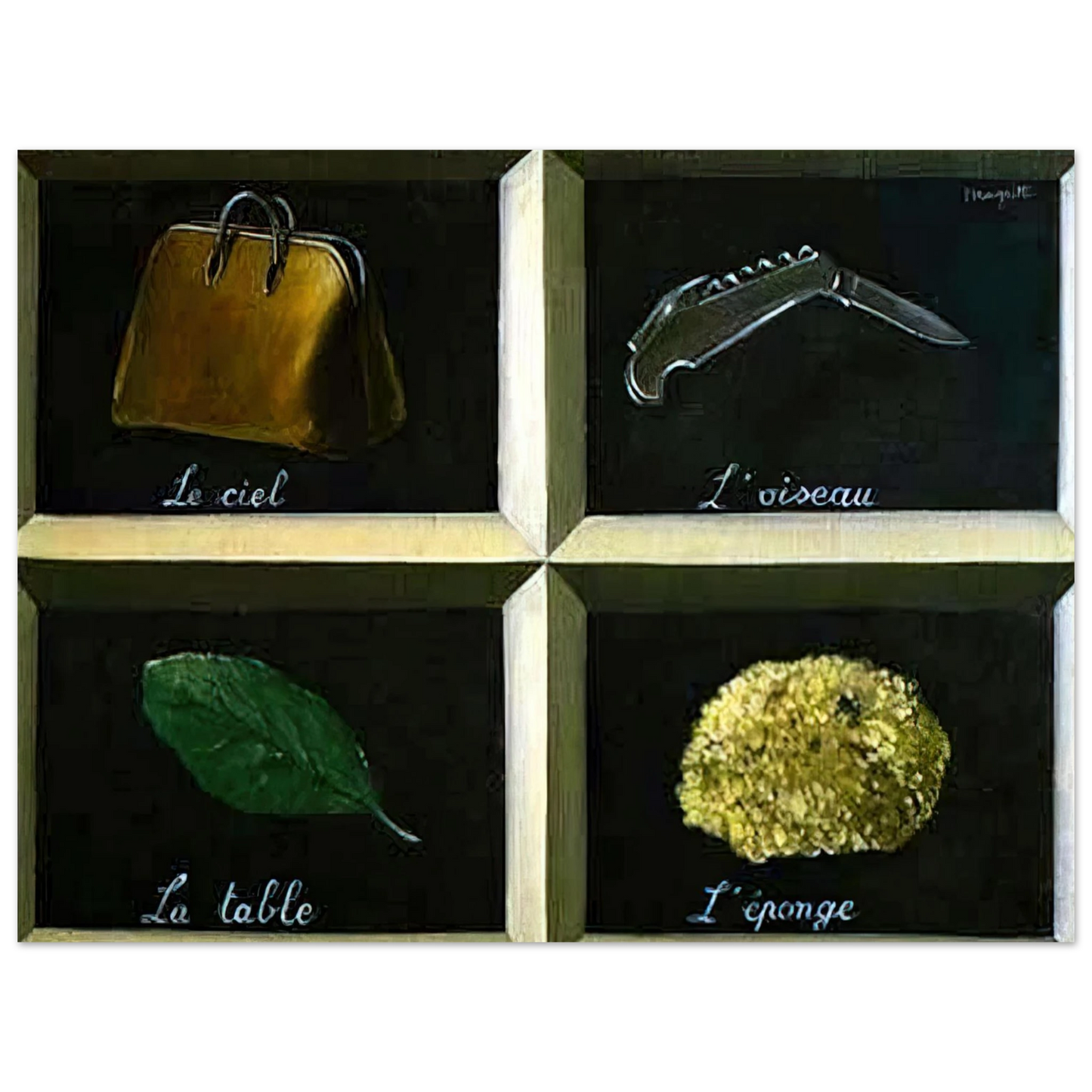
Rene Magritte - THE INTERPRETATION OF DREAMS 1927 75x100 cm / 30x40inches Fine Art Poster
Rene Magritte - THE INTERPRETATION OF DREAMS 1927 75x100 cm / 30x40inches Fine Art Poster
Couldn't load pickup availability
Rene Magritte - THE INTERPRETATION OF DREAMS 1927 Fine Art Print
Immerse yourself in the surrealist genius of Rene Magritte with this museum-quality reproduction of "The Interpretation of Dreams" (1927). This iconic 75x100 cm (30x40 inches) fine art poster captures the enigmatic interplay of objects and text that defines Magritte's revolutionary style, inviting viewers into a world where reality and imagination blur. As a seminal work from his early period, it explores themes of language, perception, and the subconscious, making it a captivating centerpiece for any art lover's collection.
At RedKalion, we specialize in archival-grade reproductions that honor the original's integrity. Printed on our exclusive Master's Edition archival paper, this piece features a matte, uncoated finish with a natural white (off-white) hue, enhancing its luxurious texture and visual depth. The acid-free composition (pH above 7) ensures it resists yellowing over decades, while the substantial 250 gsm (110 lb) weight and 0.29 mm (11.4 mils) thickness provide a durable, premium feel. Crafted from FSC-certified paper, this fine art print combines sustainability with enduring beauty, offering a thoughtful addition to modern interiors.
Elevate your space with an archival masterpiece that endures, backed by RedKalion's commitment to excellence in every detail.
Discover Unlimited Art Possibilities
At RedKalion, you can find virtually any artwork from any artist, available in a wide range of sizes to perfectly match your space.
If you didn’t find what you’re looking for, contact us at support@redkalion.com . We will source any artwork and produce it in any size and format you need, including art prints, posters, canvas, framed pieces, framed canvas, and more.
For dedicated art enthusiasts, we also offer handcrafted replicas of any artwork, carefully painted by highly skilled artists using traditional techniques.
For custom requests, contact us at support@redkalion.com .
What are the dimensions of this Rene Magritte fine art print?
This museum-quality reproduction measures 75x100 cm (30x40 inches), perfectly sized for framing and display in homes or offices.
What type of paper is used for this archival print?
It's printed on Master's Edition archival paper, featuring a matte, uncoated finish with natural white color for a luxurious texture and long-lasting quality.
How durable is this fine art poster against aging?
The acid-free paper (pH above 7) prevents yellowing over time, ensuring your Magritte reproduction remains vibrant for decades as a premium art investment.
What is the weight and thickness of the paper?
With 250 gsm (110 lb) weight and 0.29 mm (11.4 mils) thickness, this heavy-duty paper offers a substantial feel ideal for high-end framing and preservation.
How is this print shipped and are there minimum orders?
We print and ship on demand with no minimum orders, providing convenient fulfillment for your museum-quality art reproduction needs.
What makes "The Interpretation of Dreams" a significant surrealist artwork?
Created in 1927, this piece exemplifies Magritte's exploration of dream logic and linguistic puzzles, using juxtaposed objects to challenge perceptions of reality in early surrealism.
Why does Magritte use text alongside imagery in this work?
Magritte incorporates text to subvert expectations, highlighting the gap between representation and meaning, a key technique in his surrealist masterpieces.