
RedKalion
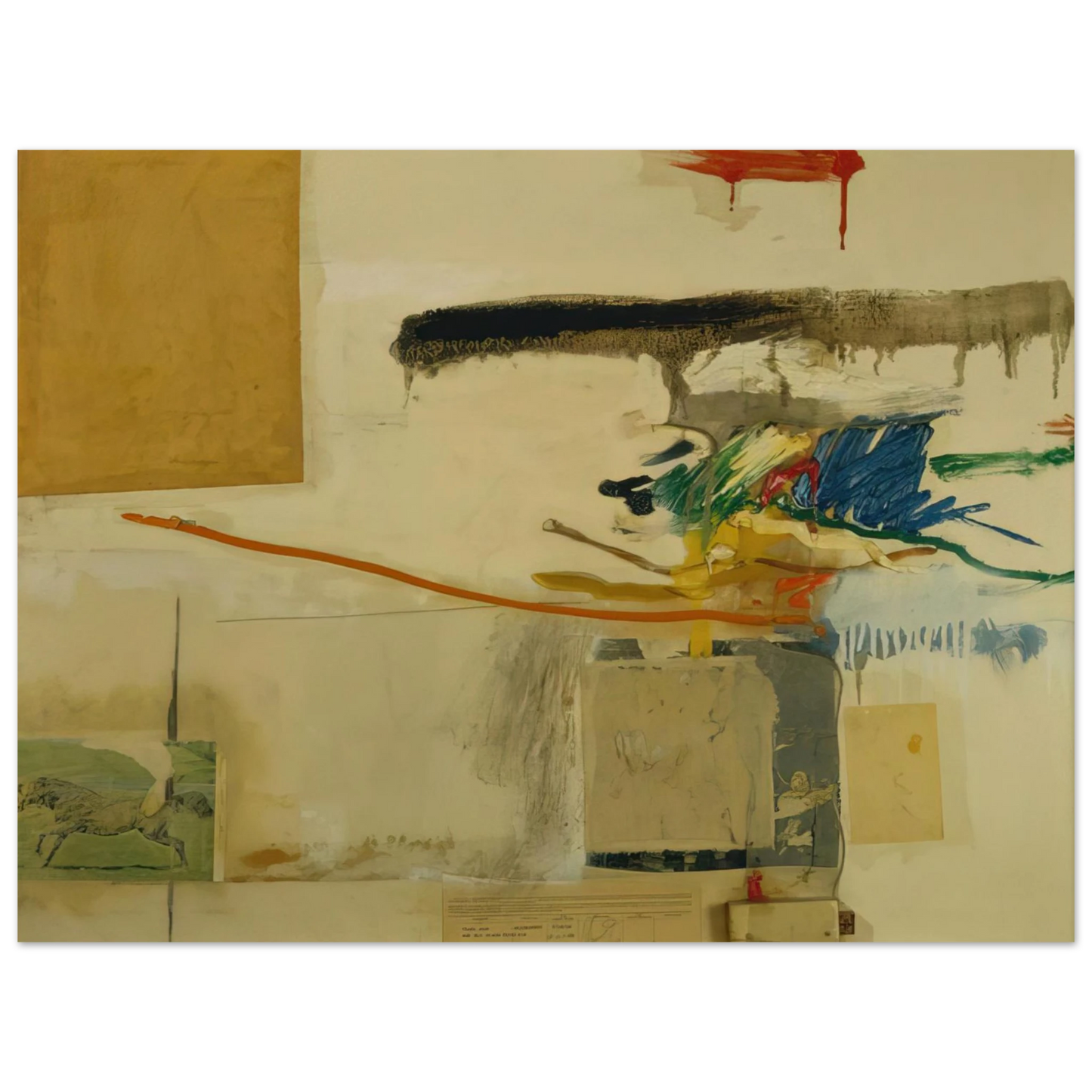
Robert Rauschenberg - UNTITLED FORMERLY TITLED COLLAGE WITH HORSE 1957 75x100 cm / 30x40inches Fine Art Poster
Robert Rauschenberg - UNTITLED FORMERLY TITLED COLLAGE WITH HORSE 1957 75x100 cm / 30x40inches Fine Art Poster
Couldn't load pickup availability
Robert Rauschenberg - UNTITLED FORMERLY TITLED COLLAGE WITH HORSE 1957: A Museum-Quality Fine Art Print
Immerse yourself in the groundbreaking energy of the mid-20th century with this archival reproduction of Robert Rauschenberg's seminal 1957 collage, UNTITLED FORMERLY TITLED COLLAGE WITH HORSE. This 75x100 cm (30x40 inches) fine art poster captures the raw, experimental spirit of the artist's iconic Combine technique, where painting, sculpture, and found objects collide to redefine the boundaries of modern art.
Rauschenberg, a central figure in the Neo-Dada movement, created this work during a pivotal period of artistic rebellion. The inclusion of the horse image—a fragment of mass media—juxtaposed with gestural brushwork, challenges traditional notions of composition and meaning, inviting endless interpretation. This piece is not merely decor; it is a conversation-starting fragment of art history, perfect for collectors and design enthusiasts seeking to elevate their space with intellectual and aesthetic depth.
RedKalion presents this masterpiece as a museum-quality reproduction, crafted to honor the original's integrity. Our commitment to archival excellence ensures this print is a lasting investment:
- Premium Paper: Printed on Master's Edition archival paper, an acid-free (pH above 7), FSC-certified substrate that resists yellowing and ensures longevity for generations.
- Luxurious Finish: Features a matte, uncoated, natural white (off-white) surface with a substantial 250 gsm (110 lb) weight and 0.29 mm (11.4 mils) thickness, offering a tactile, gallery-worthy texture that enhances the artwork's nuanced details.
- Ethical Production: Sustainably sourced and printed on-demand, reflecting our dedication to quality without compromise.
Elevate your home or office with an archival masterpiece that endures. This fine art print by Robert Rauschenberg is more than a reproduction—it's a portal to a revolutionary moment in contemporary art, delivered with the precision and care that defines RedKalion's curation.
Discover Unlimited Art Possibilities
At RedKalion, you can find virtually any artwork from any artist, available in a wide range of sizes to perfectly match your space.
If you didn’t find what you’re looking for, contact us at support@redkalion.com . We will source any artwork and produce it in any size and format you need, including art prints, posters, canvas, framed pieces, framed canvas, and more.
For dedicated art enthusiasts, we also offer handcrafted replicas of any artwork, carefully painted by highly skilled artists using traditional techniques.
For custom requests, contact us at support@redkalion.com .
What are the dimensions of this Robert Rauschenberg fine art print?
This museum-quality reproduction measures 75x100 cm, which is equivalent to 30x40 inches, making it a substantial statement piece for any wall.
What type of paper is used for this archival print?
It is printed on Master's Edition archival paper, which is acid-free (pH above 7), FSC-certified, and features a matte, uncoated, natural white finish for a luxurious texture that prevents yellowing over time.
How durable and thick is the paper for this art poster?
The paper has a premium weight of 250 gsm (110 lb) and a thickness of 0.29 mm (11.4 mils), ensuring a sturdy, high-quality feel that enhances the artwork's presentation as a fine art reproduction.
What is the shipping and fulfillment process for this on-demand print?
We offer no minimum orders; each print is produced and shipped on demand to ensure freshness and quality, with careful packaging to protect your museum-quality poster during transit.
How does the archival quality ensure this print lasts over time?
The acid-free, pH-balanced paper and sustainable FSC certification prevent deterioration and yellowing, making this a long-lasting investment for displaying Robert Rauschenberg's collage art.
What is the historical significance of Rauschenberg's 1957 collage with a horse?
Created during the Neo-Dada movement, this work exemplifies Rauschenberg's revolutionary Combine technique, blending painting and found objects like a horse image to challenge traditional art forms and reflect 1950s cultural fragmentation.
Why did Rauschenberg use a horse image in this untitled collage?
The horse, sourced from mass media, serves as a symbolic fragment that juxtaposes with abstract brushstrokes, exploring themes of memory, popular culture, and the breakdown of conventional artistic boundaries in post-war America.