RedKalion
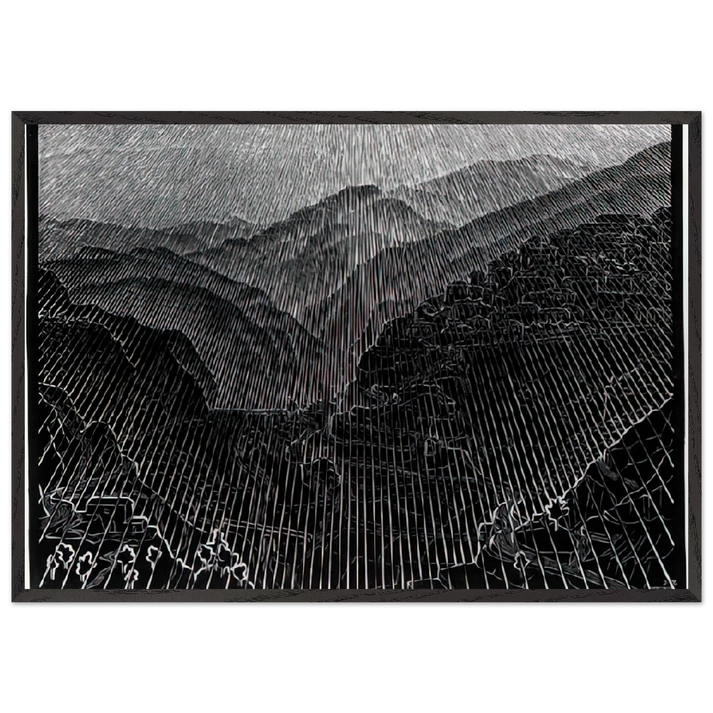
ROSSANO CALABRIA FEBRUARY 1931 1931 - MC Escher 70x100 cm / 28x40 inches Framed Art Print – Black Wooden Frame | Maurits Cornelis Escher Prints
ROSSANO CALABRIA FEBRUARY 1931 1931 - MC Escher 70x100 cm / 28x40 inches Framed Art Print – Black Wooden Frame | Maurits Cornelis Escher Prints
Couldn't load pickup availability
ROSSANO CALABRIA FEBRUARY 1931 by M.C. Escher: A Masterpiece of Geometric Intrigue
Immerse yourself in the captivating world of M.C. Escher with this museum-quality fine art print of ROSSANO CALABRIA FEBRUARY 1931, a seminal work from 1931 that showcases the artist's early exploration of perspective and tessellation. This archival reproduction captures every intricate detail of Escher's precise linework, allowing you to bring a piece of mathematical artistry into your home or office.
At RedKalion, we specialize in premium reproductions that honor the original's integrity. This print is produced on 250 gsm (110 lb) matte, uncoated archival museum-quality paper, ensuring a natural white finish that resists fading for generations. The shatterproof plexiglass provides durable protection while maintaining clarity, and the frame is crafted from responsibly sourced oak and ash wood, measuring 20mm (0.79") thick and wide for a substantial, gallery-worthy presence. Each piece is ready-to-hang with an included kit, making it effortless to elevate your space with a timeless conversation starter.
Did you know? This artwork reflects Escher's transition from landscape studies to the impossible geometries he later perfected, offering a rare glimpse into his evolving style during a pivotal year in his career.

Discover Unlimited Art Possibilities
At RedKalion, you can find virtually any artwork from any artist, available in a wide range of sizes to perfectly match your space.
If you didn’t find what you’re looking for, contact us at support@redkalion.com . We will source any artwork and produce it in any size and format you need, including art prints, posters, canvas, framed pieces, framed canvas, and more.
For dedicated art enthusiasts, we also offer handcrafted replicas of any artwork, carefully painted by highly skilled artists using traditional techniques.
For custom requests, contact us at support@redkalion.com .
What are the dimensions of this M.C. Escher framed art print?
This framed fine art print measures 70x100 cm (28x40 inches), with a 20mm (0.79") thick black wooden frame, providing a substantial and elegant display for your museum-quality reproduction.
What type of paper is used for this archival print?
We use 250 gsm (110 lb) matte, uncoated, natural white archival museum-quality paper, which is FSC-certified for sustainability and ensures long-lasting color fidelity in your premium art print.
Is this print ready to hang upon delivery?
Yes, this framed art print includes a hanging kit and is ready-to-hang directly on your wall, offering a hassle-free setup for your M.C. Escher masterpiece.
How durable is the framing and protection for this piece?
The frame is made from responsibly sourced oak and ash wood, and features shatterproof plexiglass to protect your geometric art print from damage while maintaining a clear view.
What makes this a museum-quality reproduction?
This print uses archival-grade materials, including 250 gsm paper and sustainable FSC-certified sources, ensuring it meets the high standards of fine art prints for longevity and visual appeal.
What is the historical significance of ROSSAO CALABRIA FEBRUARY 1931?
Created in 1931, this work marks M.C. Escher's early experimentation with perspective and tessellation, showcasing his shift toward the impossible geometries that define his later iconic pieces.
How does this artwork reflect M.C. Escher's style in 1931?
In 1931, Escher was transitioning from realistic landscapes to more abstract, mathematical designs, with this piece highlighting his precise linework and growing interest in spatial illusion.