RedKalion
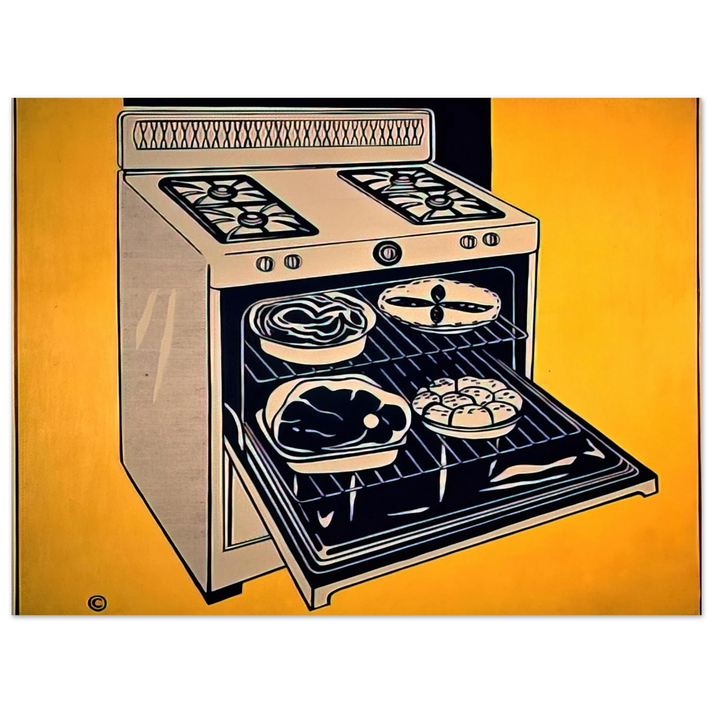
Roy Lichtenstein - KITCHEN RANGE 1962 75x100 cm / 30x40inches Fine Art Poster
Roy Lichtenstein - KITCHEN RANGE 1962 75x100 cm / 30x40inches Fine Art Poster
Couldn't load pickup availability
Roy Lichtenstein - KITCHEN RANGE 1962 Fine Art Print
Immerse your space in the bold, iconic energy of Pop Art with this museum-quality reproduction of Roy Lichtenstein's "KITCHEN RANGE" (1962). This masterpiece captures Lichtenstein's revolutionary technique of mimicking commercial printing, using Ben-Day dots and crisp black outlines to transform an everyday kitchen appliance into a powerful commentary on consumer culture and mass media. The vibrant colors and graphic precision evoke a sense of playful nostalgia and critical wit, making it a perfect centerpiece for modern interiors seeking artistic depth.
RedKalion presents this archival-grade fine art print on our exclusive Master's Edition archival paper, ensuring every detail—from the signature dots to the sharp lettering—is reproduced with gallery-level fidelity. The matte, uncoated finish in a natural white hue enhances the luxurious texture, allowing the artwork to command attention without glare. Crafted from acid-free, FSC-certified paper with a substantial 250 gsm weight (0.29 mm thickness), this print is designed to resist yellowing and endure for generations, embodying our commitment to sustainability and preservation.
Elevate your home or office with a piece that bridges art history and contemporary design. This 75x100 cm (30x40 inches) reproduction is printed and shipped on demand, offering a seamless acquisition of a timeless classic. Trust RedKalion for authoritative reproductions that honor the artist's vision while delivering uncompromising quality.
Discover Unlimited Art Possibilities
At RedKalion, you can find virtually any artwork from any artist, available in a wide range of sizes to perfectly match your space.
If you didn’t find what you’re looking for, contact us at support@redkalion.com . We will source any artwork and produce it in any size and format you need, including art prints, posters, canvas, framed pieces, framed canvas, and more.
For dedicated art enthusiasts, we also offer handcrafted replicas of any artwork, carefully painted by highly skilled artists using traditional techniques.
For custom requests, contact us at support@redkalion.com .
What are the dimensions of this Roy Lichtenstein KITCHEN RANGE fine art print?
This museum-quality reproduction measures 75x100 cm (30x40 inches), perfectly sized to make a bold statement in any room while capturing the original's graphic impact.
What type of paper is used for this archival art print?
It's printed on Master's Edition archival paper, featuring a matte, uncoated finish in natural white for a luxurious texture and acid-free composition to ensure longevity.
We use high-resolution imaging and precise color calibration to reproduce every Ben-Day dot and detail, delivering a museum-quality fine art poster that honors Lichtenstein's technique.
Is this print shipped ready to frame?
Yes, it arrives flat and protected, ready for framing. Our on-demand printing means no minimum orders, so you receive a fresh, archival-grade reproduction tailored to your needs.
How long will this archival print last without fading or yellowing?
Crafted from acid-free, FSC-certified 250 gsm paper, it resists yellowing over time, ensuring your Pop Art masterpiece remains vibrant for generations as a durable fine art poster.
What inspired Roy Lichtenstein's KITCHEN RANGE from 1962?
Lichtenstein drew from advertising and comic books, using Ben-Day dots to critique consumer culture, transforming a mundane appliance into an iconic Pop Art symbol of mass media.
Why are Ben-Day dots significant in this artwork?
They mimic commercial printing techniques, emphasizing Lichtenstein's focus on reproduction and parody, key elements that define his contribution to the Pop Art movement and its visual language.