RedKalion
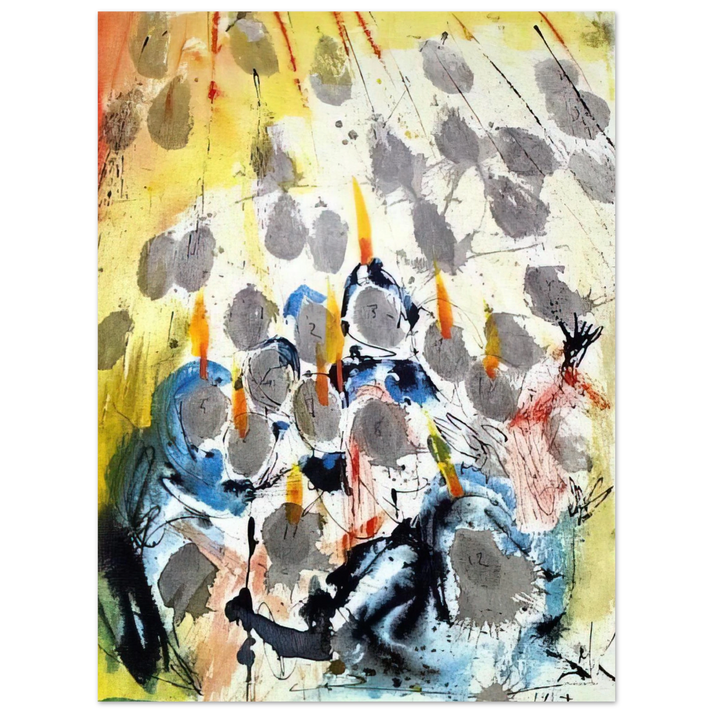
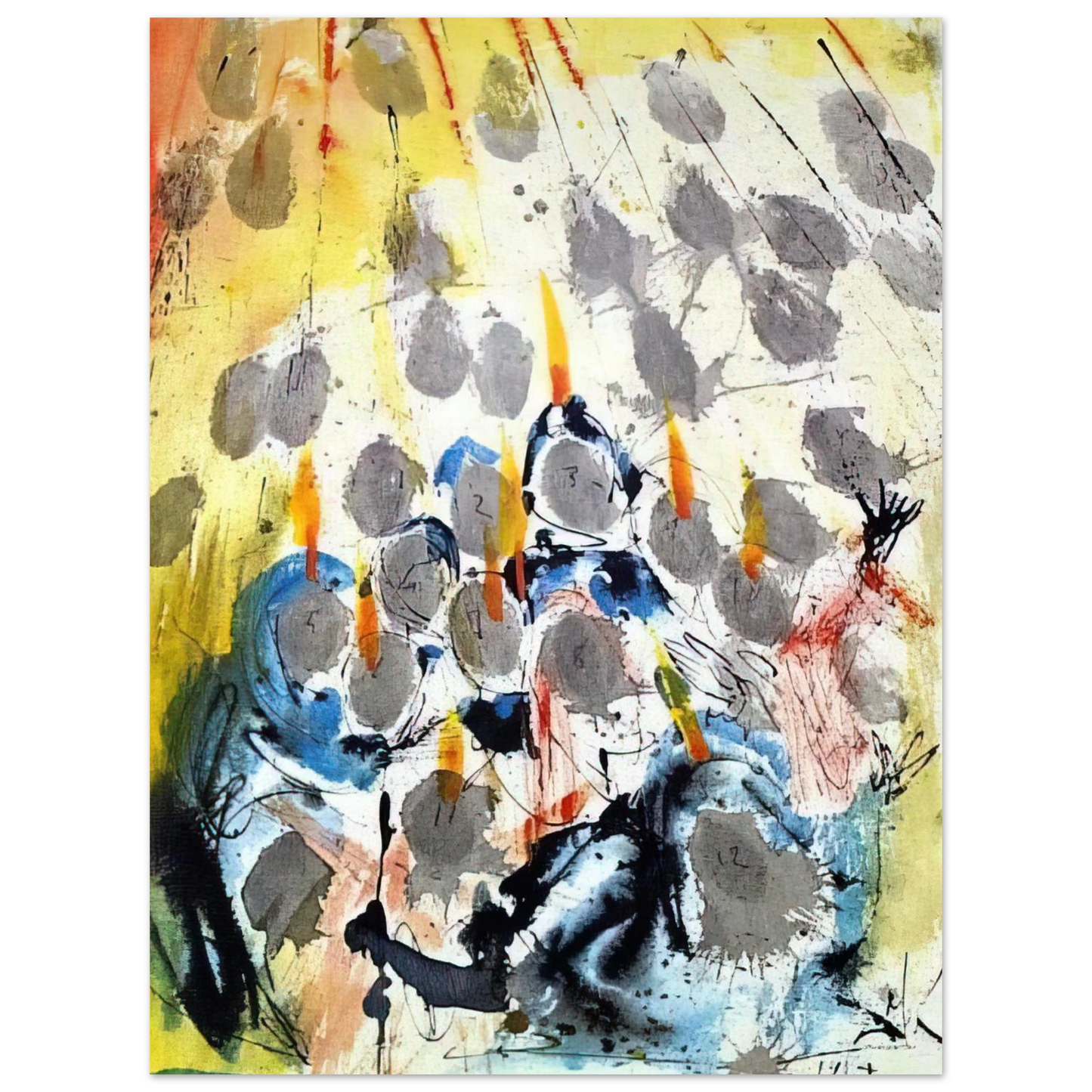
Salvador Dali - APPARUERUNT ILLIS DISPERTITAE LINGUAE ACTS 1 14 1967 75x100 cm / 30x40inches Fine Art Poster
Salvador Dali - APPARUERUNT ILLIS DISPERTITAE LINGUAE ACTS 1 14 1967 75x100 cm / 30x40inches Fine Art Poster
Couldn't load pickup availability
Salvador Dalí - APPARUERUNT ILLIS DISPERTITAE LINGUAE ACTS 1 14 1967: A Surrealist Masterpiece
Immerse yourself in the visionary world of Salvador Dalí with this museum-quality fine art print of "APPARUERUNT ILLIS DISPERTITAE LINGUAE ACTS 1 14 1967". Created in 1967, this 75x100 cm (30x40 inches) work exemplifies Dalí's late-career exploration of religious and mystical themes through his signature surrealist lens. The title references the Pentecost from the Acts of the Apostles, where tongues of fire appear—a motif Dalí transforms into a dreamlike, symbolic composition that challenges perception and evokes a sense of divine mystery.
RedKalion presents this archival reproduction on our exclusive Master's Edition paper, ensuring every detail of Dalí's intricate technique is preserved. The matte, uncoated finish and natural white hue provide a luxurious texture that mirrors the original's depth, while the acid-free, FSC-certified 250 gsm paper guarantees longevity without yellowing. Elevate your space with a piece that bridges art history and contemporary craftsmanship, printed on demand to meet your discerning standards.
- Dimensions: 75x100 cm / 30x40 inches—ideal for statement walls or curated collections.
- Paper Quality: Museum-grade archival paper with a matte finish for anti-glare viewing.
- Durability: Acid-free (pH above 7) and 250 gsm weight for enduring vibrancy.
- Eco-Conscious: FSC-certified sustainable paper, reflecting RedKalion's commitment to art and environment.
Discover Unlimited Art Possibilities
At RedKalion, you can find virtually any artwork from any artist, available in a wide range of sizes to perfectly match your space.
If you didn’t find what you’re looking for, contact us at support@redkalion.com . We will source any artwork and produce it in any size and format you need, including art prints, posters, canvas, framed pieces, framed canvas, and more.
For dedicated art enthusiasts, we also offer handcrafted replicas of any artwork, carefully painted by highly skilled artists using traditional techniques.
For custom requests, contact us at support@redkalion.com .
What is the historical significance of this Salvador Dalí artwork?
Created in 1967, this piece reflects Dalí's late surrealist period, blending religious symbolism from Acts 1:14 with his iconic dreamlike imagery to explore themes of divine communication and mysticism.
What materials are used for this fine art print?
It's printed on Master's Edition archival paper: matte, uncoated, natural white, 250 gsm weight, acid-free for longevity, and FSC-certified for sustainability—ensuring a museum-quality reproduction.
How is this Dalí print shipped and delivered?
We print and ship on demand with no minimum orders, using protective packaging to ensure your archival poster arrives in pristine condition, ready for framing.
Will this art print resist fading or yellowing over time?
Yes, the acid-free paper (pH above 7) prevents yellowing, and archival inks maintain color vibrancy, making it a durable investment for your home or office decor.
What makes RedKalion's reproductions museum-quality?
Our prints use premium archival paper and precise color matching to capture every detail, offering a luxury fine art poster that rivals gallery displays.
What does the title "APPARUERUNT ILLIS DISPERTITAE LINGUAE" refer to in this artwork?
It references the Pentecost event in Acts 1:14, where "tongues of fire" appear—Dalí reinterprets this biblical motif through surrealist symbolism, adding layers of spiritual and artistic meaning.
How does Dalí's technique in this 1967 piece differ from his earlier works?
In this late-career work, Dalí employs a more refined, symbolic approach compared to his earlier chaotic surrealism, focusing on religious themes with meticulous detail and softer color palettes.