

RedKalion
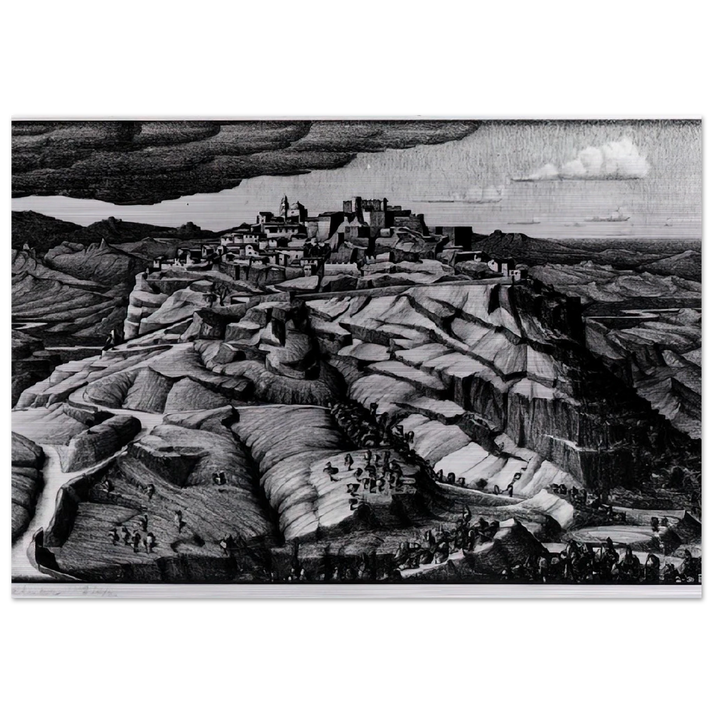
SANTA SEVERINA CALABRIA FEBRUARY 1931 1931 - MC Escher Brushed Aluminum Print - 70x100 cm / 28x40 inches | MC Escher Aluminum Print | MC Escher Prints | Maurits Cornelis Escher Prints
SANTA SEVERINA CALABRIA FEBRUARY 1931 1931 - MC Escher Brushed Aluminum Print - 70x100 cm / 28x40 inches | MC Escher Aluminum Print | MC Escher Prints | Maurits Cornelis Escher Prints
Couldn't load pickup availability
M.C. Escher's 'Santa Severina Calabria February 1931' - A Geometric Masterpiece on Brushed Aluminum
Experience the architectural precision of M.C. Escher's early work with this museum-quality brushed aluminum print of 'Santa Severina Calabria February 1931'. Created in 1931 during Escher's transformative Italian period, this piece captures the stark, geometric beauty of the Calabrian landscape, foreshadowing the impossible geometries that would later define his legacy. Unlike his later optical illusions, this work reveals Escher's masterful eye for perspective and structural harmony, offering a rare glimpse into the artist's foundational techniques.
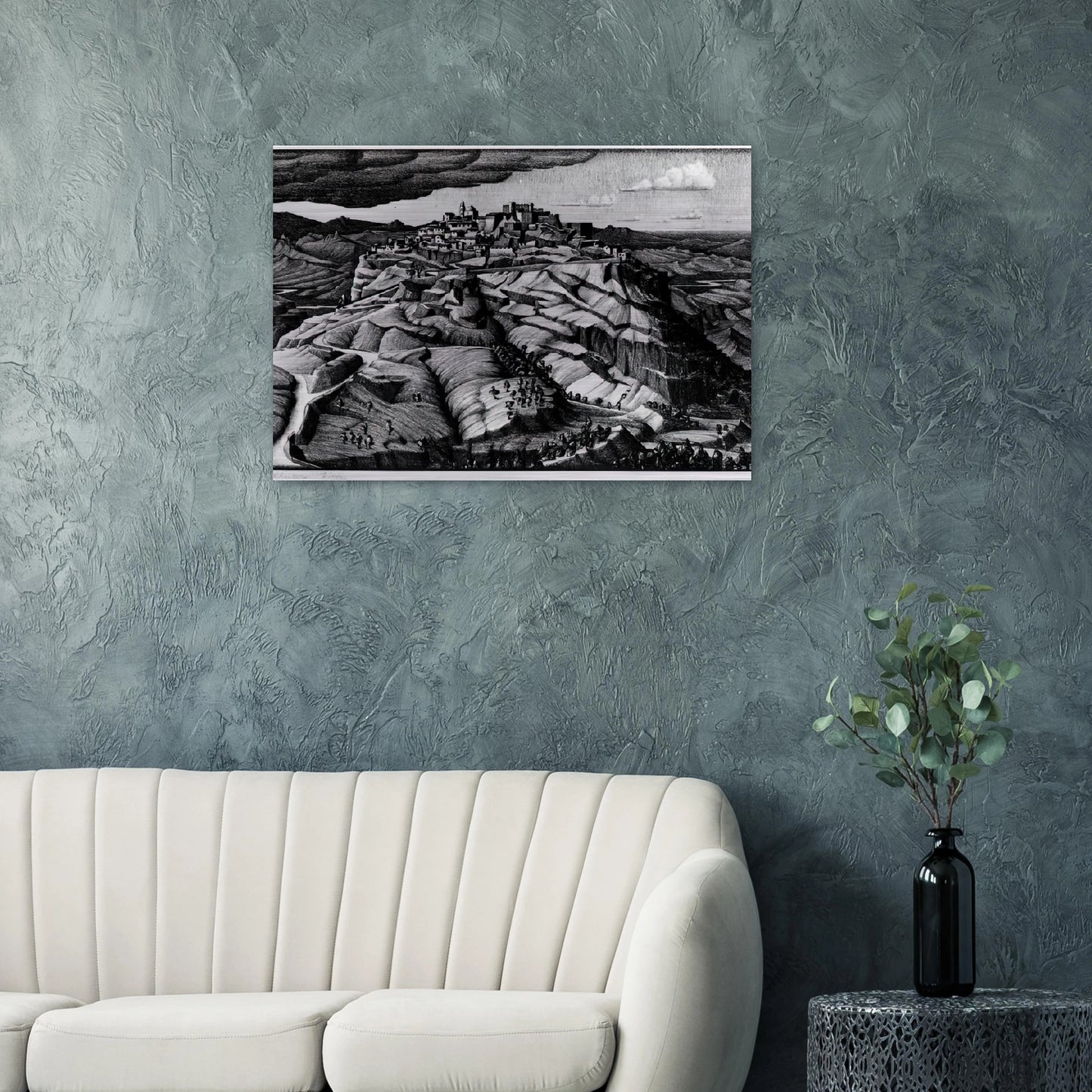
This premium fine art print is meticulously reproduced on 3mm thick brushed silver Aluminum DIBOND®, featuring a dynamic horizontal grain and metallic finish that enhances the artwork's bold contrasts. The direct print technology ensures vivid, archival-grade colors with a matte, glare-free surface, while unprinted areas reveal a striking metallic silver effect—perfect for highlighting Escher's iconic black-and-white designs. Measuring 70x100 cm (28x40 inches), this piece arrives ready to display with an included hanging kit, making it an effortless addition to any modern interior.
At RedKalion, we specialize in archival-grade reproductions that honor the artist's original vision. Elevate your space with this durable, rigid print that combines historical significance with contemporary craftsmanship, ensuring it endures as a timeless statement piece.


Discover Unlimited Art Possibilities
At RedKalion, you can find virtually any artwork from any artist, available in a wide range of sizes to perfectly match your space.
If you didn’t find what you’re looking for, contact us at support@redkalion.com . We will source any artwork and produce it in any size and format you need, including art prints, posters, canvas, framed pieces, framed canvas, and more.
For dedicated art enthusiasts, we also offer handcrafted replicas of any artwork, carefully painted by highly skilled artists using traditional techniques.
For custom requests, contact us at support@redkalion.com .
What is the historical significance of 'Santa Severina Calabria February 1931' by M.C. Escher?
This 1931 work marks Escher's Italian period, showcasing his early mastery of perspective and geometric precision in capturing the Calabrian landscape, before he developed his famous optical illusions.
How does the brushed aluminum material enhance this M.C. Escher print?
The brushed silver Aluminum DIBOND® with a horizontal grain adds a dynamic, metallic effect, complementing Escher's black-and-white design with a modern, durable finish for museum-quality wall art.
What are the specifications of this M.C. Escher aluminum print?
It measures 70x100 cm (28x40 inches), is 3mm thick with a matte, glare-free surface, and uses direct print on aluminum for vivid colors and archival longevity in fine art reproductions.
Is a hanging kit included with this premium M.C. Escher print?
Yes, a hanging kit is included; specific components may vary by fulfillment country to ensure secure installation for your brushed aluminum art print.
How durable and archival is this brushed aluminum print?
Made with 3mm Aluminum DIBOND®, it offers rigid durability and archival-grade printing, resistant to fading for long-lasting museum-quality wall decor.
Why did M.C. Escher choose Santa Severina as a subject in 1931?
During his Italian travels, Escher was drawn to Santa Severina's stark, geometric architecture, which aligned with his interest in perspective and structural patterns, as seen in this early work.
How does the matte finish benefit this black-and-white Escher print?
The matte, glare-free finish minimizes reflections, enhancing the contrast and detail of Escher's design while revealing a metallic silver effect in unprinted areas for a striking look.