RedKalion
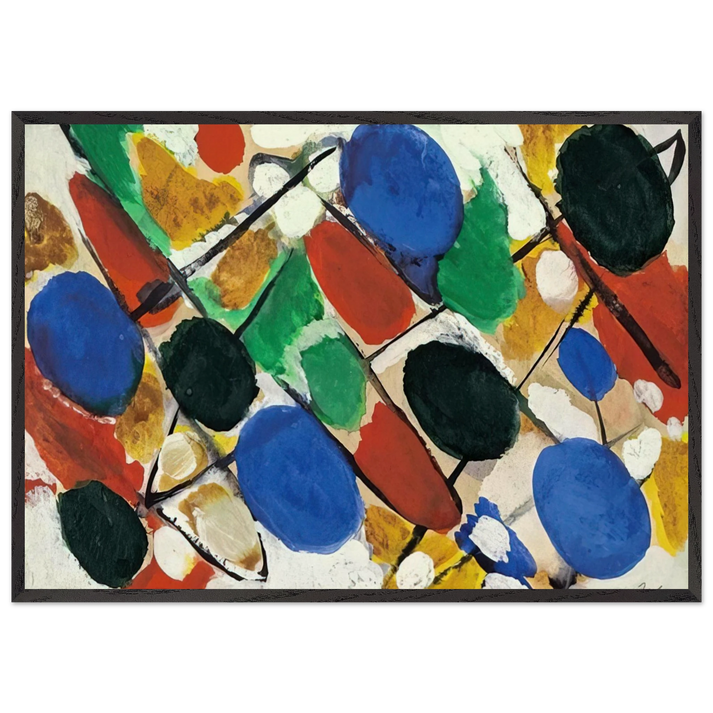
Scheiben - 1955 - Ernst Wilhelm Nay 70x100 cm / 28x40 inches Framed Art Print – Black Wooden Frame
Scheiben - 1955 - Ernst Wilhelm Nay 70x100 cm / 28x40 inches Framed Art Print – Black Wooden Frame
Couldn't load pickup availability
Scheiben (1955) by Ernst Wilhelm Nay: A Museum-Quality Framed Art Print
Elevate your space with Scheiben (1955), a pivotal work by German abstract master Ernst Wilhelm Nay. This museum-quality reproduction captures the vibrant energy of Nay's post-war period, where he explored geometric abstraction through dynamic color and form. The title Scheiben (meaning "discs" or "circles") reflects his fascination with rhythmic, overlapping shapes that evoke movement and depth, making it a timeless piece for modern interiors.
RedKalion presents this fine art print in a premium black wooden frame, crafted from responsibly sourced oak and ash wood. The frame measures 20mm (0.79") thick and wide, offering a substantial, gallery-worthy presence that enhances the artwork's impact. Each print is meticulously reproduced on 250 gsm (110 lb) archival museum-quality paper with a matte, uncoated finish, ensuring true color fidelity and longevity. Protected by shatterproof plexiglass, this ready-to-hang piece includes a hanging kit for immediate display.
Art Historical Insight: Nay developed his Scheibenbilder (disc paintings) in the 1950s, moving away from figurative art to embrace pure abstraction. This series, including Scheiben (1955), showcases his mastery of color theory and spatial composition, influenced by his studies of light and nature. It represents a key moment in European abstract expressionism, bridging post-war innovation with timeless aesthetic appeal.
Trust RedKalion for archival-grade reproductions that bring elite artistry into your home. This framed print measures 70x100 cm / 28x40 inches, making it a statement piece for living rooms, offices, or galleries.

Discover Unlimited Art Possibilities
At RedKalion, you can find virtually any artwork from any artist, available in a wide range of sizes to perfectly match your space.
If you didn’t find what you’re looking for, contact us at support@redkalion.com . We will source any artwork and produce it in any size and format you need, including art prints, posters, canvas, framed pieces, framed canvas, and more.
For dedicated art enthusiasts, we also offer handcrafted replicas of any artwork, carefully painted by highly skilled artists using traditional techniques.
For custom requests, contact us at support@redkalion.com .
What are the dimensions and framing details of this Ernst Wilhelm Nay print?
This framed art print measures 70x100 cm (28x40 inches) and features a black wooden frame made from responsibly sourced oak and ash wood, 20mm (0.79") thick and wide, with shatterproof plexiglass protection and a ready-to-hang kit.
What type of paper is used for this museum-quality reproduction?
It uses 250 gsm (110 lb) archival museum-quality paper with a matte, uncoated finish, 0.29 mm (11.4 mils) thick, made from sustainable FSC-certified materials for durability and fine art presentation.
Is this framed print ready to hang upon delivery?
Yes, this ready-to-hang framed art print includes a hanging kit, allowing for immediate display on your wall without additional setup.
How does the archival quality ensure long-term preservation?
The archival paper and shatterproof plexiglass protect against fading, moisture, and damage, ensuring this fine art print maintains its vibrant colors and integrity for decades.
What is the significance of Scheiben (1955) in art history?
Scheiben (1955) is part of Ernst Wilhelm Nay's Scheibenbilder series, marking his shift to geometric abstraction in post-war Germany, showcasing innovative color and form that influenced European abstract expressionism.
How does the frame enhance this art print?
The 20mm black wooden frame, wider than classic 14mm frames, adds a substantial, gallery-worthy border that complements the abstract design and elevates the overall presentation.
Can you describe Nay's technique in this artwork?
Nay used layered, overlapping circular forms and bold color contrasts in Scheiben (1955) to create dynamic spatial effects, reflecting his exploration of rhythm and light in abstract painting.