RedKalion
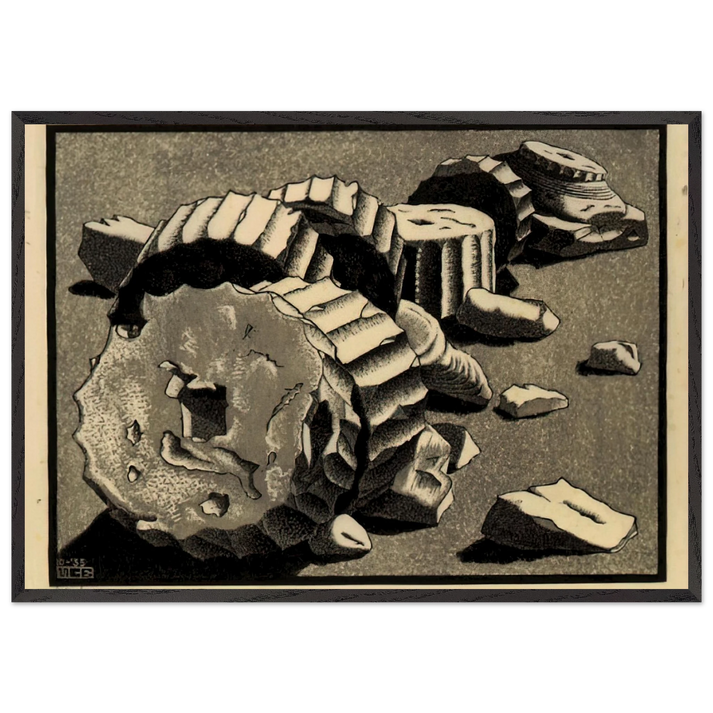
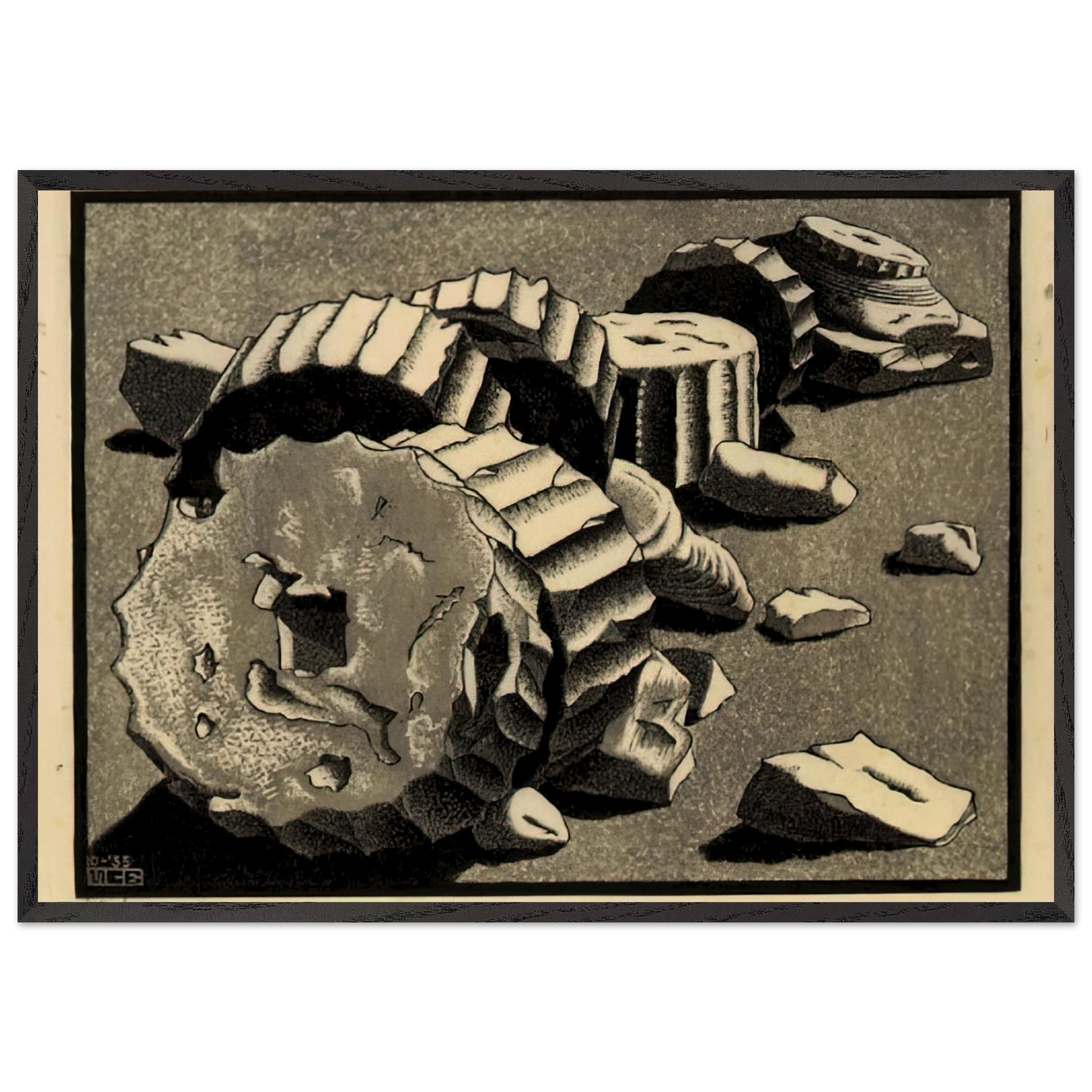
SELINUNTE SICILY OCTOBER 1935 1935 - MC Escher 70x100 cm / 28x40 inches Framed Art Print – Black Wooden Frame | Maurits Cornelis Escher Prints
SELINUNTE SICILY OCTOBER 1935 1935 - MC Escher 70x100 cm / 28x40 inches Framed Art Print – Black Wooden Frame | Maurits Cornelis Escher Prints
Couldn't load pickup availability
SELINUNTE SICILY OCTOBER 1935 by M.C. Escher: A Timeless Fine Art Print
Experience the architectural precision and surreal beauty of M.C. Escher's 1935 masterpiece, SELINUNTE SICILY OCTOBER 1935, now available as a museum-quality reproduction from RedKalion. This iconic work captures the ancient ruins of Selinunte in Sicily, rendered with Escher's signature attention to geometric detail and atmospheric perspective, evoking a sense of historical grandeur and contemplative stillness.
Our archival-grade print is meticulously reproduced on 250 gsm (110 lb) matte, uncoated, natural white paper—a premium, FSC-certified material that ensures longevity and true color fidelity. The artwork is elegantly presented in a responsibly sourced black wooden frame crafted from oak and ash, featuring a wider 20mm (0.79") profile for a bold, modern aesthetic. Protected by shatterproof plexiglass, this framed art print arrives ready-to-hang with a complete hanging kit, allowing you to elevate your space with a piece that endures.
As an elite online gallery, RedKalion specializes in curating world-class reproductions that honor the artist's original vision. This print not only showcases Escher's mastery of lithography but also serves as a testament to his early explorations of symmetry and structure, making it a compelling addition for collectors and design enthusiasts alike.
Discover Unlimited Art Possibilities
At RedKalion, you can find virtually any artwork from any artist, available in a wide range of sizes to perfectly match your space.
If you didn’t find what you’re looking for, contact us at support@redkalion.com . We will source any artwork and produce it in any size and format you need, including art prints, posters, canvas, framed pieces, framed canvas, and more.
For dedicated art enthusiasts, we also offer handcrafted replicas of any artwork, carefully painted by highly skilled artists using traditional techniques.
For custom requests, contact us at support@redkalion.com .
What are the dimensions of this M.C. Escher framed art print?
This framed print measures 70x100 cm (28x40 inches), with a 20mm (0.79") thick black wooden frame, providing a wider profile than standard frames for enhanced visual impact.
What type of paper is used for this museum-quality reproduction?
We use 250 gsm (110 lb) matte, uncoated, natural white archival paper, FSC-certified for sustainability, ensuring a premium fine art print with excellent color accuracy and longevity.
Is this framed print ready to hang upon delivery?
Yes, it includes a hanging kit and is ready-to-hang directly on your wall, making installation simple and immediate for your home or office decor.
How does the frame protect the M.C. Escher print?
The frame features shatterproof plexiglass that safeguards the print from dust, UV light, and damage, while the responsibly sourced oak and ash wood ensures durability.
Is this print archival and fade-resistant?
Yes, our archival museum-quality paper and protective plexiglass ensure this fine art print is fade-resistant and designed to last for generations without yellowing.
What historical significance does SELINUNTE SICILY OCTOBER 1935 hold?
Created in 1935, this work reflects M.C. Escher's early fascination with Italian architecture and geometric precision, capturing the ancient ruins of Selinunte in Sicily with detailed lithographic technique.
How does Escher's technique influence the mood of this artwork?
Escher's use of precise lines and atmospheric perspective in this lithograph evokes a serene, contemplative mood, highlighting the timeless beauty and structural harmony of the Sicilian ruins.