RedKalion
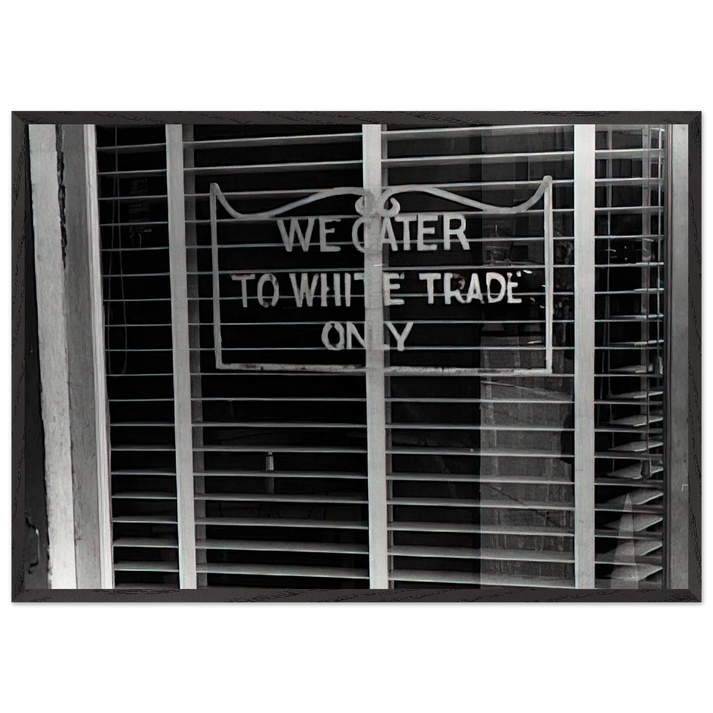
SIGN ON A RESTAURANT WE CATER TO WHITE TRADE ONLY 1938 - Ben Shahn 70x100 cm / 28x40 inches Framed Art Print – Black Wooden Frame
SIGN ON A RESTAURANT WE CATER TO WHITE TRADE ONLY 1938 - Ben Shahn 70x100 cm / 28x40 inches Framed Art Print – Black Wooden Frame
Couldn't load pickup availability
SIGN ON A RESTAURANT WE CATER TO WHITE TRADE ONLY 1938 - Ben Shahn
This powerful 1938 artwork by Ben Shahn captures a stark moment of racial segregation in America, rendered with the artist's signature social realist style. Shahn, a prominent figure in 20th-century American art, used his work to critique injustice, making this piece a poignant historical document and a striking conversation starter for any modern space.
RedKalion presents this museum-quality print as a ready-to-hang framed art piece, meticulously reproduced to honor Shahn's original intent. The print is crafted on 250 gsm (110 lb) archival museum-quality paper with a matte, uncoated finish, ensuring vibrant detail and longevity. It is protected by shatterproof plexiglass and housed in a responsibly sourced black wooden frame made from oak and ash wood, measuring 20mm thick for a substantial, gallery-worthy presence.
Elevate your home or office with this archival masterpiece that combines art historical significance with enduring physical quality. Each element—from the FSC-certified sustainable paper to the wider 20mm frame—reflects RedKalion's commitment to premium reproductions that stand the test of time.

Discover Unlimited Art Possibilities
At RedKalion, you can find virtually any artwork from any artist, available in a wide range of sizes to perfectly match your space.
If you didn’t find what you’re looking for, contact us at support@redkalion.com . We will source any artwork and produce it in any size and format you need, including art prints, posters, canvas, framed pieces, framed canvas, and more.
For dedicated art enthusiasts, we also offer handcrafted replicas of any artwork, carefully painted by highly skilled artists using traditional techniques.
For custom requests, contact us at support@redkalion.com .
What are the dimensions of this Ben Shahn framed art print?
This framed print measures 70x100 cm (28x40 inches), including the black wooden frame, making it an ideal size for prominent wall display in living rooms, offices, or galleries.
What materials are used in the frame and paper?
The frame is made from responsibly sourced oak and ash wood, 20mm thick for durability. The print uses 250 gsm archival museum-quality paper with a matte finish, protected by shatterproof plexiglass for longevity.
Yes, it includes a hanging kit and is ready-to-hang directly on your wall, ensuring easy setup for immediate enjoyment of this fine art reproduction.
How does the archival paper ensure long-term quality?
The 250 gsm FSC-certified paper is acid-free and uncoated, designed to resist fading and deterioration, preserving this museum-quality print for generations as a durable art investment.
What is the historical significance of this artwork?
Created in 1938 by Ben Shahn, this piece critiques racial segregation in America, reflecting the social realist movement and Shahn's activism, making it a valuable historical and artistic statement.
Why is the frame wider than standard frames?
The 20mm thick frame provides enhanced stability and a bold, gallery-style aesthetic, offering better protection and a more substantial presence compared to classic 14mm frames.
Can I learn more about Ben Shahn's technique in this work?
Shahn often used tempera and graphic design elements to convey social messages, with this piece showcasing his precise lettering and stark composition to highlight institutional racism in 1930s America.