
RedKalion
Sistine Chapel Hands of God and Adam Fine Art Print | RedKalion
Sistine Chapel Hands of God and Adam Fine Art Print | RedKalion
Couldn't load pickup availability
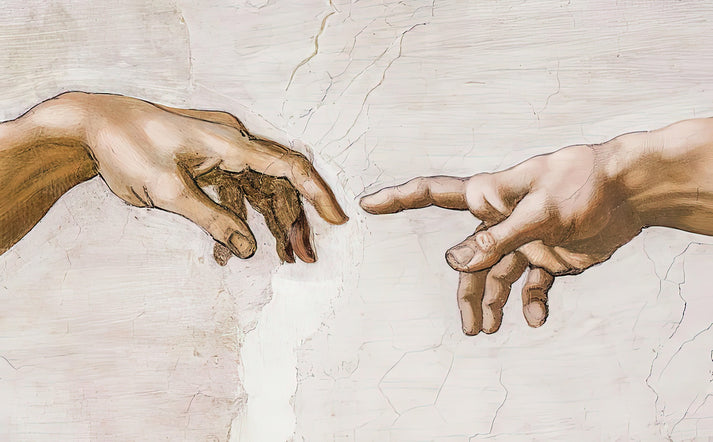
Michelangelo's Hands of God the Father and Adam from the Sistine Chapel Ceiling (c. 1511) captures the moment of divine creation. This iconic fresco detail, part of the Creation of Adam scene, is renowned for its dynamic tension and anatomical precision. The near-touch of fingertips symbolizes the spark of life, rendered with Michelangelo's masterful chiaroscuro and foreshortening.
Analysis of the Sistine Chapel Hands
The composition focuses on the hands of God and Adam, separated by a narrow gap. God's hand, extended with authority, contrasts with Adam's languid, receptive gesture. Michelangelo's use of fresco technique allowed for subtle tonal gradations, enhancing the volumetric realism. This detail exemplifies High Renaissance ideals, blending theological narrative with humanistic expression.
Michelangelo's Artistic Legacy
Created during the Sistine Chapel's ceiling project (1508-1512), this work reflects Michelangelo's deep study of human anatomy and classical sculpture. The hands are not merely symbolic; they are anatomically accurate, showcasing tendons and musculature in motion. This attention to detail elevates the spiritual theme, making it a cornerstone of Western art history.
Print Specifications & Materials
- Available Sizes: 75×100 cm / 30×40″, 40×50 cm / 16×20″, 21×29.7 cm / 8×12″
- Paper Finishing: Matte, uncoated, natural white (off-white)
- Acid-Free: pH above 7 to prevent yellowing over time
- Paper Weight: 250 gsm (110 lb) | Thickness: 0.29 mm (11.4 mils)
- Sustainable Paper: FSC-certified
RedKalion's premium art print of the Sistine Chapel hands offers museum-quality reproduction, ideal for scholars and art enthusiasts. Our archival materials ensure this iconic Michelangelo detail remains vibrant for generations.


Discover Unlimited Art Possibilities
At RedKalion, you can find virtually any artwork from any artist, available in a wide range of sizes to perfectly match your space.
If you didn’t find what you’re looking for, contact us at support@redkalion.com . We will source any artwork and produce it in any size and format you need, including art prints, posters, canvas, framed pieces, framed canvas, and more.
For dedicated art enthusiasts, we also offer handcrafted replicas of any artwork, carefully painted by highly skilled artists using traditional techniques.
For custom requests, contact us at support@redkalion.com .
What is the historical context of the Sistine Chapel hands?
Painted around 1511 by Michelangelo, this detail is from the Creation of Adam fresco on the Sistine Chapel ceiling, commissioned by Pope Julius II to depict biblical narratives.
How does Michelangelo's technique enhance the hands' symbolism?
Michelangelo used fresco and chiaroscuro to create volumetric realism, with anatomical accuracy emphasizing the divine spark of life through the near-touch of fingertips.
What paper is used for this fine art print?
We use FSC-certified, acid-free paper with a matte finish, 250 gsm weight, and natural white color for archival longevity and true color reproduction.
How is the print shipped and packaged?
Prints are shipped flat in sturdy packaging to prevent damage, with global shipping options and tracking for secure delivery of your Sistine Chapel art.
Will the print fade or yellow over time?
No, our acid-free paper and archival inks resist fading and yellowing, ensuring the Michelangelo print remains vibrant for decades under normal display conditions.
What sizes are available for this artwork?
Available in 75×100 cm, 40×50 cm, and 21×29.7 cm to suit different spaces, from large statement pieces to smaller study prints.
Why is the gap between the hands significant?
The narrow gap symbolizes the imminent transfer of life, highlighting Michelangelo's mastery of tension and narrative in High Renaissance art.