


RedKalion
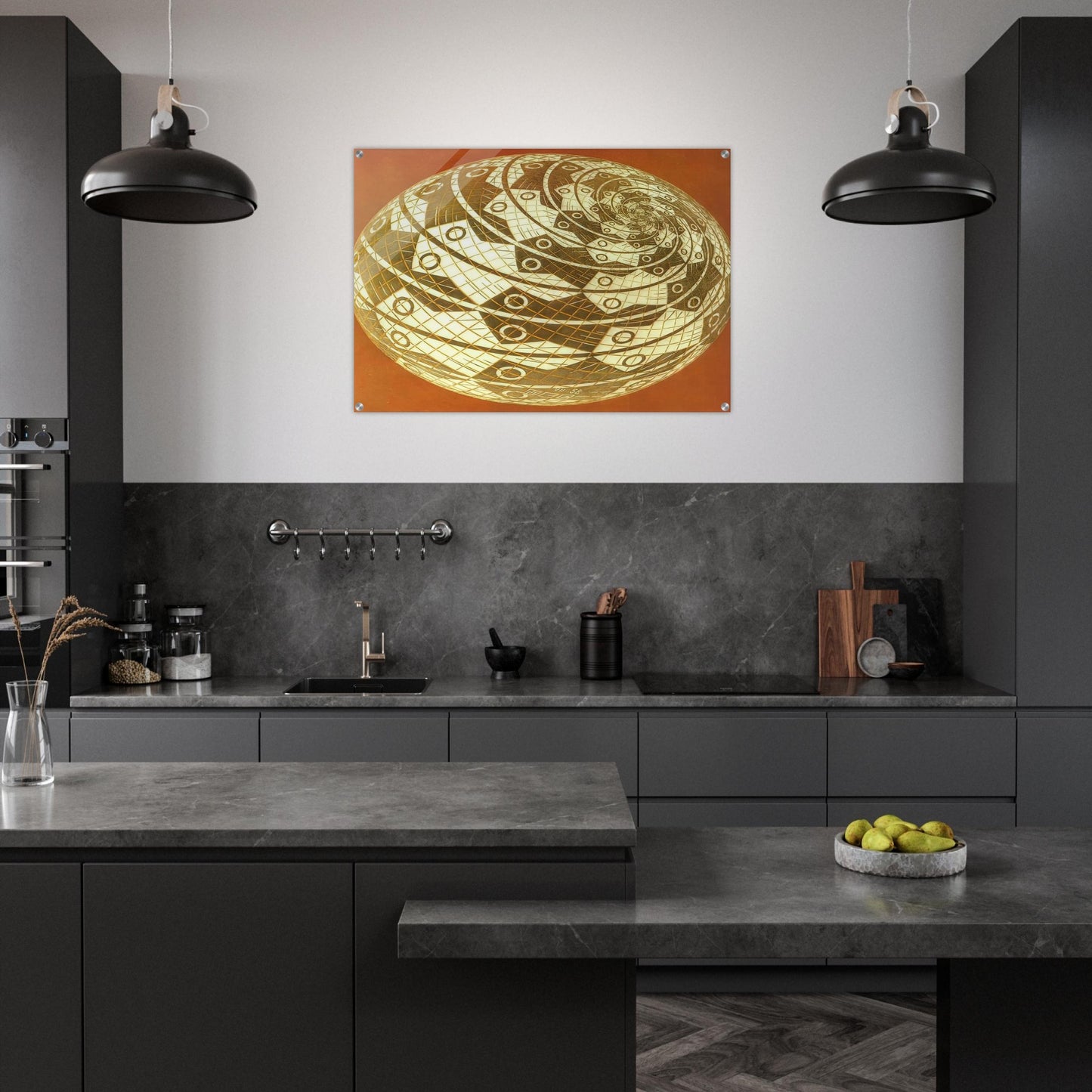
SPHERE SURFACE WITH FISHES COLOUR - MC Escher Acrylic Print - 70x100 cm / 28x40″ inches | Maurits Cornelis Escher Prints
SPHERE SURFACE WITH FISHES COLOUR - MC Escher Acrylic Print - 70x100 cm / 28x40″ inches | Maurits Cornelis Escher Prints
Couldn't load pickup availability
SPHERE SURFACE WITH FISHES COLOUR - MC Escher Acrylic Print
Immerse yourself in the mesmerizing world of Maurits Cornelis Escher with this premium museum-quality reproduction of "Sphere Surface with Fishes Colour." This fine art print captures Escher's genius in transforming mathematical precision into surreal visual poetry, where interlocking fish swim across the curved surface of a sphere, defying conventional perspective. As a master of tessellation and optical illusion, Escher created this work in the mid-20th century, blending art and science to explore infinity and symmetry—a hallmark of his iconic style that continues to captivate collectors and enthusiasts worldwide.
RedKalion presents this archival-grade acrylic print on 4mm (0.15") high-quality acrylic, ensuring vibrant colors and a sleek, durable finish that resists fading. With dimensions of 70x100 cm / 28x40" inches, it features straight-cut corners for a modern aesthetic, and transparent backgrounds are optimized to white for striking presentation. Elevate your space with a masterpiece that endures, backed by our commitment to premium e-commerce craftsmanship and art historical authenticity.
- Material: 4mm (0.15") acrylic for vibrant, durable display.
- Design: Straight-cut corners; transparent backgrounds default to white.
- Hanging Kit: Includes hardware, screws, and screw holes (14mm from edge, 8mm diameter, 15mm screw head).
- Dimensions: 70x100 cm / 28x40" inches.


Discover Unlimited Art Possibilities
At RedKalion, you can find virtually any artwork from any artist, available in a wide range of sizes to perfectly match your space.
If you didn’t find what you’re looking for, contact us at support@redkalion.com . We will source any artwork and produce it in any size and format you need, including art prints, posters, canvas, framed pieces, framed canvas, and more.
For dedicated art enthusiasts, we also offer handcrafted replicas of any artwork, carefully painted by highly skilled artists using traditional techniques.
For custom requests, contact us at support@redkalion.com .
What is the historical significance of MC Escher's "Sphere Surface with Fishes Colour"?
This artwork exemplifies Maurits Cornelis Escher's mastery of tessellation and mathematical art, created in the 1950s to explore infinity and symmetry through surreal visual illusions, making it a key piece in optical art history.
How does the acrylic print enhance the colors of this Escher reproduction?
The 4mm acrylic material provides a glossy, vibrant finish that intensifies colors and offers UV protection, ensuring this fine art print remains museum-quality for years.
What are the specifications for hanging this 70x100 cm acrylic print?
It includes a hanging kit with screws and pre-drilled holes 14mm from the edge (8mm diameter, 15mm screw head) for easy, secure installation of your premium art reproduction.
Is the background of this print customizable or fixed?
Transparent backgrounds default to white for optimal presentation, but contact RedKalion for custom options on this archival-grade acrylic print.
How durable is the 4mm acrylic material for long-term display?
This durable acrylic resists scratches and fading, making it ideal for preserving your MC Escher fine art print as a lasting investment in home or office decor.
What makes Escher's use of fish in this artwork unique?
Escher uses interlocking fish to create a seamless tessellation on a spherical surface, blending biological forms with geometric precision to challenge perceptions of space.
Can I learn more about Escher's techniques in this piece?
Yes, Escher employed lithography and meticulous planning to achieve the illusion of infinite repetition, a technique detailed in art history resources on his works.