

RedKalion
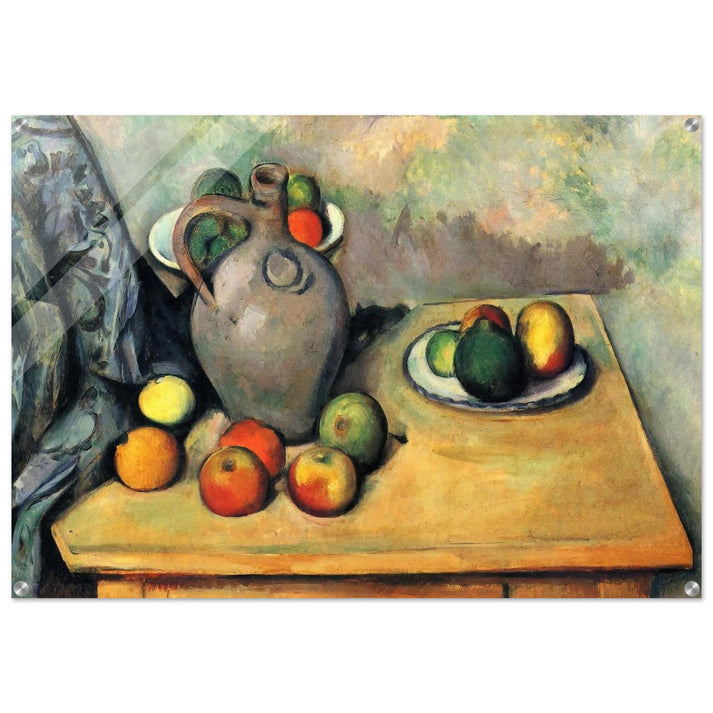
Still life, jug and fruit on a table - Paul Cézanne Acrylic Print - 70x100 cm / 28x40″ inches
Still life, jug and fruit on a table - Paul Cézanne Acrylic Print - 70x100 cm / 28x40″ inches
Couldn't load pickup availability
Still Life, Jug and Fruit on a Table by Paul Cézanne: A Masterpiece in Modern Reproduction
Elevate your space with this museum-quality acrylic print of Paul Cézanne's iconic "Still Life, Jug and Fruit on a Table". This fine art print captures the revolutionary essence of Cézanne's post-impressionist vision, where everyday objects are transformed into geometric explorations of form and color. As a pioneer who bridged Impressionism and Cubism, Cézanne's work in still life redefined artistic perception, making this piece a timeless addition to any art collection.
Our premium reproduction is meticulously crafted on 4mm (0.15") acrylic, offering a sleek, vibrant, and durable finish that enhances the painting's rich textures and subtle hues. The straight-cut corners provide a modern aesthetic, while transparent backgrounds are optimized to white for a crisp, gallery-ready presentation. Measuring 70x100 cm / 28x40" inches, this archival-grade print comes complete with a hanging kit, including hardware, screws, and pre-drilled screw holes at each corner (14mm from the edge, 8mm diameter, 15mm screw head) for effortless installation.
At RedKalion, we specialize in museum-quality reproductions that honor the artist's original intent. This piece not only reflects Cézanne's innovative use of brushstrokes to build volume and depth but also serves as a testament to our commitment to excellence in art preservation. Display it in your home or office to inspire contemplation and sophistication.


Discover Unlimited Art Possibilities
At RedKalion, you can find virtually any artwork from any artist, available in a wide range of sizes to perfectly match your space.
If you didn’t find what you’re looking for, contact us at support@redkalion.com . We will source any artwork and produce it in any size and format you need, including art prints, posters, canvas, framed pieces, framed canvas, and more.
For dedicated art enthusiasts, we also offer handcrafted replicas of any artwork, carefully painted by highly skilled artists using traditional techniques.
For custom requests, contact us at support@redkalion.com .
What are the dimensions and material of this Paul Cézanne acrylic print?
This fine art print measures 70x100 cm (28x40 inches) and is crafted on 4mm acrylic for a vibrant, durable museum-quality reproduction.
How is the acrylic print mounted and hung?
It features straight-cut corners with pre-drilled screw holes (14mm from edge, 8mm diameter) and includes a full hanging kit for easy installation of your archival art piece.
What makes this reproduction of "Still Life, Jug and Fruit on a Table" museum-quality?
RedKalion uses high-resolution imaging and 4mm acrylic to capture Cézanne's post-impressionist details, ensuring a premium fine art print that rivals gallery displays.
How does the transparent background appear in this print?
Transparent backgrounds default to white for optimal presentation, enhancing the modern look of this Paul Cézanne still life reproduction.
What is the shipping and return policy for this item?
We offer secure global shipping with tracking and a satisfaction guarantee, so you can trust in your investment for this archival art print.
Why is Paul Cézanne's "Still Life, Jug and Fruit on a Table" significant in art history?
This painting exemplifies Cézanne's revolutionary approach to form and color, bridging Impressionism and Cubism, making it a key work in modern art evolution.
What techniques did Cézanne use in this still life painting?
Cézanne employed geometric brushstrokes and layered colors to create depth and volume, transforming ordinary objects into structured compositions that influenced 20th-century art.