

RedKalion
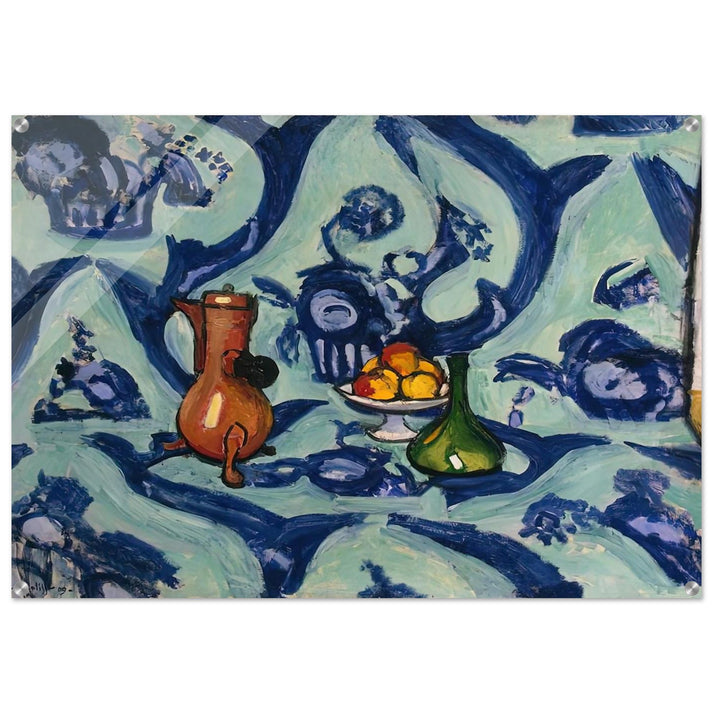
STILL LIFE WITH BLUE TABLECLOTH 1906 - Henri Matisse Acrylic Print - 70x100 cm / 28x40″ inches
STILL LIFE WITH BLUE TABLECLOTH 1906 - Henri Matisse Acrylic Print - 70x100 cm / 28x40″ inches
Couldn't load pickup availability
Still Life with Blue Tablecloth (1906) by Henri Matisse
Immerse your space in the vibrant energy of Fauvism with this museum-quality acrylic print of Henri Matisse's "Still Life with Blue Tablecloth" (1906). This iconic work captures Matisse's revolutionary use of bold, non-naturalistic color and expressive brushwork, defining the early 20th-century avant-garde movement. The composition—featuring a richly patterned blue cloth, fruit, and vessels—radiates a joyful, dynamic mood, transforming ordinary objects into a symphony of hue and form.
RedKalion presents this archival masterpiece as a premium 70x100 cm / 28x40″ acrylic print, crafted with precision to honor Matisse's original vision. Our reproduction utilizes a 4mm (0.15") acrylic panel for a sleek, gallery-ready finish that enhances color vibrancy and durability. The design features straight-cut corners for a modern aesthetic, with transparent backgrounds defaulting to white to ensure optimal presentation in any setting.
Each print includes a complete hanging kit with hardware, screws, and pre-drilled screw holes at each corner (positioned 14mm (0.55") from the edge, with an 8mm (0.31") diameter hole and 15mm (0.6") screw head), allowing for effortless installation. Elevate your home or office with a fine art reproduction that combines historical significance with contemporary craftsmanship, backed by RedKalion's commitment to archival quality.
Art Historical Insight: Painted during Matisse's Fauvist peak, this still life exemplifies his departure from realistic depiction. The intense blue tablecloth, contrasted with warm oranges and greens, creates a visual tension that challenges traditional perspective, showcasing his belief that color could evoke emotion independently of form—a principle that would influence modern art for decades.


Discover Unlimited Art Possibilities
At RedKalion, you can find virtually any artwork from any artist, available in a wide range of sizes to perfectly match your space.
If you didn’t find what you’re looking for, contact us at support@redkalion.com . We will source any artwork and produce it in any size and format you need, including art prints, posters, canvas, framed pieces, framed canvas, and more.
For dedicated art enthusiasts, we also offer handcrafted replicas of any artwork, carefully painted by highly skilled artists using traditional techniques.
For custom requests, contact us at support@redkalion.com .
What are the dimensions of this Henri Matisse acrylic print?
This fine art print measures 70x100 cm (28x40 inches), making it an ideal statement piece for wall decor with a museum-quality reproduction on durable acrylic.
What material is used for the acrylic print?
It features a 4mm (0.15") acrylic panel for a sleek, vibrant finish that enhances color depth and ensures long-lasting durability in your art collection.
How is the print shipped and installed?
We include a hanging kit with hardware and screws; screw holes are pre-drilled at each corner (14mm from edge, 8mm diameter) for easy mounting of your premium art reproduction.
Transparent backgrounds default to white for optimal presentation, providing a clean, modern look that highlights Matisse's Fauvist masterpiece in any room setting.
How archival and durable is this acrylic print?
Our archival-grade acrylic print resists fading and damage, offering a durable, museum-quality reproduction that preserves the vibrant colors of Matisse's 1906 still life for years.
What is the historical significance of "Still Life with Blue Tablecloth"?
Painted in 1906, it's a key Fauvist work where Matisse used bold, non-naturalistic colors to express emotion, revolutionizing modern art with its vibrant tablecloth and dynamic composition.
Why did Matisse choose such intense colors in this painting?
Matisse employed intense blues and contrasting hues to evoke emotional impact over realism, showcasing Fauvist principles that color could independently convey mood and energy in art.