
RedKalion
Stockholm Sweden City Map 1880 Art Print | RedKalion
Stockholm Sweden City Map 1880 Art Print | RedKalion
Couldn't load pickup availability
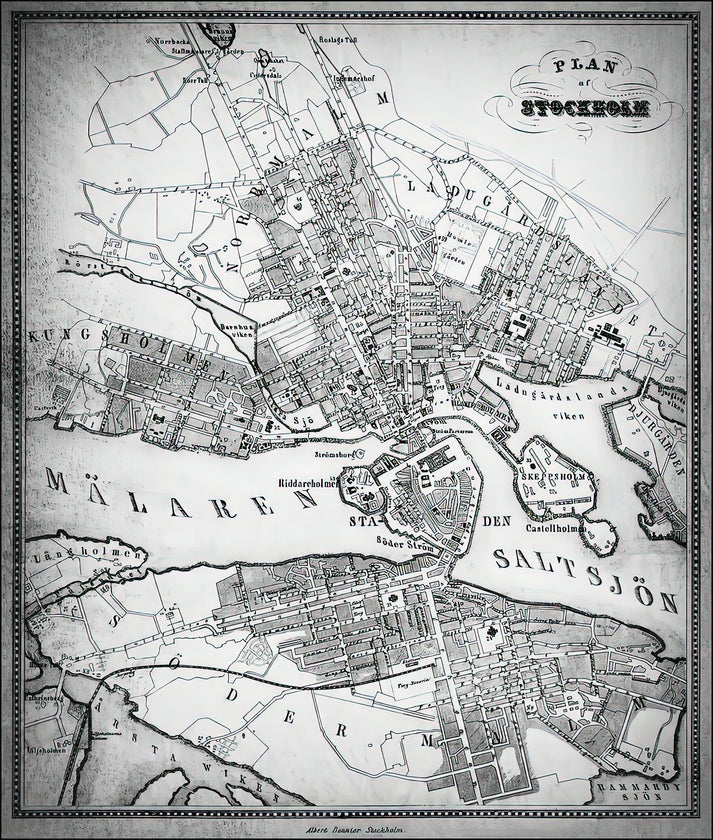
This 1880 Stockholm city map art print captures the Swedish capital in meticulous detail during its late 19th-century urban expansion. The black and white cartography, typical of the period, highlights the city's evolving infrastructure, from Gamla Stan's medieval alleys to new districts emerging post-industrialization. It serves as a historical document of Stockholm's transformation into a modern metropolis.
Stockholm Sweden City Map: Historical Context
Created in 1880, this map reflects Stockholm's rapid growth during the Industrial Revolution. The design emphasizes clarity and precision, with engraved lines delineating streets, waterways, and public spaces. It showcases the city's transition from a fortified trading hub to a burgeoning European capital, making it a valuable resource for historians and art enthusiasts alike.
Features of This Vintage Map Print
The monochrome palette enhances the map's architectural and topographical details, allowing viewers to appreciate the intricate street layouts and natural geography. This print is ideal for decor, offering a timeless aesthetic that complements both modern and traditional interiors while celebrating Stockholm's rich heritage.
Print Specifications & Materials
- Available Sizes: 75×100 cm / 30×40″, 40×50 cm / 16×20″, 21×29.7 cm / 8×12″
- Paper Finishing: Matte, uncoated, natural white (off-white)
- Acid-Free: pH above 7 to prevent yellowing over time
- Paper Weight: 250 gsm (110 lb) | Thickness: 0.29 mm (11.4 mils)
- Sustainable Paper: FSC-certified
RedKalion's premium art prints ensure archival quality, preserving this Stockholm Sweden city map for generations. Trust our expertise in museum-grade reproductions to bring historical cartography into your space.


Discover Unlimited Art Possibilities
At RedKalion, you can find virtually any artwork from any artist, available in a wide range of sizes to perfectly match your space.
If you didn’t find what you’re looking for, contact us at support@redkalion.com . We will source any artwork and produce it in any size and format you need, including art prints, posters, canvas, framed pieces, framed canvas, and more.
For dedicated art enthusiasts, we also offer handcrafted replicas of any artwork, carefully painted by highly skilled artists using traditional techniques.
For custom requests, contact us at support@redkalion.com .
What historical details does this Stockholm Sweden city map show?
This 1880 map depicts Stockholm's urban layout during industrialization, including Gamla Stan, waterways, and emerging districts, with precise black and white engraving typical of late 19th-century cartography.
What paper is used for this vintage map art print?
We use FSC-certified, acid-free paper with a matte finish and 250 gsm weight to ensure durability and prevent yellowing, ideal for archival-quality prints of Stockholm Sweden city maps.
How is this Stockholm map print shipped and packaged?
Prints are shipped flat in protective packaging to prevent damage, with tracking provided for secure delivery of your Stockholm Sweden city map art print.
Will this art print last over time without fading?
Yes, the acid-free, archival-quality materials resist fading and yellowing, ensuring your Stockholm Sweden city map print remains vibrant for decades.
What sizes are available for this Stockholm map print?
Available in 75×100 cm, 40×50 cm, and 21×29.7 cm sizes to fit various spaces, perfect for displaying this detailed Stockholm Sweden city map.
Why was Stockholm mapped in black and white in 1880?
Black and white engraving was standard for 1880s maps due to its clarity and cost-effectiveness, emphasizing Stockholm's structural details without color distractions.
How does this map reflect Stockholm's 19th-century growth?
It shows expanded infrastructure and new districts post-industrialization, highlighting Stockholm's transition from a medieval city to a modern capital in the late 1800s.