

RedKalion
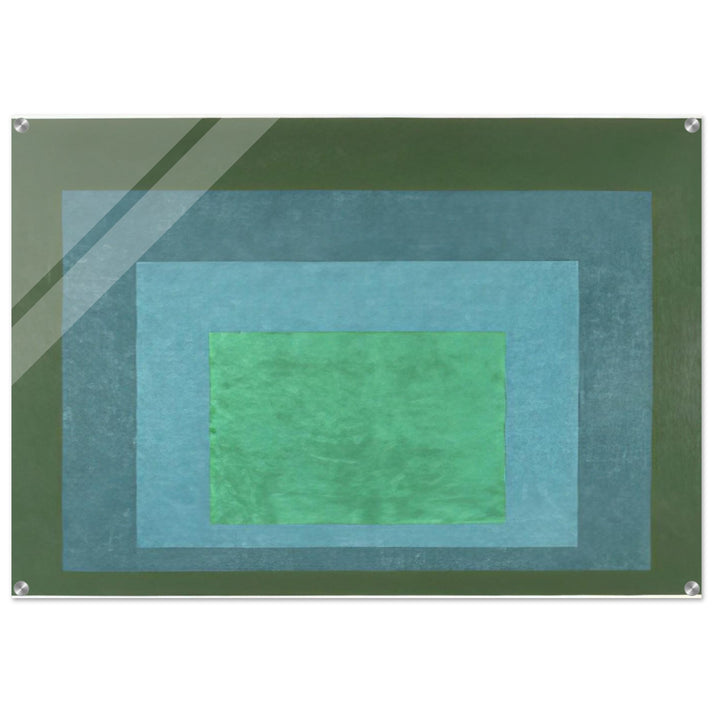
STUDY FOR HOMAGE TO THE SQUARE TERRASSED FOLIAGE 1960 - Josef Albers Acrylic Print - 70x100 cm / 28x40″ inches
STUDY FOR HOMAGE TO THE SQUARE TERRASSED FOLIAGE 1960 - Josef Albers Acrylic Print - 70x100 cm / 28x40″ inches
Couldn't load pickup availability
Study for Homage to the Square: Terrassed Foliage (1960) by Josef Albers – Museum-Quality Acrylic Print
Immerse yourself in the geometric precision and chromatic brilliance of Josef Albers with this archival-grade acrylic print of Study for Homage to the Square: Terrassed Foliage (1960). As a seminal work from Albers’ iconic Homage to the Square series, this piece explores the profound interaction of color and form, where nested squares in earthy, foliage-inspired hues create a dynamic visual rhythm. Albers, a master of the Bauhaus and Black Mountain College, dedicated decades to studying color theory, and this study exemplifies his meticulous approach to evoking depth and emotion through minimalist geometry. This fine art print captures every subtle gradient and crisp edge, offering a timeless addition to modern interiors.
RedKalion presents this masterpiece as a premium 70x100 cm (28x40 inch) acrylic print, crafted with uncompromising quality. The artwork is infused into a 4mm (0.15") thick acrylic panel, ensuring a sleek, vibrant, and durable finish that resists fading and scratches. Featuring straight-cut corners for a contemporary aesthetic, the print defaults to a white background for transparent areas, optimizing presentation. Each piece includes a complete hanging kit with hardware, screws, and pre-drilled holes (14mm from the edge, 8mm diameter) for effortless installation. Elevate your space with an archival reproduction that honors Albers’ legacy and endures as a focal point of sophistication.
- Artwork: Study for Homage to the Square: Terrassed Foliage (1960) by Josef Albers
- Dimensions: 70x100 cm / 28x40 inches
- Material: 4mm (0.15") acrylic for vibrant, museum-quality display
- Design: Straight-cut corners; white background default
- Included: Hanging kit with screws and pre-drilled holes


Discover Unlimited Art Possibilities
At RedKalion, you can find virtually any artwork from any artist, available in a wide range of sizes to perfectly match your space.
If you didn’t find what you’re looking for, contact us at support@redkalion.com . We will source any artwork and produce it in any size and format you need, including art prints, posters, canvas, framed pieces, framed canvas, and more.
For dedicated art enthusiasts, we also offer handcrafted replicas of any artwork, carefully painted by highly skilled artists using traditional techniques.
For custom requests, contact us at support@redkalion.com .
What are the dimensions and material of this Josef Albers acrylic print?
This fine art print measures 70x100 cm (28x40 inches) and is made with a 4mm thick acrylic panel, offering a sleek, vibrant, and durable museum-quality reproduction.
How is the acrylic print mounted and hung?
It includes a hanging kit with hardware, screws, and pre-drilled holes (14mm from the edge, 8mm diameter) for easy installation, featuring straight-cut corners for a modern look.
What is the background color for transparent areas in this print?
Transparent backgrounds default to white to ensure optimal presentation and contrast, enhancing the color theory and geometric precision of Albers' work.
Is this print archival and fade-resistant?
Yes, this archival-grade acrylic print is designed to resist fading and scratches, providing a long-lasting, museum-quality reproduction of the 1960 study.
What shipping and return options does RedKalion offer?
RedKalion provides secure global shipping with tracking and a satisfaction guarantee, ensuring your Josef Albers print arrives safely and meets premium standards.
What is the significance of the Homage to the Square series by Josef Albers?
The Homage to the Square series, started in 1950, explores color interaction and perception through nested squares, reflecting Albers' Bauhaus-influenced studies in geometric abstraction and chromatic theory.
How does Terrassed Foliage reflect Albers' color theory techniques?
This 1960 study uses earthy, foliage-inspired hues in layered squares to create depth and visual vibration, showcasing Albers' methodical approach to evoking emotion through minimalist color relationships.