
RedKalion
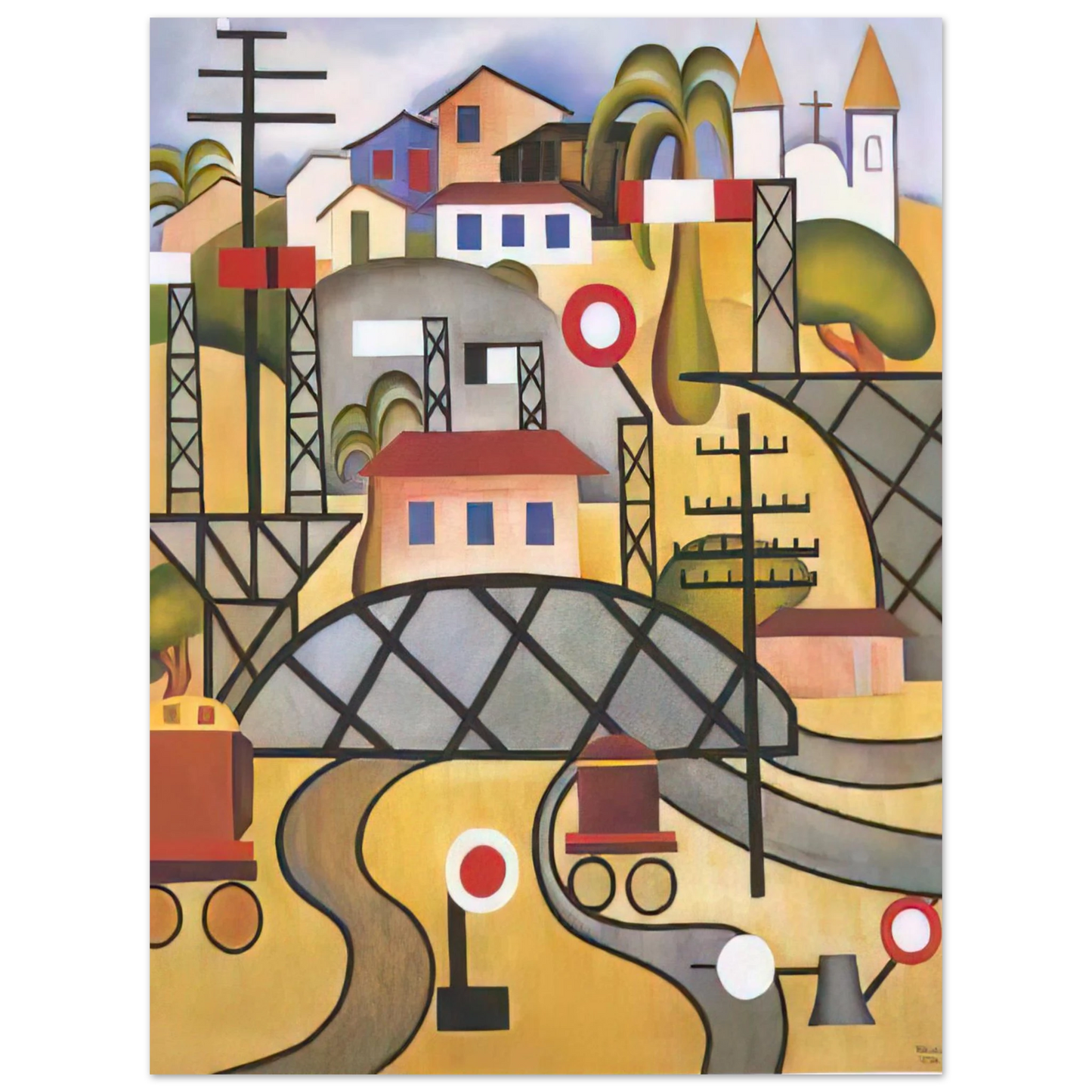
Tarsila do Amaral - E.F.C.B. Estrada de Ferro Central do Brasil 75x100 cm / 30x40inches Fine Art Poster
Tarsila do Amaral - E.F.C.B. Estrada de Ferro Central do Brasil 75x100 cm / 30x40inches Fine Art Poster
Couldn't load pickup availability
Tarsila do Amaral - E.F.C.B. Estrada de Ferro Central do Brasil: A Modernist Masterpiece
Immerse yourself in the vibrant world of Brazilian Modernism with this museum-quality fine art print of Tarsila do Amaral's "E.F.C.B. Estrada de Ferro Central do Brasil". Created in 1924, this iconic work captures the dynamism of industrialization in early 20th-century Brazil, blending geometric abstraction with bold, tropical colors to evoke a sense of national identity and progress. As a key figure in the Antropofagia movement, Tarsila infused her art with a unique visual language that reimagined European avant-garde styles through a distinctly Brazilian lens, making this piece a cornerstone of Latin American art history.
RedKalion presents this archival reproduction on our exclusive Master's Edition archival paper, ensuring every detail—from the rhythmic train tracks to the lush green landscapes—is rendered with precision. The matte, uncoated finish in a natural white hue enhances the artwork's texture and depth, while the acid-free composition (pH above 7) guarantees it resists yellowing for generations. Crafted from FSC-certified paper at 250 gsm (0.29 mm thick), this print offers a luxurious, durable feel that mirrors the quality of original museum displays.
Elevate your space with a piece that combines historical significance with enduring beauty, printed and shipped on demand to bring art directly to your doorstep.
Discover Unlimited Art Possibilities
At RedKalion, you can find virtually any artwork from any artist, available in a wide range of sizes to perfectly match your space.
If you didn’t find what you’re looking for, contact us at support@redkalion.com . We will source any artwork and produce it in any size and format you need, including art prints, posters, canvas, framed pieces, framed canvas, and more.
For dedicated art enthusiasts, we also offer handcrafted replicas of any artwork, carefully painted by highly skilled artists using traditional techniques.
For custom requests, contact us at support@redkalion.com .
What is the historical significance of Tarsila do Amaral's "E.F.C.B. Estrada de Ferro Central do Brasil"?
This 1924 painting is a landmark of Brazilian Modernism, depicting the Central do Brasil railway to symbolize industrialization and national progress during the early 20th century, blending geometric forms with vibrant colors.
What are the dimensions of this fine art print?
The print measures 75x100 cm (30x40 inches), making it an ideal size for prominent display in homes or offices as a museum-quality reproduction.
What type of paper is used for this archival print?
It's printed on Master's Edition archival paper, a museum-quality, acid-free material with a matte, uncoated finish in natural white for superior texture and longevity.
How durable is this print against fading or damage?
The acid-free paper (pH above 7) prevents yellowing, and the 250 gsm weight (0.29 mm thick) ensures durability, offering a long-lasting fine art poster resistant to environmental factors.
Is this print sustainably produced?
Yes, it uses FSC-certified paper, supporting responsible forestry practices for an eco-friendly fine art reproduction.
How does the shipping and fulfillment process work?
RedKalion prints and ships on demand with no minimum orders, ensuring each Tarsila do Amaral print is custom-made and delivered directly to you.
Can you describe Tarsila do Amaral's artistic style in this piece?
She employs geometric abstraction and bold, tropical palettes to reinterpret European Modernism through a Brazilian perspective, highlighting themes of movement and national identity.