RedKalion
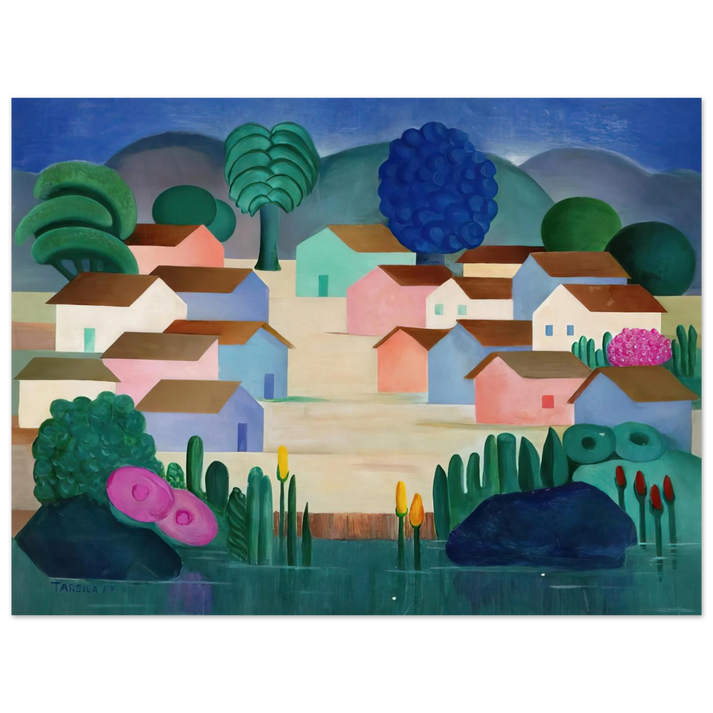
Tarsila do Amaral - Landscape with Sixteen Houses 75x100 cm / 30x40inches Fine Art Poster
Tarsila do Amaral - Landscape with Sixteen Houses 75x100 cm / 30x40inches Fine Art Poster
Couldn't load pickup availability
Tarsila do Amaral - Landscape with Sixteen Houses: A Masterpiece of Brazilian Modernism
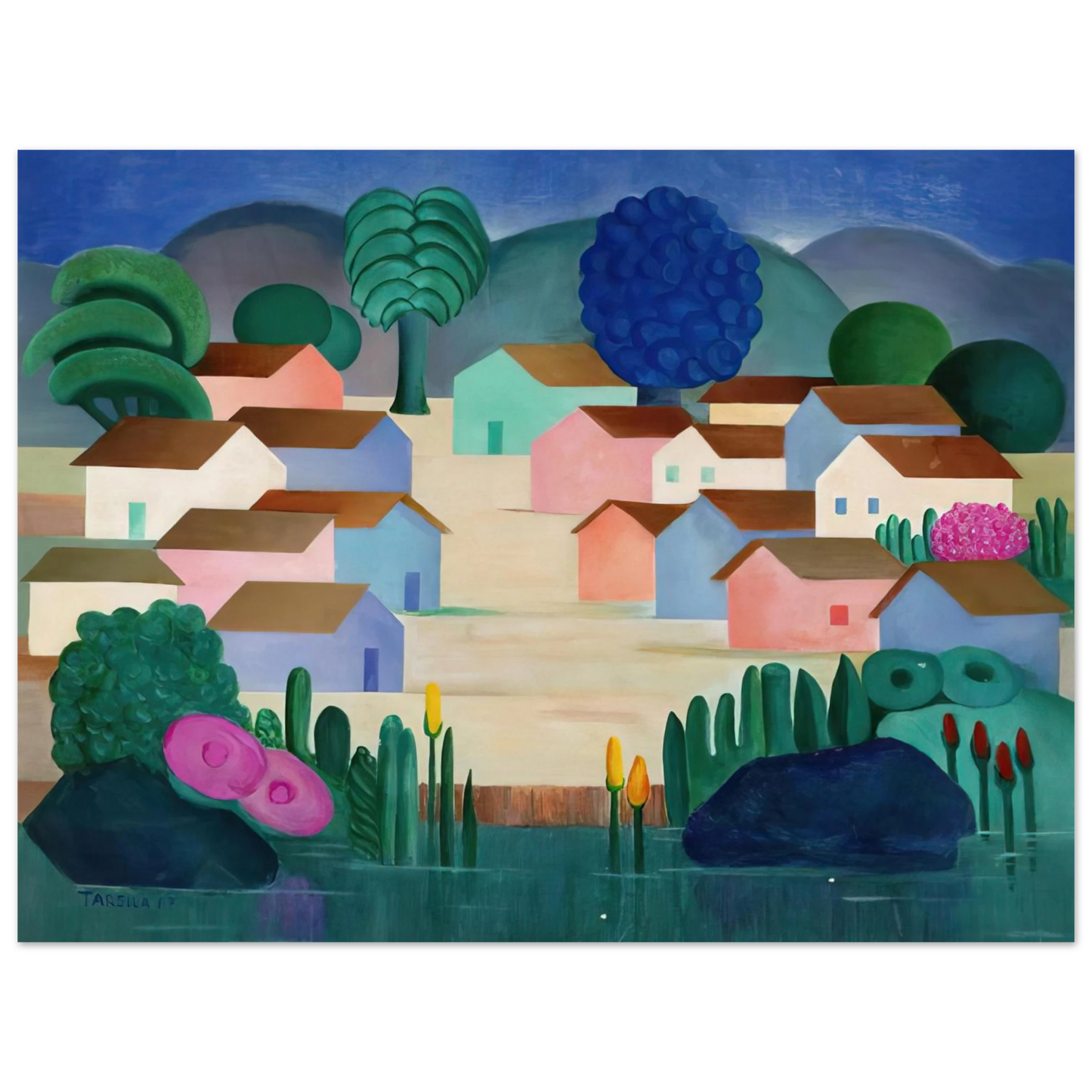
Immerse yourself in the vibrant world of Tarsila do Amaral with this museum-quality fine art print of Landscape with Sixteen Houses. This iconic work, created in 1925, is a cornerstone of Brazilian Modernism, showcasing Tarsila's unique blend of Cubist geometry and tropical color. The composition features sixteen simplified houses nestled in a lush, rolling landscape, rendered in bold greens, blues, and earthy tones that evoke the warmth and vitality of Brazil's interior. Tarsila's pioneering Antropofagia (cultural cannibalism) movement sought to digest European avant-garde styles and reimagine them through a distinctly Brazilian lens, making this piece a powerful statement of national identity and artistic innovation.
RedKalion presents this archival reproduction on our exclusive Master's Edition archival paper, ensuring every detail—from the crisp lines of the houses to the subtle gradations of color—is captured with precision. The matte, uncoated finish in a natural white hue provides a luxurious, tactile experience that mimics the texture of original artwork, free from glare for optimal viewing. Crafted from FSC-certified, acid-free paper (pH above 7), this print is designed to resist yellowing and degradation, preserving its beauty for generations. With a substantial 250 gsm (110 lb) weight and 0.29 mm (11.4 mils) thickness, it offers a premium feel ideal for framing and display.
Elevate your home or office with a piece of art history that combines cultural significance with enduring quality. This 75x100 cm / 30x40 inches fine art poster is printed and shipped on demand with no minimum orders, allowing you to acquire a timeless reproduction that honors Tarsila do Amaral's legacy. Trust RedKalion to deliver archival-grade artistry that transforms any space into a gallery of inspiration.
Discover Unlimited Art Possibilities
At RedKalion, you can find virtually any artwork from any artist, available in a wide range of sizes to perfectly match your space.
If you didn’t find what you’re looking for, contact us at support@redkalion.com . We will source any artwork and produce it in any size and format you need, including art prints, posters, canvas, framed pieces, framed canvas, and more.
For dedicated art enthusiasts, we also offer handcrafted replicas of any artwork, carefully painted by highly skilled artists using traditional techniques.
For custom requests, contact us at support@redkalion.com .
What are the dimensions of this Tarsila do Amaral fine art print?
This museum-quality reproduction measures 75x100 cm (approximately 30x40 inches), making it an ideal size for prominent wall display in homes or offices.
What type of paper is used for this archival print?
It's printed on Master's Edition archival paper, featuring a matte, uncoated finish in natural white for a luxurious texture that enhances the artwork's vibrant colors.
How does the acid-free paper ensure longevity for this art poster?
The acid-free paper (pH above 7) prevents yellowing over time, ensuring this Tarsila do Amaral reproduction remains vibrant and durable as a long-lasting fine art print.
What is the weight and thickness of this premium art print?
With a weight of 250 gsm (110 lb) and thickness of 0.29 mm (11.4 mils), it offers a substantial, high-quality feel perfect for framing and preservation.
How is this fine art poster shipped and are there minimum orders?
It's printed and shipped on demand with no minimum orders, providing flexible fulfillment for acquiring this museum-quality reproduction.
What artistic movement does Landscape with Sixteen Houses represent?
This piece is a key example of Brazilian Modernism and Tarsila's Antropofagia movement, blending Cubist influences with tropical themes to express national identity.
Why are the colors in this print so vibrant and significant?
Tarsila used bold greens, blues, and earthy tones to capture Brazil's landscape, reflecting her innovative approach to color in modernist art from the 1920s.