RedKalion
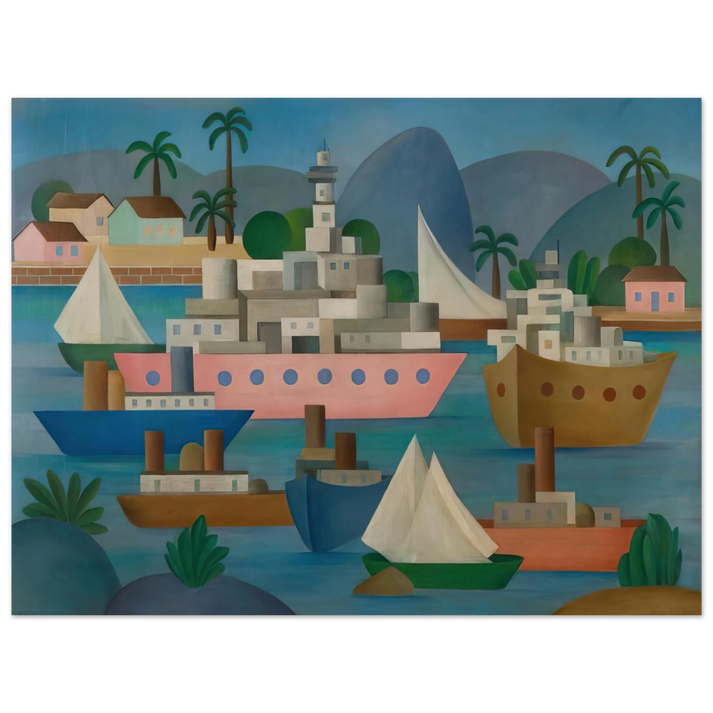
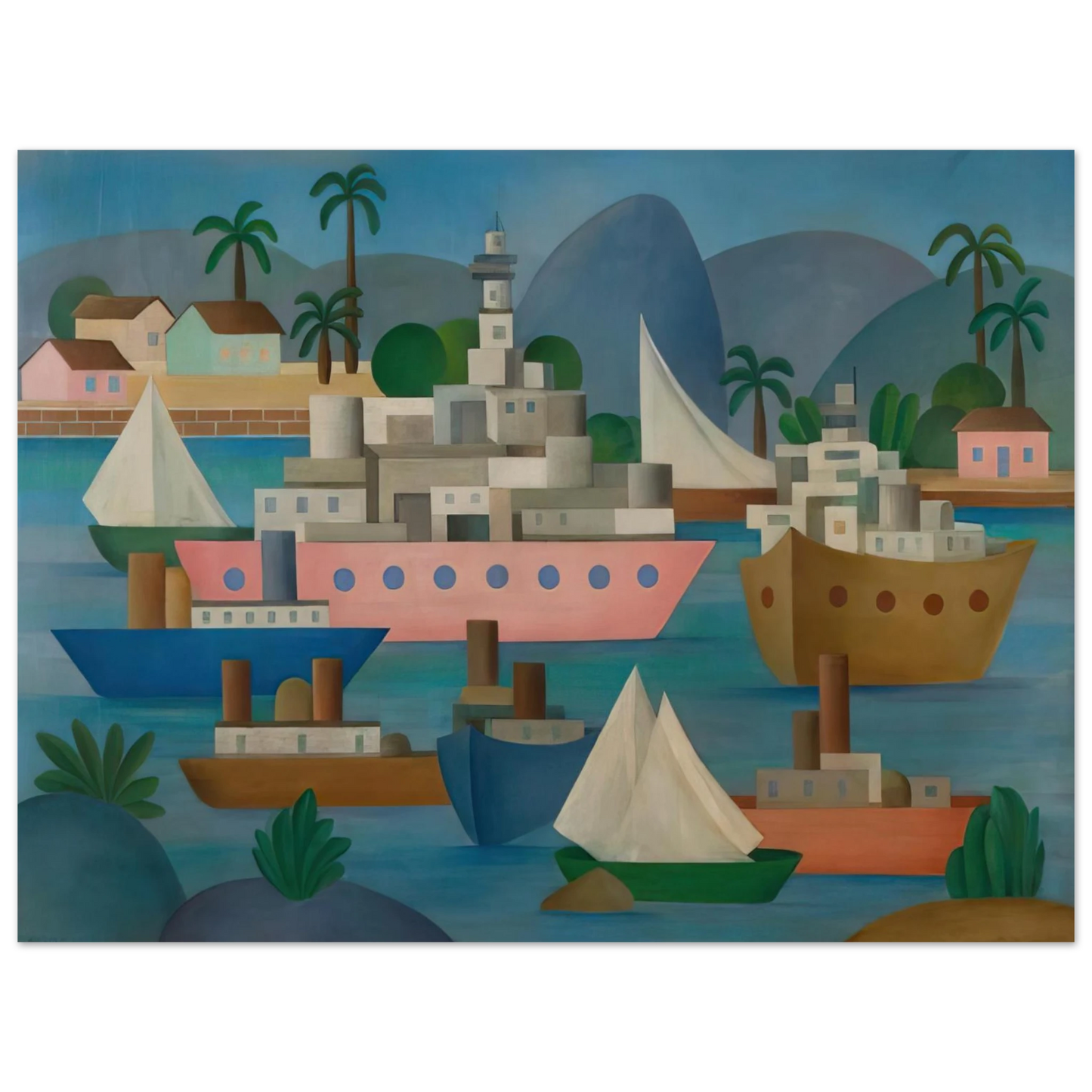
Tarsila do Amaral - Porto I 75x100 cm / 30x40inches Fine Art Poster
Tarsila do Amaral - Porto I 75x100 cm / 30x40inches Fine Art Poster
Couldn't load pickup availability
Tarsila do Amaral - Porto I: A Masterpiece of Brazilian Modernism
Immerse yourself in the vibrant world of Tarsila do Amaral with this museum-quality fine art print of Porto I. Created in 1926, this iconic work captures the essence of Brazilian Modernism, blending geometric abstraction with a rich, earthy palette that evokes the bustling energy of a port city. Tarsila, a pioneering figure in the Antropofagia movement, masterfully uses simplified forms and bold colors to reinterpret local landscapes through a modernist lens, making this piece a cornerstone of Latin American art history.
This premium reproduction is crafted on our exclusive Master's Edition archival paper, ensuring a luxurious matte finish with an uncoated, natural white (off-white) surface that enhances texture and depth. With a weight of 250 gsm (110 lb) and a thickness of 0.29 mm (11.4 mils), the print offers exceptional durability and a tactile feel. It is acid-free (pH above 7) to prevent yellowing over time and printed on FSC-certified paper, reflecting our commitment to sustainability. Printed and shipped on demand with no minimum orders, this 75x100 cm (30x40 inches) fine art poster is ready to elevate any space with its archival-grade quality.
At RedKalion, we specialize in curating world-class reproductions that honor the artist's original vision. Our expertise in art history and premium materials ensures that each print, like this Tarsila do Amaral masterpiece, becomes a timeless addition to your collection. Discover the fusion of cultural heritage and modern design with this authentic piece, perfect for art enthusiasts and interior designers seeking to infuse their environment with sophistication and historical significance.
Discover Unlimited Art Possibilities
At RedKalion, you can find virtually any artwork from any artist, available in a wide range of sizes to perfectly match your space.
If you didn’t find what you’re looking for, contact us at support@redkalion.com . We will source any artwork and produce it in any size and format you need, including art prints, posters, canvas, framed pieces, framed canvas, and more.
For dedicated art enthusiasts, we also offer handcrafted replicas of any artwork, carefully painted by highly skilled artists using traditional techniques.
For custom requests, contact us at support@redkalion.com .
What are the dimensions of this Tarsila do Amaral fine art print?
This museum-quality reproduction measures 75x100 cm (30x40 inches), ideal for large-scale display in homes or offices.
What type of paper is used for this archival art print?
It is printed on Master's Edition archival paper, featuring a matte, uncoated, natural white (off-white) finish for a luxurious texture and FSC-certified sustainability.
How durable is this fine art poster, and will it yellow over time?
The print is acid-free (pH above 7) to prevent yellowing, with a weight of 250 gsm (110 lb) and thickness of 0.29 mm (11.4 mils) for long-lasting quality.
What is the shipping process for this on-demand print?
We print and ship on demand with no minimum orders, ensuring fast fulfillment and careful handling for your Tarsila do Amaral reproduction.
Can this artwork be framed, and what styles complement it?
Yes, its 75x100 cm size fits standard frames; minimalist or wooden frames enhance its Brazilian Modernist aesthetic and earthy tones.
What is the historical significance of Porto I in Tarsila do Amaral's career?
Porto I, created in 1926, is a key work in her Pau-Brasil phase, showcasing geometric abstraction and local themes that defined Brazilian Modernism.
How does Tarsila do Amaral's technique in Porto I reflect the Antropofagia movement?
She uses simplified forms and bold colors to 'cannibalize' European modernism, blending it with Brazilian culture to create a unique visual language.