
RedKalion
Teeth from Sucking Fingers Art Print | Medical Illustration | RedKalion
Teeth from Sucking Fingers Art Print | Medical Illustration | RedKalion
Couldn't load pickup availability
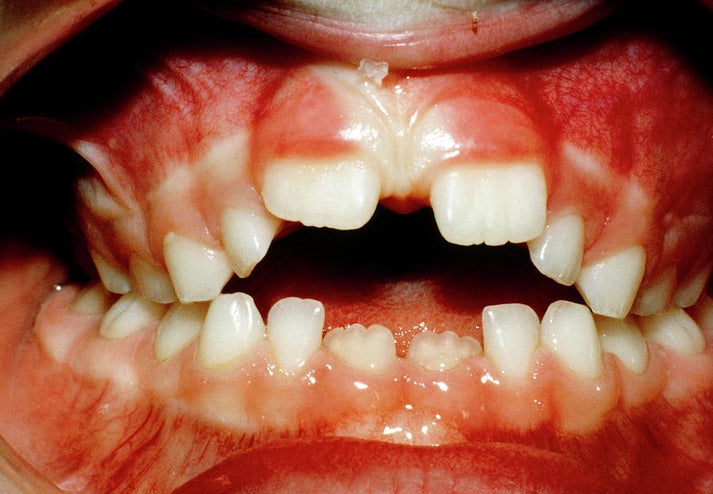
This striking 19th-century medical illustration, titled 'Deformed Teeth Due To Thumb-sucking,' offers a precise anatomical study of dental malocclusion caused by prolonged digit-sucking habits. Created during an era when scientific illustration reached its zenith, the artwork combines clinical accuracy with a stark, almost aesthetic, presentation of pathology. It serves as both a historical document of early orthodontic observation and a compelling visual artifact.
Historical Context of the Teeth from Sucking Fingers Illustration
Emerging from the late 1800s, this piece reflects the period's growing interest in dental hygiene and developmental disorders. Medical illustrators, trained in both art and anatomy, produced such works for textbooks and lectures, aiming to educate practitioners on the physical consequences of common childhood behaviors. The depiction of teeth from sucking thumb highlights how Victorian medicine began systematizing pediatric care.
Artistic Analysis of the Teeth from Sucking Thumb Depiction
The illustration employs a clean, linear style typical of scientific draughtsmanship, with careful shading to emphasize the protrusion and misalignment of the incisors. Unlike sentimental art of the time, it avoids narrative embellishment, focusing solely on morphological detail. This objectivity transforms a clinical subject into a study of form, where deformation is rendered with an almost sculptural clarity.
Print Specifications & Materials
- Available Sizes: 75×100 cm / 30×40″, 40×50 cm / 16×20″, 21×29.7 cm / 8×12″
- Paper Finishing: Matte, uncoated, natural white (off-white)
- Acid-Free: pH above 7 to prevent yellowing over time
- Paper Weight: 250 gsm (110 lb) | Thickness: 0.29 mm (11.4 mils)
- Sustainable Paper: FSC-certified
At RedKalion, we curate prints like this teeth from sucking fingers illustration to bridge art and science, offering museum-quality reproductions for collectors, educators, and medical professionals. Each print preserves the original's didactic intensity, making it a unique addition to any space.


Discover Unlimited Art Possibilities
At RedKalion, you can find virtually any artwork from any artist, available in a wide range of sizes to perfectly match your space.
If you didn’t find what you’re looking for, contact us at support@redkalion.com . We will source any artwork and produce it in any size and format you need, including art prints, posters, canvas, framed pieces, framed canvas, and more.
For dedicated art enthusiasts, we also offer handcrafted replicas of any artwork, carefully painted by highly skilled artists using traditional techniques.
For custom requests, contact us at support@redkalion.com .
What is the historical significance of this medical illustration?
This late 19th-century illustration documents early orthodontic understanding of malocclusion from thumb-sucking, reflecting Victorian advances in pediatric dental care through precise anatomical art.
What artistic style characterizes this teeth from sucking thumb print?
It uses a clinical, linear draughtsmanship style common in scientific illustration, emphasizing morphological detail with clean lines and shading to show dental deformation clearly.
What paper is used for RedKalion art prints?
We use 250 gsm FSC-certified acid-free paper with a matte finish to ensure archival longevity and a natural white tone for accurate color reproduction.
How is the print shipped to prevent damage?
Prints are securely rolled in a protective tube with reinforced ends and shipped via tracked courier, with insurance options available for high-value orders.
How long will the print last without fading or yellowing?
Our acid-free, pH-balanced paper and pigment-based inks ensure the print resists fading and yellowing for over 100 years under proper display conditions.
What does this illustration reveal about 19th-century medicine?
It shows how medical illustrators systematically documented common disorders like teeth from sucking fingers, aiding education and highlighting the era's focus on anatomical accuracy.
Why is the depiction of deformed teeth considered artistically valuable?
The illustration transforms a clinical subject into a formal study, using precise shading and composition to render dental malocclusion with an aesthetic, almost sculptural quality.