RedKalion
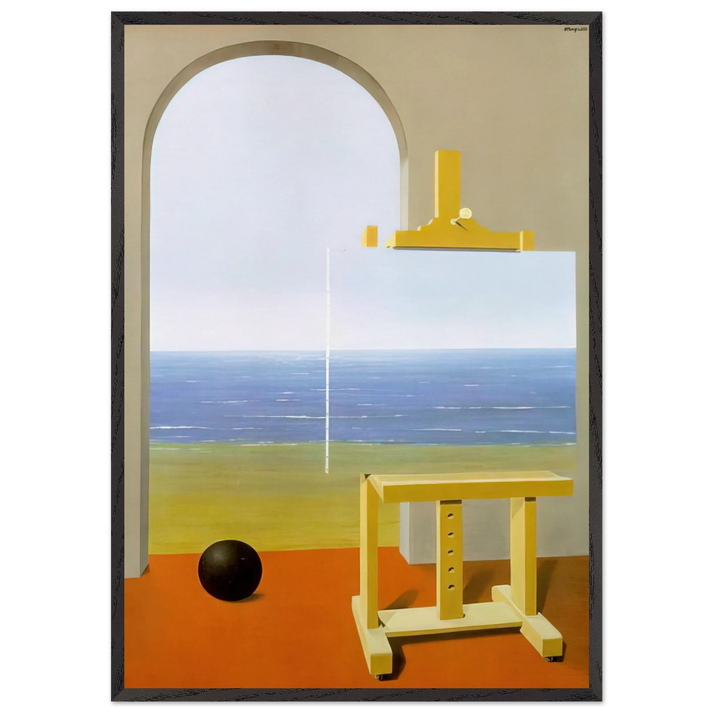
THE HUMAN CONDITION 1935 - Rene Magritte 70x100 cm / 28x40 inches Framed Art Print – Black Wooden Frame
THE HUMAN CONDITION 1935 - Rene Magritte 70x100 cm / 28x40 inches Framed Art Print – Black Wooden Frame
Couldn't load pickup availability
The Human Condition (1935) by René Magritte
Own a museum-quality reproduction of René Magritte's iconic surrealist masterpiece, The Human Condition (1935). This framed art print captures the Belgian artist's profound exploration of reality, illusion, and perception, where a painted landscape on an easel seamlessly blends with the view outside a window, challenging our understanding of truth and representation. Magritte's precise, dreamlike technique—part of his "windowpane" series—invites contemplation, making it a timeless centerpiece for modern interiors, studies, or galleries.
RedKalion presents this archival-grade fine art print in a premium black wooden frame, crafted from responsibly sourced oak and ash wood. The frame measures 20mm thick and wide, offering a substantial, gallery-worthy presence that enhances the artwork's depth. Your print is safeguarded by shatterproof plexiglass and printed on FSC-certified, matte-finish archival paper (250 gsm, 0.29 mm thick), ensuring vibrant colors and longevity. Ready-to-hang with an included kit, this piece arrives prepared to elevate your space with enduring sophistication.
- Artwork: The Human Condition (1935) by René Magritte
- Frame: Black wooden frame (oak/ash, 20mm thick)
- Print Size: 70x100 cm / 28x40 inches
- Paper: 250 gsm matte archival paper, FSC-certified
- Protection: Shatterproof plexiglass
- Ready-to-Hang: Includes hanging kit
Invest in a curated reproduction that honors Magritte's legacy and RedKalion's commitment to excellence in fine art prints.
Discover Unlimited Art Possibilities
At RedKalion, you can find virtually any artwork from any artist, available in a wide range of sizes to perfectly match your space.
If you didn’t find what you’re looking for, contact us at support@redkalion.com . We will source any artwork and produce it in any size and format you need, including art prints, posters, canvas, framed pieces, framed canvas, and more.
For dedicated art enthusiasts, we also offer handcrafted replicas of any artwork, carefully painted by highly skilled artists using traditional techniques.
For custom requests, contact us at support@redkalion.com .
What is the significance of The Human Condition by René Magritte?
This 1935 surrealist painting explores reality and illusion, depicting a painted landscape that merges with a window view, challenging perception—a key work in Magritte's oeuvre that inspires deep reflection in fine art collections.
What materials are used in this framed art print?
The print uses 250 gsm matte archival paper, framed in black wood from responsibly sourced oak and ash, with shatterproof plexiglass for protection, ensuring a premium museum-quality reproduction.
Is this print ready to hang upon delivery?
Yes, it includes a hanging kit and is ready-to-hang, allowing immediate display of your René Magritte art print in any room.
How durable and archival is the paper for this fine art print?
The 250 gsm FSC-certified paper is archival-grade, resistant to fading, and ideal for long-term preservation of this Magritte masterpiece reproduction.
What are the frame dimensions and quality?
The black wooden frame is 20mm thick and wide, made from oak and ash, offering a sturdy, gallery-style presentation for your 70x100 cm art print.
How does Magritte's technique in this artwork reflect surrealism?
Magritte used precise, realistic painting to create paradoxical scenes, blending interior and exterior spaces in The Human Condition to provoke thought on truth—a hallmark of surrealist art.
Why is the year 1935 important for this artwork?
Painted in 1935, this piece marks a peak in Magritte's career, contributing to surrealism's rise and exploring themes that define his legacy in art history.