RedKalion
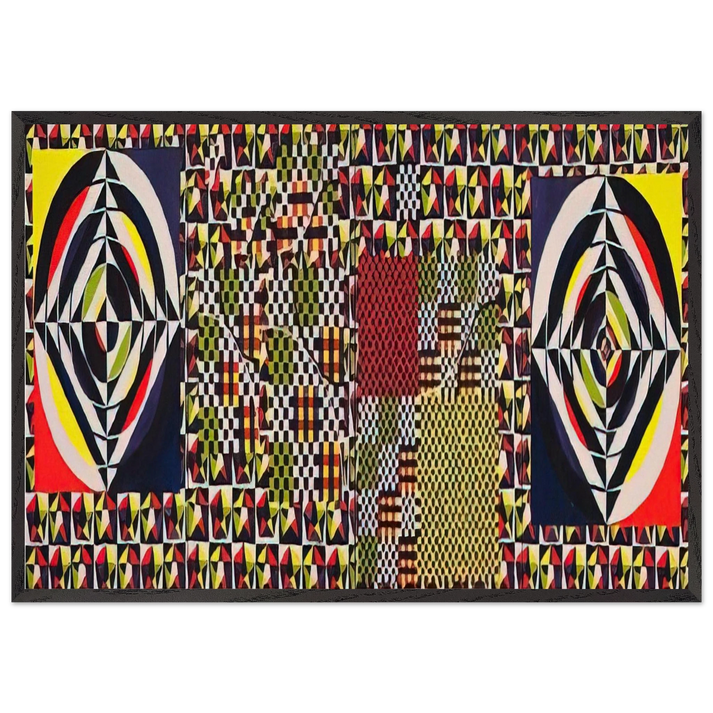
The Pythagorean Theorem - 1964 - Alfred Jensen 70x100 cm / 28x40 inches Framed Art Print – Black Wooden Frame
The Pythagorean Theorem - 1964 - Alfred Jensen 70x100 cm / 28x40 inches Framed Art Print – Black Wooden Frame
Couldn't load pickup availability
The Pythagorean Theorem (1964) by Alfred Jensen
Immerse yourself in the intellectual and visual brilliance of Alfred Jensen's The Pythagorean Theorem, a 1964 masterpiece that marries mathematical precision with vibrant abstract expressionism. This museum-quality framed art print captures every nuance of Jensen's iconic grid-based composition, where geometric forms and symbolic colors explore the harmony of numbers and cosmic order. As a leading figure in the post-war art scene, Jensen's work bridges art and science, offering a timeless piece that stimulates both the mind and the senses.
RedKalion presents this archival reproduction on premium 250 gsm (110 lb) matte, uncoated, natural white paper, ensuring exceptional detail and color fidelity that rivals the original. The print is elegantly housed in a black wooden frame crafted from responsibly sourced oak and ash wood, with a substantial 20mm (0.79") thickness for a bold, gallery-worthy presence. Protected by shatterproof plexiglass, this framed art print is ready-to-hang with an included kit, allowing you to elevate any space with a piece that endures as a conversation starter and a testament to fine art craftsmanship.
- Artwork: The Pythagorean Theorem (1964) by Alfred Jensen
- Print Size: 70x100 cm / 28x40 inches
- Frame: Black wooden frame (oak and ash, 20mm thick)
- Paper: 250 gsm matte archival museum-quality paper, FSC-certified
- Protection: Shatterproof plexiglass
- Ready-to-Hang: Includes hanging kit
Discover the allure of Jensen's mathematical abstractions—a perfect addition for collectors, educators, and design enthusiasts seeking a sophisticated focal point.

Discover Unlimited Art Possibilities
At RedKalion, you can find virtually any artwork from any artist, available in a wide range of sizes to perfectly match your space.
If you didn’t find what you’re looking for, contact us at support@redkalion.com . We will source any artwork and produce it in any size and format you need, including art prints, posters, canvas, framed pieces, framed canvas, and more.
For dedicated art enthusiasts, we also offer handcrafted replicas of any artwork, carefully painted by highly skilled artists using traditional techniques.
For custom requests, contact us at support@redkalion.com .
What is the significance of Alfred Jensen's The Pythagorean Theorem from 1964?
This artwork blends abstract expressionism with mathematical themes, using a grid and symbolic colors to explore Pythagorean concepts, reflecting Jensen's unique fusion of art and science in the 1960s.
How does the frame enhance this fine art print?
The black wooden frame, made from responsibly sourced oak and ash, is 20mm thick for a bold look, wider than classic frames, and includes shatterproof plexiglass for durable protection.
What are the specifications of the museum-quality paper used?
The print uses 250 gsm (110 lb) matte, uncoated, natural white archival paper, 0.29 mm thick, with FSC-certified materials for sustainable fine art reproduction.
Is this framed art print ready to hang?
Yes, it comes with a hanging kit, so you can display it directly on your wall without additional setup for easy home or office decor.
How does RedKalion ensure the longevity of this reproduction?
We use archival-grade paper and shatterproof plexiglass to protect against fading and damage, ensuring your print remains vibrant for years as a premium art investment.
What inspired Alfred Jensen's use of geometric patterns in this piece?
Jensen was influenced by ancient numerology and Pythagorean theory, aiming to visualize mathematical harmony through abstract forms and a structured color palette.
Can you describe the color symbolism in The Pythagorean Theorem?
Jensen employed specific hues to represent numerical values and cosmic principles, creating a visual language that conveys balance and intellectual depth in this artwork.