RedKalion
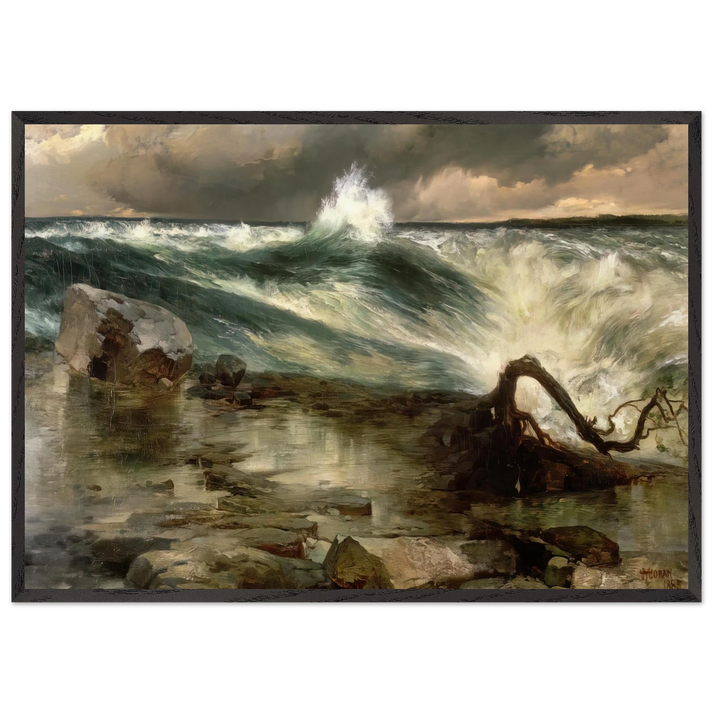
The Rapids Above Niagara - Thomas Moran 70x100 cm / 28x40 inches Framed Art Print – Black Wooden Frame
The Rapids Above Niagara - Thomas Moran 70x100 cm / 28x40 inches Framed Art Print – Black Wooden Frame
Couldn't load pickup availability
The Rapids Above Niagara - Thomas Moran: A Masterpiece of American Landscape Art
Immerse yourself in the raw power of nature with Thomas Moran's iconic 1872 painting, The Rapids Above Niagara. This fine art print captures the breathtaking drama of Niagara Falls, showcasing Moran's masterful use of light and color to evoke the sublime energy of the American wilderness. As a key figure of the Hudson River School, Moran's work helped shape the nation's perception of its natural wonders, making this piece a museum-quality reproduction that brings historical significance and artistic excellence into your home.
Our archival-grade print is meticulously reproduced on 250 gsm (110 lb) matte, uncoated, natural white paper with a thickness of 0.29 mm (11.4 mils), ensuring vibrant colors and exceptional detail that rival the original. The print is elegantly presented in a black wooden frame crafted from responsibly sourced oak and ash wood, featuring a substantial 20mm (0.79") thickness for a bold, modern aesthetic. Protected by shatterproof plexiglass and including a ready-to-hang kit, this framed art print arrives fully assembled for immediate display.
Elevate your space with a premium art reproduction that combines the grandeur of 19th-century American art with RedKalion's commitment to sustainability and quality. This piece is not just a decoration but a timeless investment in beauty and heritage.

Discover Unlimited Art Possibilities
At RedKalion, you can find virtually any artwork from any artist, available in a wide range of sizes to perfectly match your space.
If you didn’t find what you’re looking for, contact us at support@redkalion.com . We will source any artwork and produce it in any size and format you need, including art prints, posters, canvas, framed pieces, framed canvas, and more.
For dedicated art enthusiasts, we also offer handcrafted replicas of any artwork, carefully painted by highly skilled artists using traditional techniques.
For custom requests, contact us at support@redkalion.com .
What are the dimensions of this framed art print?
This framed art print measures 70x100 cm (28x40 inches), including the black wooden frame, making it a striking centerpiece for any room.
What type of paper is used for the print?
We use 250 gsm (110 lb) matte, uncoated, natural white archival museum-quality paper, with a thickness of 0.29 mm (11.4 mils), ensuring vibrant colors and long-lasting durability for fine art reproductions.
Is the frame ready to hang?
Yes, this framed art print includes a hanging kit and is ready to hang directly on your wall upon arrival, offering convenience and immediate display.
How is the print protected in the frame?
The print is protected by shatterproof plexiglass, which safeguards it from damage while maintaining clarity, unlike traditional glass that can break easily.
What materials are used in the frame?
The frame is made from responsibly sourced oak and ash wood, with a thickness of 20mm (0.79"), wider than classic 14mm frames for a robust and elegant look.
What is the historical significance of The Rapids Above Niagara?
Painted in 1872 by Thomas Moran, this work is part of the Hudson River School and helped popularize Niagara Falls as a symbol of American natural grandeur, influencing conservation efforts.
How does Thomas Moran's technique enhance this artwork?
Moran used luminous colors and dramatic lighting to capture the sublime energy of the rapids, a technique that emphasized the emotional impact of American landscapes in the 19th century.