

RedKalion
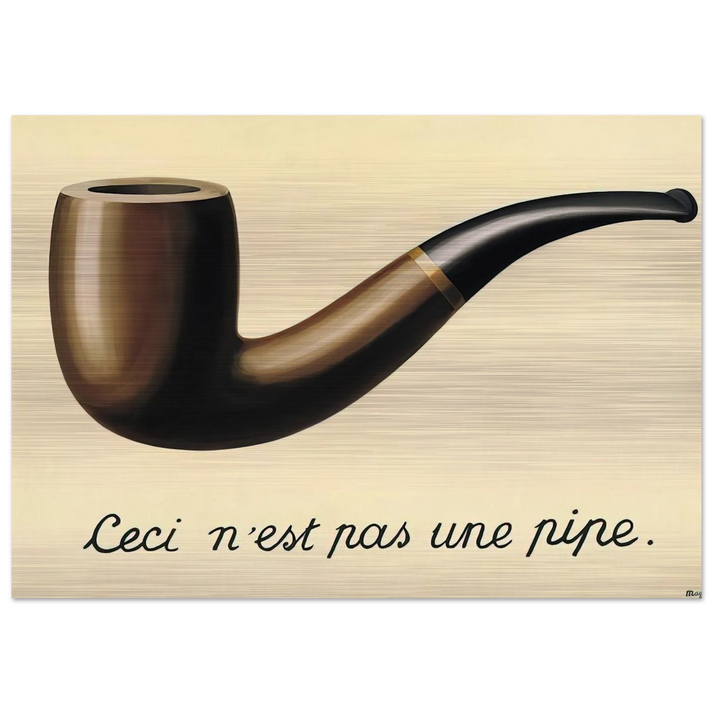
THE TREACHERY OF IMAGES THIS IS NOT A PIPE 1948 - Rene Magritte Brushed Aluminum Print - 70x100 cm / 28x40 inches | Rene Magritte Aluminum Print | Rene Magritte Prints
THE TREACHERY OF IMAGES THIS IS NOT A PIPE 1948 - Rene Magritte Brushed Aluminum Print - 70x100 cm / 28x40 inches | Rene Magritte Aluminum Print | Rene Magritte Prints
Couldn't load pickup availability
The Treachery of Images (This is Not a Pipe) - 1948 by René Magritte
Own a museum-quality brushed aluminum print of René Magritte's iconic 1929 surrealist masterpiece, "The Treachery of Images (This is Not a Pipe)." This premium reproduction captures the philosophical depth and visual intrigue of the original, now reimagined on archival-grade aluminum for a modern, dynamic display.
Magritte's work challenges perception with its famous inscription "Ceci n'est pas une pipe" (This is not a pipe), questioning the relationship between objects and their representations. Created in the late 1920s, it became a cornerstone of Surrealist art, blending precise realism with conceptual wit to explore reality, language, and illusion.
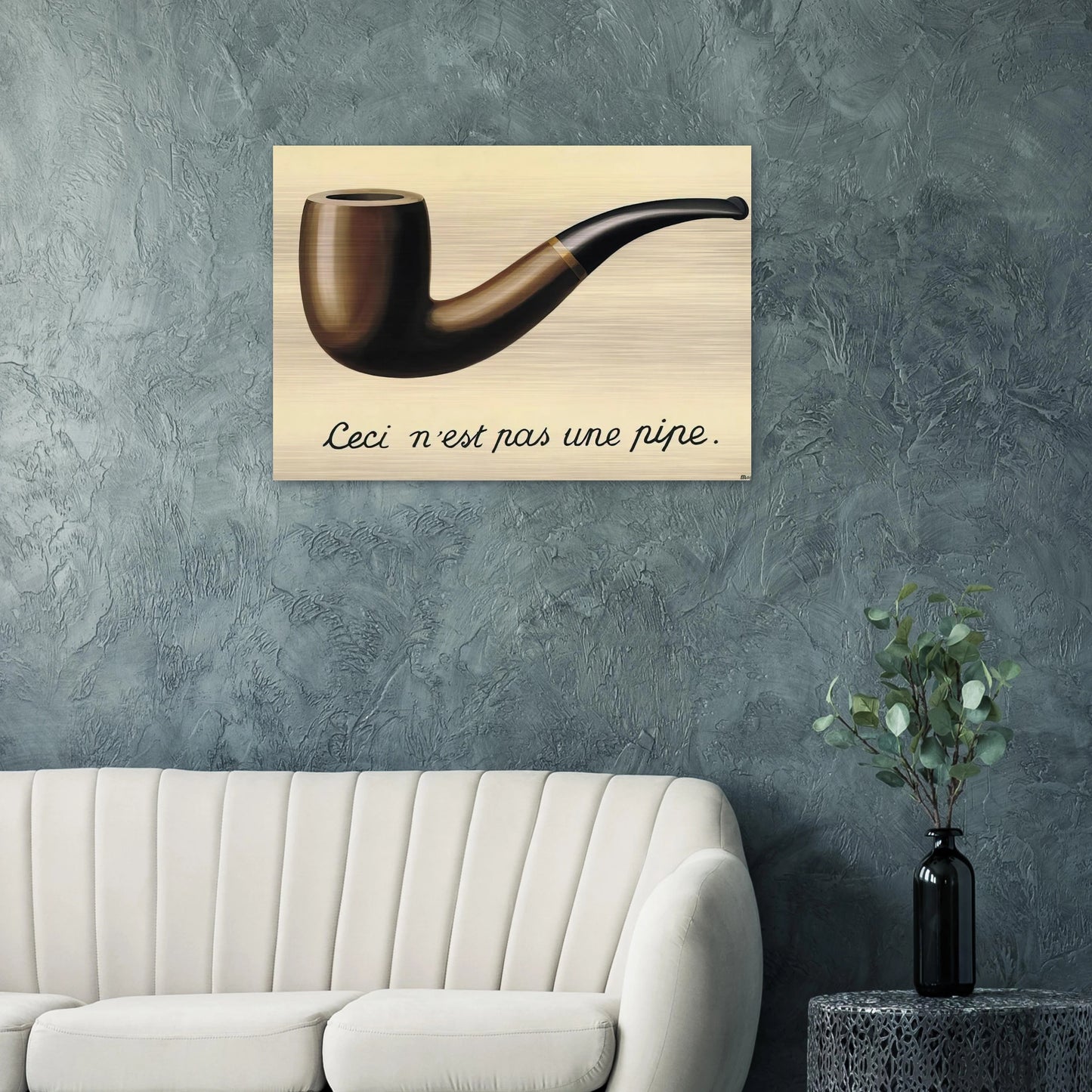
This fine art print is meticulously crafted on 3mm thick brushed silver Aluminum DIBOND®, featuring a horizontal grain that adds a subtle metallic shimmer. The direct print technology ensures vibrant, fade-resistant colors with a matte, glare-free finish, while unprinted areas reveal the elegant silver base for a striking contrast. Measuring 70x100 cm (28x40 inches), it includes a hanging kit for easy installation.
Elevate your space with an archival masterpiece that endures, blending art historical significance with contemporary durability. RedKalion curates only the highest-quality reproductions, trusted by collectors and enthusiasts worldwide.


Discover Unlimited Art Possibilities
At RedKalion, you can find virtually any artwork from any artist, available in a wide range of sizes to perfectly match your space.
If you didn’t find what you’re looking for, contact us at support@redkalion.com . We will source any artwork and produce it in any size and format you need, including art prints, posters, canvas, framed pieces, framed canvas, and more.
For dedicated art enthusiasts, we also offer handcrafted replicas of any artwork, carefully painted by highly skilled artists using traditional techniques.
For custom requests, contact us at support@redkalion.com .
What are the dimensions and material of this René Magritte print?
This fine art print measures 70x100 cm (28x40 inches) and is crafted on 3mm thick brushed silver Aluminum DIBOND® with a metallic finish and horizontal grain for a dynamic, museum-quality display.
How is the print applied to the aluminum surface?
It features direct printing on AluDibond, ensuring vivid colors and a matte finish, with unprinted white areas revealing a striking metallic silver effect for enhanced visual appeal.
Yes, a hanging kit is included for easy installation; specific components may vary by fulfillment country to ensure secure mounting.
What makes this a durable and archival-quality reproduction?
Made with 3mm Aluminum DIBOND® and fade-resistant inks, this print offers long-lasting durability and resistance to environmental factors, ideal for preserving Magritte's surrealist artwork.
Can I expect glare or reflections from this print?
No, the matte, glare-free finish minimizes reflections, making it perfect for displaying black-and-white designs like this René Magritte masterpiece in any lighting.
What is the historical significance of "The Treachery of Images"?
Created in 1929, this iconic surrealist painting by René Magritte challenges perception with its text "This is not a pipe," exploring themes of reality, representation, and language in art history.
Why did Magritte use such precise realism in this artwork?
Magritte employed hyper-realistic techniques to contrast with the conceptual message, emphasizing the gap between images and reality, a hallmark of his philosophical approach to surrealism.