
RedKalion
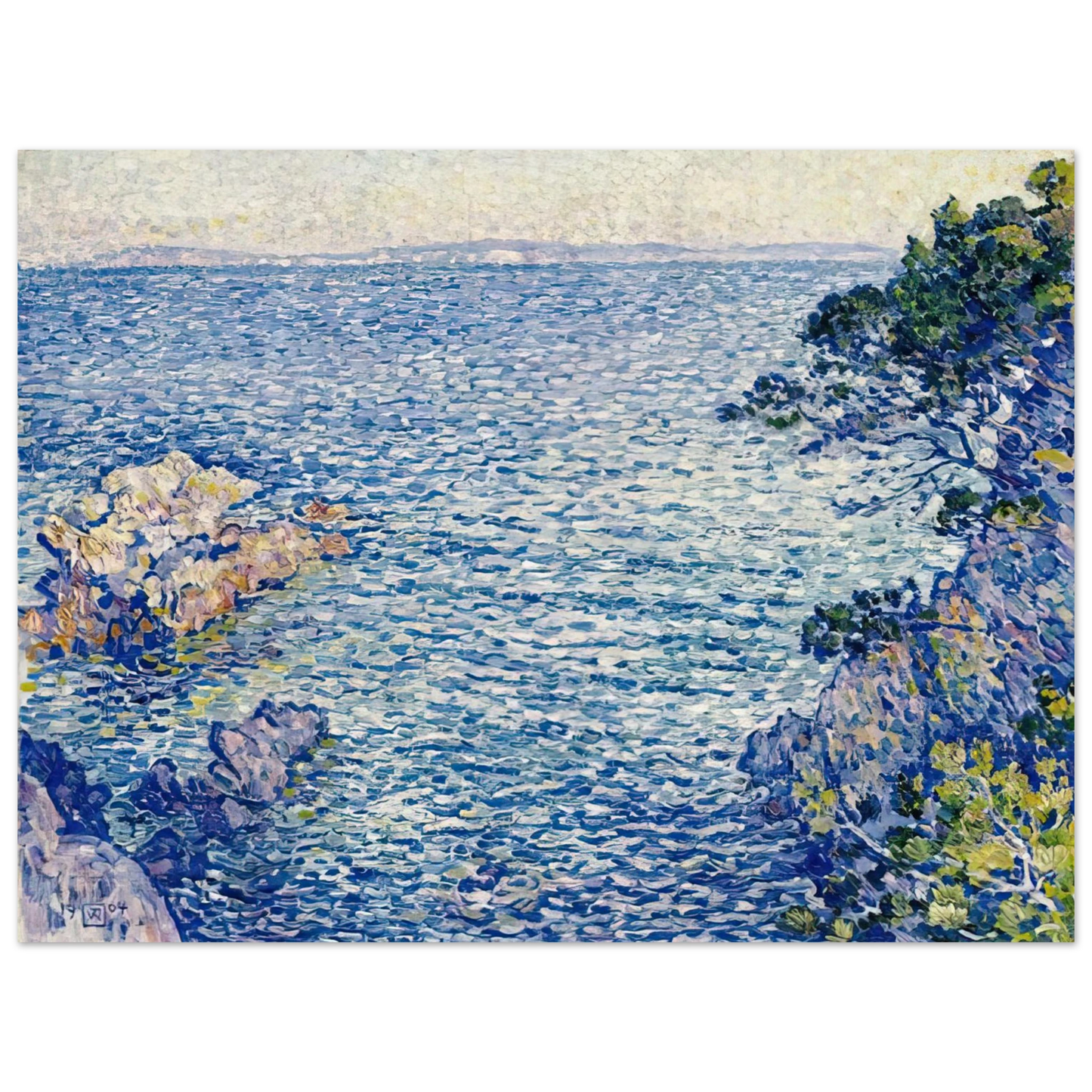
Theo van Rysselberghe - THE POINT OF ROSSIGNOL 1904 75x100 cm / 30x40inches Fine Art Poster
Theo van Rysselberghe - THE POINT OF ROSSIGNOL 1904 75x100 cm / 30x40inches Fine Art Poster
Couldn't load pickup availability
Theo van Rysselberghe - THE POINT OF ROSSIGNOL 1904: A Neo-Impressionist Masterpiece
Immerse yourself in the luminous beauty of Theo van Rysselberghe's 1904 painting, "The Point of Rossignol," now available as a museum-quality fine art print from RedKalion. This iconic work, measuring 75x100 cm (30x40 inches), captures the serene coastal landscape of Belgium with the artist's signature pointillist technique, using meticulously placed dots of pure color to create a vibrant, shimmering effect that defines the Neo-Impressionist movement.
Van Rysselberghe, a leading figure in European art, masterfully blends light and atmosphere in this piece, evoking a sense of tranquil harmony and natural elegance. The composition invites viewers into a world of refined detail and emotional depth, making it an ideal centerpiece for any sophisticated interior. At RedKalion, we honor this legacy with our premium reproduction, printed on Master's Edition archival paper that ensures every nuance of the original is preserved. The matte, uncoated finish in a natural white hue enhances the artwork's texture, while the acid-free, FSC-certified paper guarantees longevity without yellowing. With a substantial weight of 250 gsm (110 lb) and a thickness of 0.29 mm (11.4 mils), this fine art poster offers a luxurious feel that elevates your space with enduring quality.
Our on-demand fulfillment means no minimum orders, allowing you to acquire this archival masterpiece with ease. Trust RedKalion to deliver a reproduction that not only reflects expert craftsmanship but also serves as a timeless addition to your collection, blending art history with modern precision.
Discover Unlimited Art Possibilities
At RedKalion, you can find virtually any artwork from any artist, available in a wide range of sizes to perfectly match your space.
If you didn’t find what you’re looking for, contact us at support@redkalion.com . We will source any artwork and produce it in any size and format you need, including art prints, posters, canvas, framed pieces, framed canvas, and more.
For dedicated art enthusiasts, we also offer handcrafted replicas of any artwork, carefully painted by highly skilled artists using traditional techniques.
For custom requests, contact us at support@redkalion.com .
What are the dimensions of this Theo van Rysselberghe fine art print?
The print measures 75x100 cm, equivalent to 30x40 inches, making it a versatile size for display in homes or offices as a museum-quality reproduction.
What type of paper is used for this archival print?
We use Master's Edition archival paper, which is acid-free (pH above 7), FSC-certified, and features a matte, uncoated finish in natural white for a luxurious texture that prevents yellowing over time.
How is this fine art poster shipped and are there minimum orders?
It is printed and shipped on demand with no minimum orders, ensuring efficient fulfillment and delivery of your premium Neo-Impressionist reproduction.
What is the weight and thickness of the paper for durability?
The paper has a weight of 250 gsm (110 lb) and a thickness of 0.29 mm (11.4 mils), providing a sturdy, high-quality feel for long-lasting display.
How does the archival quality ensure the print's longevity?
The acid-free, pH-balanced paper resists yellowing and degradation, making this Theo van Rysselberghe reproduction an enduring piece of fine art for your collection.
What artistic technique did Theo van Rysselberghe use in "The Point of Rossignol"?
Van Rysselberghe employed pointillism, a Neo-Impressionist method using small dots of pure color to create vibrant, luminous effects in this 1904 coastal landscape.
Why is "The Point of Rossignol" significant in art history?
This work exemplifies van Rysselberghe's mastery of light and atmosphere, contributing to the Neo-Impressionist movement's exploration of color theory and modern landscape painting.