
RedKalion
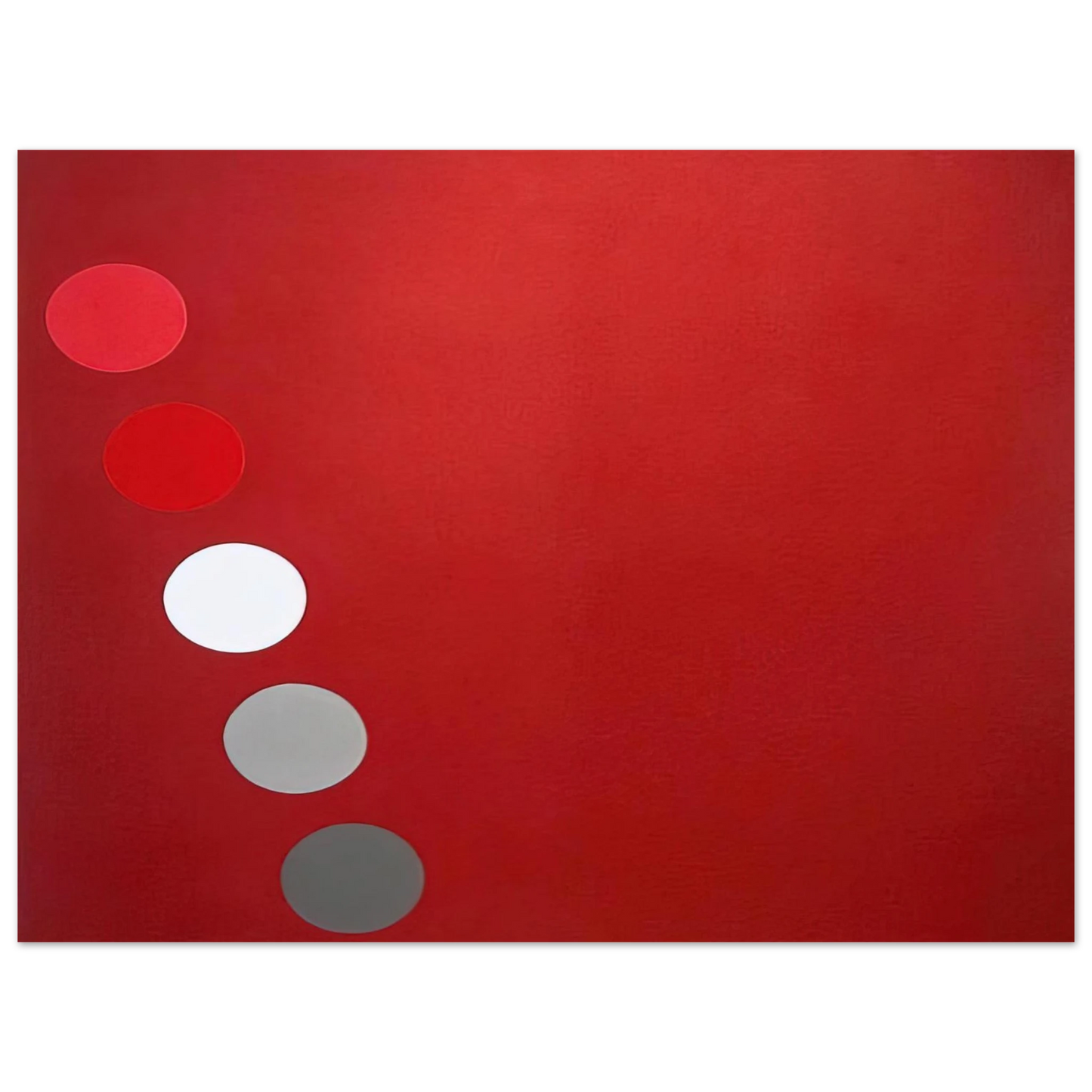
Thomas Downing - Phased Red - 1965 75x100 cm / 30x40inches Fine Art Poster
Thomas Downing - Phased Red - 1965 75x100 cm / 30x40inches Fine Art Poster
Couldn't load pickup availability
Thomas Downing - Phased Red - 1965 | Museum-Quality Fine Art Print
Immerse yourself in the vibrant energy of the Washington Color School with this archival reproduction of Thomas Downing's "Phased Red" (1965). A masterwork of hard-edge abstraction, this piece showcases Downing's signature use of bold, unmodulated color and precise geometric forms to create a dynamic visual rhythm. Measuring 75x100 cm (30x40 inches), it captures the artist's exploration of optical effects and spatial relationships, making it a statement piece for modern interiors.
RedKalion presents this fine art poster on our exclusive Master's Edition archival paper. Featuring a matte, uncoated finish in a natural white hue, this paper offers a luxurious texture that enhances the depth and intensity of Downing's reds. Crafted from acid-free, FSC-certified materials with a weight of 250 gsm (0.29 mm thick), it ensures museum-quality longevity, resisting yellowing over decades. Printed and shipped on demand with no minimum orders, this reproduction brings elite artistry into your space.
Art Historical Insight: Downing, a key figure in the 1960s Color Field movement, often arranged dots or shapes in grid-like patterns to challenge perception. "Phased Red" exemplifies his technique of using flat, saturated color to evoke movement and light, reflecting the era's fascination with minimalism and optical art.
- Dimensions: 75x100 cm / 30x40 inches
- Paper: Master's Edition archival, matte finish, natural white
- Archival Quality: Acid-free (pH above 7), 250 gsm, 0.29 mm thick
- Sustainability: FSC-certified paper
- Fulfillment: Printed and shipped on demand, no minimums
Elevate your environment with a trusted reproduction that honors Downing's legacy and RedKalion's commitment to archival excellence.
Discover Unlimited Art Possibilities
At RedKalion, you can find virtually any artwork from any artist, available in a wide range of sizes to perfectly match your space.
If you didn’t find what you’re looking for, contact us at support@redkalion.com . We will source any artwork and produce it in any size and format you need, including art prints, posters, canvas, framed pieces, framed canvas, and more.
For dedicated art enthusiasts, we also offer handcrafted replicas of any artwork, carefully painted by highly skilled artists using traditional techniques.
For custom requests, contact us at support@redkalion.com .
What are the dimensions and details of this Thomas Downing print?
This fine art print measures 75x100 cm (30x40 inches) and reproduces Downing's 1965 hard-edge abstraction "Phased Red," featuring bold red geometric forms from the Washington Color School era.
What type of paper is used for this museum-quality reproduction?
It's printed on Master's Edition archival paper with a matte, uncoated finish in natural white, offering a luxurious texture for premium art prints that resist degradation.
How does the archival quality ensure longevity for this art poster?
The acid-free paper (pH above 7), 250 gsm weight, and 0.29 mm thickness prevent yellowing, making it a durable choice for preserving Downing's vibrant colors over time.
What is the shipping and fulfillment process for this print?
We print and ship on demand with no minimum orders, ensuring fresh production and careful handling for your geometric abstraction fine art poster.
Is the paper sustainable for this Color Field movement print?
Yes, it uses FSC-certified paper, supporting responsible forestry while delivering high-quality reproductions of 1960s abstract art.
What artistic technique did Thomas Downing use in "Phased Red"?
Downing employed hard-edge abstraction with flat, saturated reds in precise geometric patterns to create optical movement, typical of his Washington Color School style.
Why is "Phased Red" significant in art history?
As a 1965 work, it represents Downing's key role in the Color Field movement, exploring minimalism and perceptual effects through bold, unmodulated color arrangements.