RedKalion
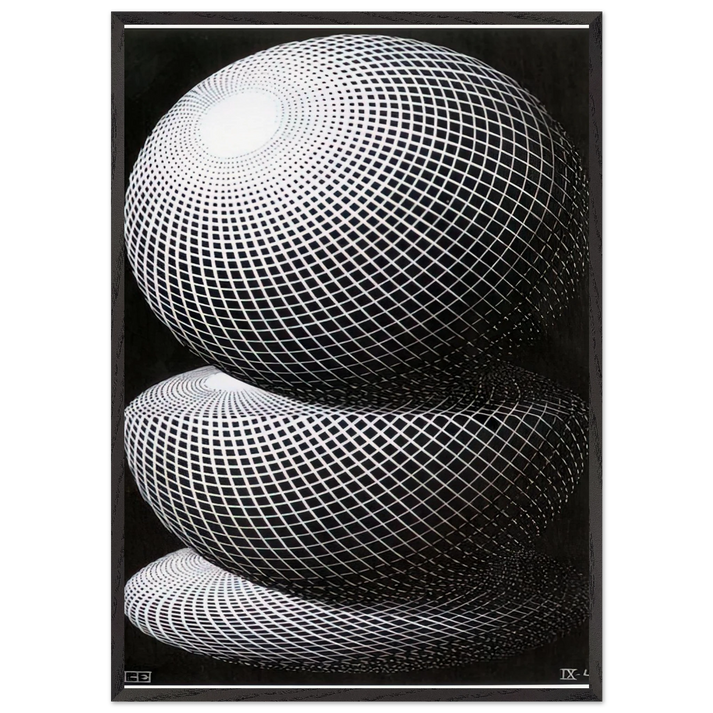
THREE SPHERES I SCHEME - MC Escher 70x100 cm / 28x40 inches Framed Art Print – Black Wooden Frame | Maurits Cornelis Escher Prints
THREE SPHERES I SCHEME - MC Escher 70x100 cm / 28x40 inches Framed Art Print – Black Wooden Frame | Maurits Cornelis Escher Prints
Couldn't load pickup availability
THREE SPHERES I SCHEME - MC Escher 70x100 cm / 28x40 inches Framed Art Print – Black Wooden Frame
Elevate your space with a museum-quality reproduction of Maurits Cornelis Escher's iconic lithograph, Three Spheres I Scheme. This 1954 masterpiece showcases Escher's genius in blending mathematical precision with surreal artistry, depicting three intricately patterned spheres that challenge perception and invite contemplation. As a leading figure in optical illusion and tessellation art, Escher's work remains a timeless symbol of intellectual curiosity and aesthetic innovation.
RedKalion presents this archival-grade framed art print, meticulously crafted to honor the original's detail and depth. Our reproduction is printed on 250 gsm (110 lb) matte, uncoated, natural white paper with a thickness of 0.29 mm (11.4 mils), ensuring a premium, gallery-worthy finish. The print is protected by shatterproof plexiglass and housed in a responsibly sourced oak and ash wood frame, measuring 20mm (0.79") thick and wide for a bold, modern presence. This piece arrives ready-to-hang with a complete hanging kit, allowing you to instantly transform any room into a sanctuary of fine art.
Invest in a piece that bridges art and science—a conversation starter that endures through generations with its FSC-certified sustainable materials and archival integrity.

Discover Unlimited Art Possibilities
At RedKalion, you can find virtually any artwork from any artist, available in a wide range of sizes to perfectly match your space.
If you didn’t find what you’re looking for, contact us at support@redkalion.com . We will source any artwork and produce it in any size and format you need, including art prints, posters, canvas, framed pieces, framed canvas, and more.
For dedicated art enthusiasts, we also offer handcrafted replicas of any artwork, carefully painted by highly skilled artists using traditional techniques.
For custom requests, contact us at support@redkalion.com .
What is the significance of MC Escher's Three Spheres I Scheme?
Created in 1954, this lithograph exemplifies Escher's mastery of mathematical art and optical illusions, using intricate patterns on spheres to explore perspective and infinity in a surreal, thought-provoking composition.
What are the specifications of the paper used for this fine art print?
This museum-quality reproduction uses 250 gsm (110 lb) matte, uncoated, natural white archival paper with a thickness of 0.29 mm (11.4 mils), ideal for vibrant, long-lasting fine art prints.
How is the frame constructed for this ready-to-hang art print?
The frame is made from responsibly sourced oak and ash wood, measuring 20mm (0.79") thick and wide, and includes a hanging kit for immediate wall display with shatterproof plexiglass protection.
What shipping and handling can I expect for this framed print?
We offer secure, tracked shipping with careful packaging to ensure your archival art print arrives in pristine condition, ready to enhance your home or office decor.
How does this print ensure archival longevity and sustainability?
Using FSC-certified sustainable materials and archival-grade paper, this reproduction is designed to resist fading and degradation, preserving its quality for years as a premium art investment.
Why did Escher choose spheres as the subject for this artwork?
Escher used spheres to explore complex geometric patterns and optical illusions, allowing him to distort perspective and create a mesmerizing, infinite effect that challenges viewer perception.
How does the frame thickness compare to standard frames?
At 20mm (0.79"), this frame is wider than the classic 14mm (0.55") frame, offering a more substantial and modern aesthetic that complements the detailed art of Escher's prints.