

RedKalion
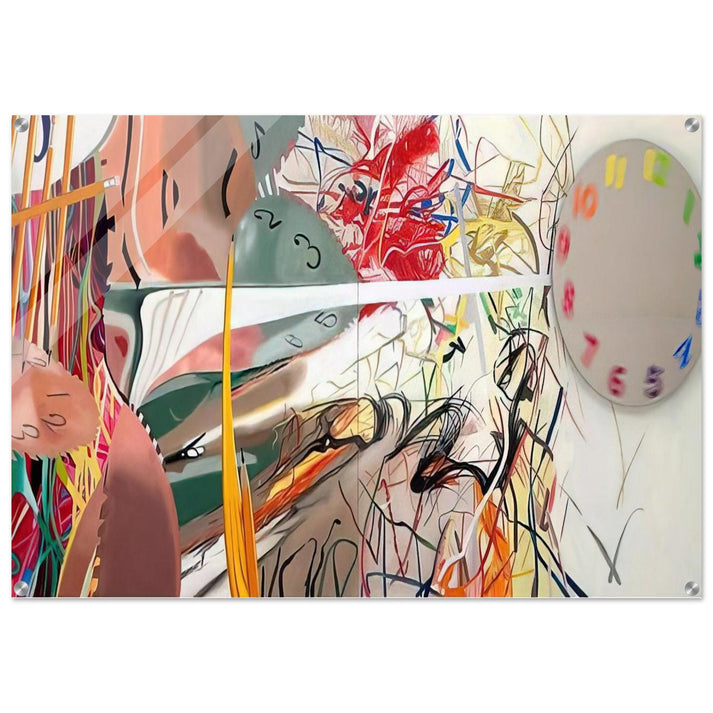
Time Stops the Face Continues - James Rosenquist Acrylic Print - 70x100 cm / 28x40″ inches
Time Stops the Face Continues - James Rosenquist Acrylic Print - 70x100 cm / 28x40″ inches
Couldn't load pickup availability
Time Stops the Face Continues - James Rosenquist Acrylic Print
Immerse yourself in the dynamic world of Pop Art with this museum-quality reproduction of James Rosenquist's iconic 1964 painting, "Time Stops the Face Continues." As a premier fine art print from RedKalion, this piece captures the fragmented, consumerist aesthetic that defined Rosenquist's groundbreaking work, blending surreal imagery with bold, graphic precision to evoke a sense of temporal disjunction and modern anxiety.
Expertly reproduced on 4mm (0.15") acrylic, this print offers a sleek, vibrant, and durable finish that enhances color saturation and detail. The straight-cut corners provide a modern look, while transparent backgrounds default to white for optimal presentation. Elevate your space with an archival masterpiece that endures, complete with a hanging kit including hardware, screws, and screw holes at each corner (14mm (0.55") from the edge, with an 8mm (0.31") diameter hole and 15mm (0.6") screw head).
This 70x100 cm / 28x40" inches acrylic print is not just a decoration but a conversation piece, reflecting Rosenquist's technique of juxtaposing disparate images to critique postwar American culture. Trust RedKalion to deliver a premium reproduction that honors the artist's vision with uncompromising quality.


Discover Unlimited Art Possibilities
At RedKalion, you can find virtually any artwork from any artist, available in a wide range of sizes to perfectly match your space.
If you didn’t find what you’re looking for, contact us at support@redkalion.com . We will source any artwork and produce it in any size and format you need, including art prints, posters, canvas, framed pieces, framed canvas, and more.
For dedicated art enthusiasts, we also offer handcrafted replicas of any artwork, carefully painted by highly skilled artists using traditional techniques.
For custom requests, contact us at support@redkalion.com .
What is the historical significance of James Rosenquist's "Time Stops the Face Continues"?
This 1964 Pop Art painting critiques postwar consumerism with fragmented imagery, showcasing Rosenquist's technique of blending surreal elements to evoke temporal disjunction and modern anxiety in American culture.
What materials are used in this acrylic print?
It features a 4mm (0.15") acrylic surface for a sleek, vibrant, and durable finish, ensuring museum-quality reproduction with enhanced color saturation and longevity.
How is the print mounted and hung?
Includes a hanging kit with hardware, screws, and screw holes at each corner (14mm from edge, 8mm diameter, 15mm screw head) for easy, secure installation of this 70x100 cm fine art print.
What are the dimensions of this artwork?
This James Rosenquist acrylic print measures 70x100 cm or 28x40 inches, offering a bold, modern size ideal for enhancing any interior space with archival quality.
How does RedKalion ensure print quality?
We use premium archival materials and expert reproduction techniques to deliver vibrant, durable museum-quality prints that capture every detail of the original artwork.
What is the design of the print corners?
Features straight-cut corners for a modern aesthetic, with transparent backgrounds defaulting to white to optimize presentation and visual impact.
How does this piece reflect Pop Art themes?
It embodies Rosenquist's use of commercial imagery and fragmentation to explore consumer culture, making it a quintessential example of 1960s Pop Art fine art prints.