

RedKalion
Two Vases of Flowers - Paul Cézanne Brushed Aluminum Print - 70x100 cm / 28x40 inches | Paul Cézanne Aluminum Print | Paul Cézanne Prints
Two Vases of Flowers - Paul Cézanne Brushed Aluminum Print - 70x100 cm / 28x40 inches | Paul Cézanne Aluminum Print | Paul Cézanne Prints
Couldn't load pickup availability
Two Vases of Flowers by Paul Cézanne: A Brushed Aluminum Print of Post-Impressionist Mastery
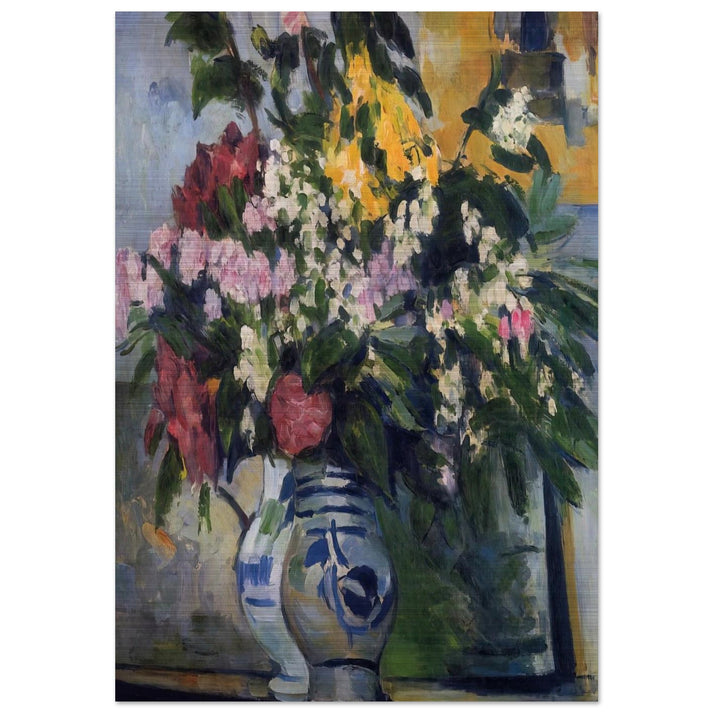
Experience the vibrant, structured beauty of Paul Cézanne's "Two Vases of Flowers" in a premium brushed aluminum print from RedKalion. This museum-quality reproduction captures the artist's revolutionary approach to form and color, transforming a classic still life into a dynamic composition that bridges Impressionism and modern art. Cézanne's deliberate brushstrokes and geometric arrangements are rendered with stunning clarity on our archival-grade aluminum, offering a contemporary twist on a 19th-century masterpiece.
Art Historical Insight: Cézanne's Floral Revolution
Created in the late 1800s, this work exemplifies Cézanne's unique technique of building forms through color planes rather than traditional shading. Unlike his Impressionist peers, he used flowers not merely for their beauty but as structural elements to explore volume and spatial relationships. This print preserves his innovative use of complementary hues and textured application, making it a pivotal piece for understanding the transition to Cubism.
Premium Physical Specifications
Our 70x100 cm / 28x40 inches print is crafted on brushed silver Aluminum DIBOND® with a 3mm thickness for exceptional durability and a sleek, rigid profile. The direct print technology ensures vivid, fade-resistant colors with a matte, glare-free finish, while unprinted areas reveal a striking metallic silver effect that enhances the artwork's luminosity. This combination of historical artistry and modern materials creates a dynamic visual experience perfect for any sophisticated space.
Why Choose RedKalion?
RedKalion curates only the finest archival reproductions, blending expert art historical knowledge with cutting-edge printing techniques. Each piece, like this Cézanne aluminum print, undergoes rigorous quality checks to ensure it meets our standards for longevity and aesthetic fidelity. Elevate your home or office with a timeless work that honors both the artist's legacy and contemporary design sensibilities.


Discover Unlimited Art Possibilities
At RedKalion, you can find virtually any artwork from any artist, available in a wide range of sizes to perfectly match your space.
If you didn’t find what you’re looking for, contact us at support@redkalion.com . We will source any artwork and produce it in any size and format you need, including art prints, posters, canvas, framed pieces, framed canvas, and more.
For dedicated art enthusiasts, we also offer handcrafted replicas of any artwork, carefully painted by highly skilled artists using traditional techniques.
For custom requests, contact us at support@redkalion.com .
What are the dimensions and material of this Paul Cézanne print?
This fine art print measures 70x100 cm (28x40 inches) and is made from brushed silver Aluminum DIBOND® with a 3mm thickness, offering a durable, museum-quality reproduction with a metallic finish.
How does the printing process enhance the artwork's colors?
Direct print on AluDibond ensures vivid, fade-resistant colors and a matte finish, while unprinted white areas reveal a dynamic brushed silver effect, perfect for this Post-Impressionist masterpiece.
Is a hanging kit included with the aluminum print?
Yes, a hanging kit is included; specific components may vary by fulfillment country to ensure secure installation for your premium art piece.
What makes this print archival and long-lasting?
Using Aluminum DIBOND® and advanced printing techniques, this print resists fading and damage, providing an archival-quality reproduction that endures for years.
How does the finish affect the viewing experience?
The matte, glare-free finish minimizes reflections and highlights the artwork's details, making it ideal for spaces with varied lighting conditions.
What is the historical significance of "Two Vases of Flowers" by Cézanne?
This late 19th-century work showcases Cézanne's innovative use of color planes and geometric structure, influencing the transition from Impressionism to modern art movements like Cubism.
How does Cézanne's technique differ in this floral still life?
Cézanne treated flowers as structural elements, using bold brushstrokes and complementary colors to explore volume, unlike traditional still lifes focused solely on realism.