RedKalion
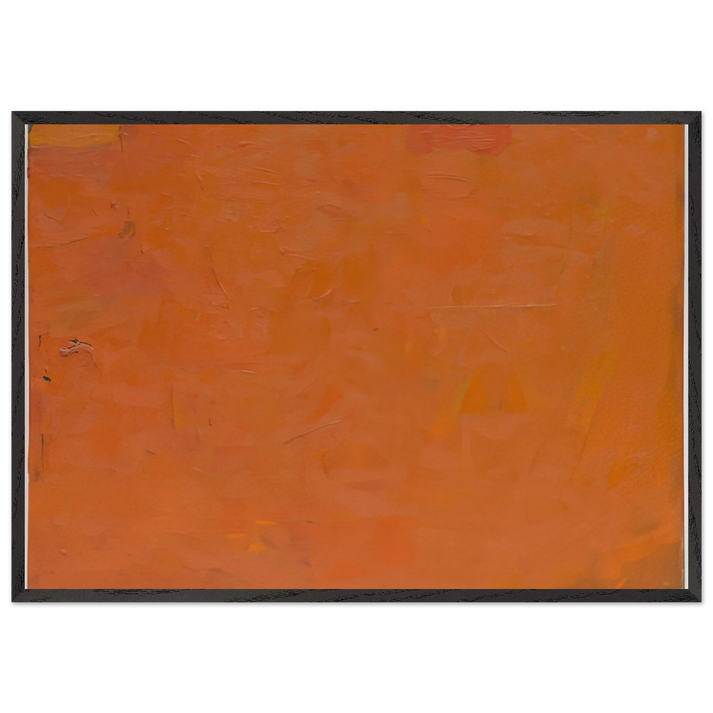
Untitled Orange Painting - 1955 - Robert Ryman 70x100 cm / 28x40 inches Framed Art Print – Black Wooden Frame
Untitled Orange Painting - 1955 - Robert Ryman 70x100 cm / 28x40 inches Framed Art Print – Black Wooden Frame
Couldn't load pickup availability
Untitled Orange Painting - 1955 - Robert Ryman: A Minimalist Masterpiece
This museum-quality reproduction captures the essence of Robert Ryman's groundbreaking 1955 work, Untitled Orange Painting. As a pivotal figure in the Minimalist movement, Ryman's exploration of monochrome and surface texture redefined painting itself. This piece, with its vibrant orange hue, invites contemplation of light, materiality, and the very act of seeing—transforming any space into a gallery of modern art.
Our fine art print is meticulously crafted on archival museum-quality paper—250 gsm (110 lb) weight with a 0.29 mm (11.4 mils) thickness—ensuring durability and a matte, uncoated finish that honors the original's tactile quality. Framed in a responsibly sourced black wooden frame made from oak and ash, with 20mm (0.79") thick and wide dimensions for a bold, contemporary presence, it includes shatterproof plexiglass protection and a hanging kit for immediate display.
Elevate your environment with this archival masterpiece from RedKalion, where expertise in art history meets premium craftsmanship in every detail.

Discover Unlimited Art Possibilities
At RedKalion, you can find virtually any artwork from any artist, available in a wide range of sizes to perfectly match your space.
If you didn’t find what you’re looking for, contact us at support@redkalion.com . We will source any artwork and produce it in any size and format you need, including art prints, posters, canvas, framed pieces, framed canvas, and more.
For dedicated art enthusiasts, we also offer handcrafted replicas of any artwork, carefully painted by highly skilled artists using traditional techniques.
For custom requests, contact us at support@redkalion.com .
What are the dimensions of this Robert Ryman framed art print?
The framed print measures 70x100 cm (28x40 inches), with a 20mm (0.79") thick and wide black wooden frame, offering a substantial presence for this minimalist masterpiece.
What type of paper is used for this fine art reproduction?
We use 250 gsm (110 lb) archival museum-quality paper with a matte, uncoated finish and 0.29 mm (11.4 mils) thickness, ensuring longevity and authentic texture for your Robert Ryman print.
Is this framed print ready to hang?
Yes, it includes a hanging kit and is ready to hang directly on your wall, making installation effortless for your minimalist art display.
How durable is the framing and protection for this artwork?
The frame is made from responsibly sourced oak and ash wood, with shatterproof plexiglass to protect your Robert Ryman reproduction from damage and UV light.
What makes this a museum-quality print?
It features FSC-certified sustainable paper, archival-grade materials, and precise color matching to Robert Ryman's original 1955 technique, ensuring a premium fine art experience.
Why is Robert Ryman's Untitled Orange Painting significant in art history?
Created in 1955, this work marks Ryman's early exploration of monochrome painting, influencing the Minimalist movement by focusing on surface, light, and the essence of paint itself.
What details should I know about the orange hue in this painting?
The vibrant orange color in Ryman's 1955 piece is applied with deliberate brushwork to study texture and reflection, challenging traditional notions of composition and subject matter.