RedKalion
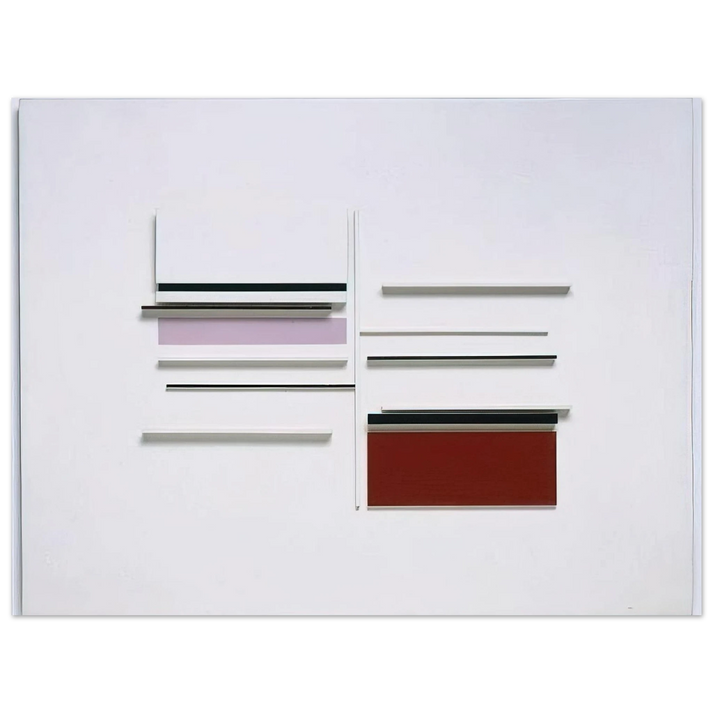
Victor Pasmore - ABSTRACT IN WHITE BLACK INDIAN AND LILAC 1957 75x100 cm / 30x40inches Fine Art Poster
Victor Pasmore - ABSTRACT IN WHITE BLACK INDIAN AND LILAC 1957 75x100 cm / 30x40inches Fine Art Poster
Couldn't load pickup availability
Victor Pasmore - ABSTRACT IN WHITE BLACK INDIAN AND LILAC 1957: A Museum-Quality Fine Art Print
Immerse yourself in the bold geometric abstraction of Victor Pasmore's 1957 masterpiece, ABSTRACT IN WHITE BLACK INDIAN AND LILAC. This iconic work from the British artist's pioneering Constructivist period showcases his radical shift from figurative painting to pure abstraction, featuring dynamic interplay of white, black, Indian red, and lilac forms that evoke a sense of architectural harmony and modernist innovation. Measuring 75x100 cm (30x40 inches), this fine art poster captures every nuanced detail of Pasmore's precise composition, where color and form create a balanced yet energetic visual rhythm.
RedKalion presents this archival reproduction on our exclusive Master's Edition archival paper, ensuring museum-quality fidelity to the original's crisp lines and subtle tonal variations. The matte, uncoated finish in a natural white hue enhances the artwork's depth with a luxurious texture that resists glare, while the acid-free composition (pH above 7) guarantees longevity without yellowing. Crafted from FSC-certified paper at 250 gsm (110 lb) and 0.29 mm thickness, this print offers a substantial feel that elevates any space, from contemporary homes to professional offices.
As a leader in premium reproductions, RedKalion combines art historical expertise with cutting-edge printing technology. Pasmore's work, part of the post-war abstraction movement, revolutionized British art with its mathematical precision and emotional restraint; our print honors this legacy by delivering an authentic, durable piece that inspires contemplation. Elevate your environment with this archival masterpiece, printed and shipped on demand with no minimum orders, and experience the enduring impact of modernist design.

Discover Unlimited Art Possibilities
At RedKalion, you can find virtually any artwork from any artist, available in a wide range of sizes to perfectly match your space.
If you didn’t find what you’re looking for, contact us at support@redkalion.com . We will source any artwork and produce it in any size and format you need, including art prints, posters, canvas, framed pieces, framed canvas, and more.
For dedicated art enthusiasts, we also offer handcrafted replicas of any artwork, carefully painted by highly skilled artists using traditional techniques.
For custom requests, contact us at support@redkalion.com .
What are the dimensions of this Victor Pasmore fine art print?
This museum-quality reproduction measures 75x100 cm (30x40 inches), perfectly capturing the scale and impact of the original 1957 artwork for display in homes or galleries.
What type of paper is used for this archival print?
We use Master's Edition archival paper, a matte, uncoated, natural white paper that is acid-free (pH above 7), FSC-certified, and weighs 250 gsm (110 lb) with a thickness of 0.29 mm for a luxurious texture.
How does the printing process ensure color accuracy in this abstract artwork?
Our advanced printing technology replicates Pasmore's precise white, black, Indian red, and lilac hues with high fidelity, using archival inks that match the original's geometric forms and tonal balance.
Is this print shipped framed or unframed?
This fine art poster is shipped unframed to allow for custom framing options, printed and shipped on demand with no minimum orders for flexible fulfillment.
How long will this archival print last without fading or yellowing?
Thanks to acid-free, museum-quality paper and archival inks, this reproduction is designed to resist yellowing and fading for decades, preserving Pasmore's modernist abstraction.
What is the historical significance of ABSTRACT IN WHITE BLACK INDIAN AND LILAC from 1957?
This artwork marks Victor Pasmore's key Constructivist period, showcasing his shift to pure abstraction with geometric forms that influenced post-war British art, emphasizing mathematical harmony and color theory.
Can I learn more about Victor Pasmore's technique in this piece?
Pasmore employed precise, hard-edged forms and a limited palette to explore spatial relationships, reflecting his interest in architecture and abstraction, which our print highlights through detailed reproduction.