


RedKalion
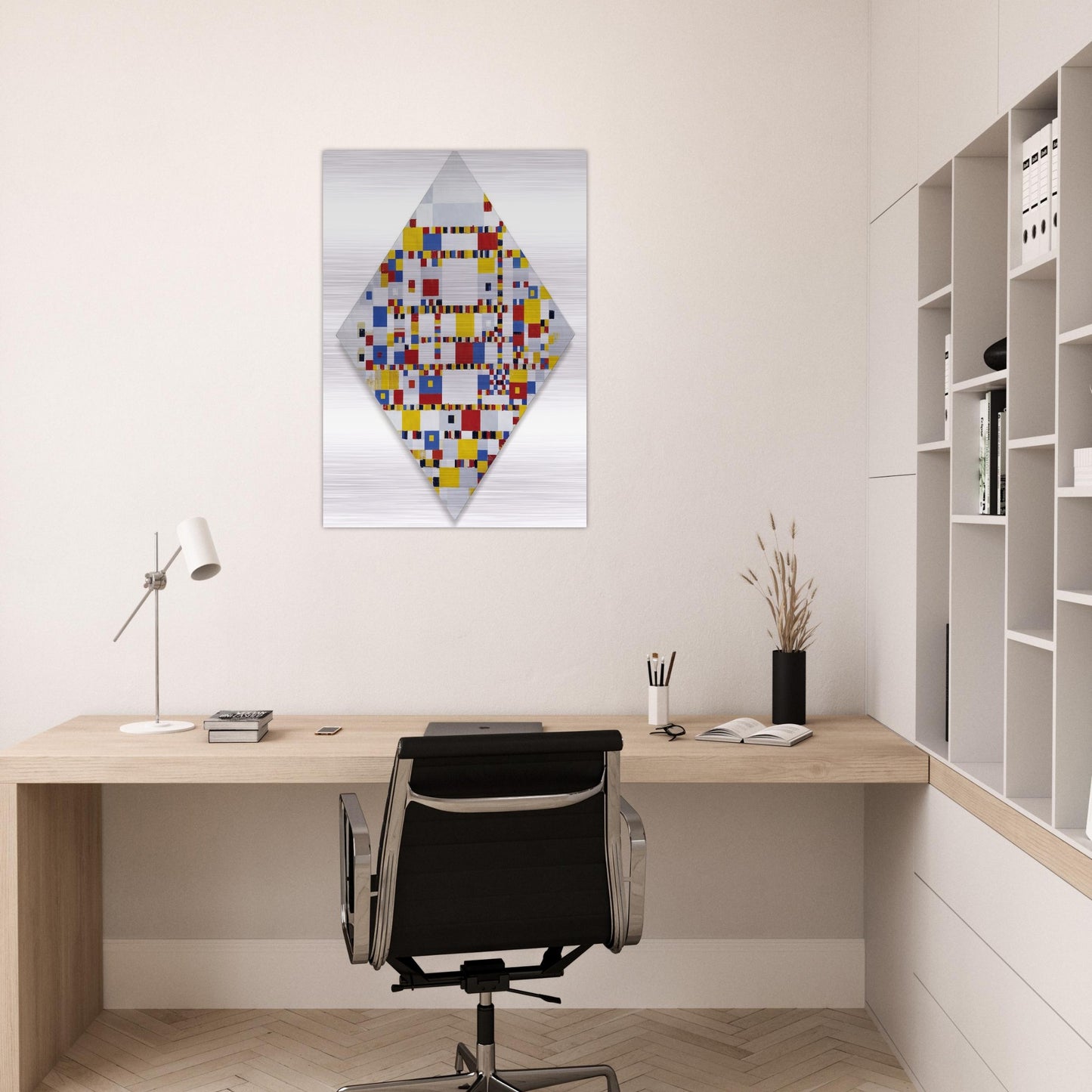
Victory Boogie Woogie - Piet Mondrian Brushed Aluminum Print - 70x100 cm / 28x40 inches | Piet Mondrian Aluminum Print | Piet Mondrian Prints
Victory Boogie Woogie - Piet Mondrian Brushed Aluminum Print - 70x100 cm / 28x40 inches | Piet Mondrian Aluminum Print | Piet Mondrian Prints
Couldn't load pickup availability
Victory Boogie Woogie by Piet Mondrian: A Brushed Aluminum Masterpiece
Experience the vibrant energy of Piet Mondrian's final, unfinished masterpiece, Victory Boogie Woogie, recreated as a premium brushed aluminum print. This 1944 abstract composition, with its dynamic grid of colorful squares and rectangles, captures the rhythm of New York City's jazz scene and Mondrian's pursuit of universal harmony. RedKalion presents this iconic work as a museum-quality reproduction, printed directly on brushed silver Aluminum DIBOND® with a 3mm thickness for a durable, rigid display that exudes modern sophistication.
Our archival-grade print process ensures vivid colors and a matte, glare-free finish, while unprinted areas reveal a striking metallic silver effect, enhancing the artwork's geometric brilliance. This 70x100 cm (28x40 inches) piece is perfect for elevating contemporary spaces with a touch of art historical significance. Each print includes a hanging kit for easy installation, making it a seamless addition to your home or office.
As a leader in fine art reproductions, RedKalion combines expert craftsmanship with historical accuracy, offering you a timeless piece that honors Mondrian's innovative use of primary colors and neoplasticism. Elevate your environment with this archival masterpiece that bridges mid-century modern art with today's design aesthetics.


Discover Unlimited Art Possibilities
At RedKalion, you can find virtually any artwork from any artist, available in a wide range of sizes to perfectly match your space.
If you didn’t find what you’re looking for, contact us at support@redkalion.com . We will source any artwork and produce it in any size and format you need, including art prints, posters, canvas, framed pieces, framed canvas, and more.
For dedicated art enthusiasts, we also offer handcrafted replicas of any artwork, carefully painted by highly skilled artists using traditional techniques.
For custom requests, contact us at support@redkalion.com .
What are the dimensions of this Piet Mondrian aluminum print?
This Victory Boogie Woogie print measures 70x100 cm (28x40 inches), ideal for a statement piece in any room with its museum-quality reproduction on brushed aluminum.
What material is used for this fine art print?
It's printed on brushed silver Aluminum DIBOND® with a 3mm thickness, offering a durable, rigid base and a metallic finish for a dynamic look in your space.
How is the print applied to the aluminum surface?
We use direct printing on AluDibond for vivid colors and a matte finish, with unprinted white areas revealing a metallic silver effect for enhanced visual appeal.
Is a hanging kit included with this Piet Mondrian print?
Yes, a hanging kit is included; it varies by fulfillment country to ensure secure installation of your premium aluminum art print.
How durable and archival is this brushed aluminum print?
This print is archival-grade with a matte, glare-free finish, resistant to fading and damage, making it a long-lasting addition to your art collection.
What is the historical significance of Victory Boogie Woogie?
Created in 1944, it was Piet Mondrian's final work, inspired by New York City's jazz culture, using a grid of primary colors to express rhythm and universal harmony in abstract art.
Why did Mondrian use primary colors in this artwork?
Mondrian employed primary colors like red, yellow, and blue in Victory Boogie Woogie as part of his neoplasticism theory, aiming to achieve pure abstraction and balance through simple geometric forms.